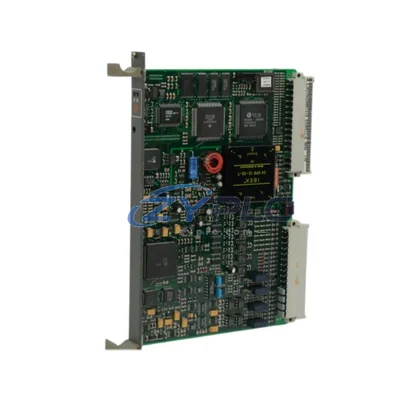
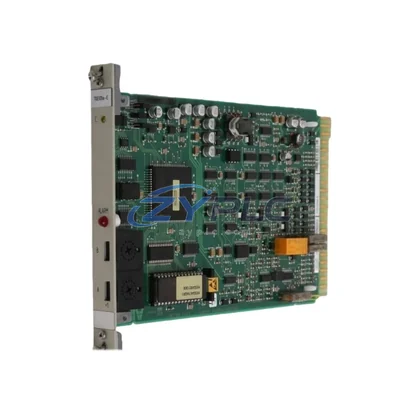
In modern industrial facilities where every watt of consumed energy and every millisecond of process latency carries a cost, the quality of analog signal acquisition at the field level determines the efficiency of the entire control loop. The ABB DSAI145 is a high-precision analog input module engineered for the ABB Advant Controller and MasterPiece DCS platform, delivering accurate, low-drift signal conversion that reduces unnecessary control corrections, minimizes actuator wear, and ultimately lowers the energy footprint of the automation system as a whole.
Unlike generic replacement modules, the DSAI145 is designed to integrate natively within the Advant architecture, ensuring that signal conditioning, channel isolation, and data transmission to the controller CPU operate at the lowest possible processing overhead. When field signals are clean and accurately digitized, the controller spends fewer cycles on error correction and re-polling — a direct contribution to reduced CPU load and more deterministic scan times across the entire control network.
Product Specification Table
| Parameter |
Specification / Value |
| SKU |
DSAI145 |
| Brand |
ABB |
| Series |
Advant / MasterPiece DCS |
| Product Category |
Analog Input Module |
| Origin |
Sweden (SE) |
| Signal Type |
Analog Input (4–20 mA / 0–10 V, multi-channel) |
| Power Consumption |
Low-power design; optimized for continuous 24/7 DCS operation |
| Operating Efficiency |
High-resolution A/D conversion; minimizes control loop corrections |
| Compatible Systems |
ABB Advant Controller AC70 / AC80 / AC110 / AC160; MasterPiece 200/1 |
| Application Environment |
Process automation, maintenance planning, motor drive monitoring, utilities |
| Maintenance Value |
Reduces redundant control corrections; lowers actuator cycling unplanned downtime |
| Quality Assurance |
Full functional test prior to shipment; burn-in verified |
| Warranty |
warranty terms confirmed during quotation |
System Compatibility and Application
The DSAI145 does not operate in isolation — it is a critical node within a layered industrial automation system. In a typical Advant-based plant, field transmitters measuring flow, pressure, temperature, and current feed their 4–20 mA signals directly into the DSAI145 channels. These digitized values are then passed to the ABB Advant Controller AC110 or AC160 CPU module, which executes PID and cascade control strategies. When the input data is accurate and low-noise, the controller issues fewer corrective output commands to downstream devices such as the ABB DSDO115 digital output module and DSAO120 analog output module, reducing unnecessary valve strokes and motor starts.
On the drive side, the analog setpoint signals generated by the Advant controller are routed to ABB ACS800 or ACS880 series variable frequency drives (VFDs), which regulate motor speed in response to real process demand rather than running at fixed full speed. The precision of the DSAI145’s input chain directly influences the quality of the speed reference signal, which in turn determines how efficiently the VFD tracks the process setpoint — a poorly conditioned input signal causes hunting, overshoot, and excess energy draw at the motor shaft.
For power monitoring and energy accounting, the DSAI145 works alongside dedicated power measurement modules such as the ABB DSDP150 pulse input module, which captures energy pulse outputs from kWh meters and feeds them into the DCS historian. Together, these modules enable the plant’s maintenance planning system to correlate process throughput with actual electrical consumption — a prerequisite for ISO 50001 energy performance monitoring. The ABB DSBC172 communication bus module ensures that all I/O data, including energy metrics, is transmitted reliably across the Advant S100 I/O bus without packet loss or retransmission overhead that would inflate network energy use.
At the HMI and SCADA layer, operators viewing real-time analog trends on an ABB Operate IT or compatible SCADA workstation rely on the DSAI145’s channel data to make informed decisions about load shedding, equipment scheduling, and demand response. Inaccurate or noisy analog inputs lead to false alarms, unnecessary operator interventions, and suboptimal production scheduling — all of which carry hidden energy costs. The DSAI145 eliminates this source of inefficiency by delivering stable, repeatable signal values across its full operating temperature range.
The module also integrates with ABB DSDP110 digital input modules for interlock and status monitoring, ensuring that energy-intensive equipment such as compressors, pumps, and conveyors is only energized when process conditions genuinely require it. This coordinated I/O strategy — combining the DSAI145’s analog acquisition with digital status feedback — forms the foundation of an energy-optimized control philosophy that reduces idle running time and eliminates unnecessary starts.
Maintenance and Replacement Notes
Consider a continuous process plant operating three centrifugal pumps in parallel, each driven by a 75 kW motor controlled via an ABB ACS800 VFD. The flow demand signal from a differential pressure transmitter is wired into the DSAI145, which converts it to a digital value consumed by the Advant controller’s flow control loop. If the analog input module introduces even 0.5% signal drift, the controller interprets a false demand increase and commands the VFD to ramp up motor speed unnecessarily — adding perhaps 2–4 kW of wasted electrical power per pump, continuously, 24 hours a day.
By maintaining high signal fidelity, the DSAI145 ensures that the VFD receives accurate demand references, keeping motor speed — and therefore energy consumption — precisely matched to actual process requirements. Over a year of continuous operation, this accuracy translates directly into measurable kWh savings and reduced wear on motor windings, bearings, and mechanical seals, lowering both energy costs and maintenance expenditure.
In batch manufacturing environments, the DSAI145 supports tighter production cycle control by providing accurate temperature and pressure feedback to the Advant controller. Precise thermal management reduces the unplanned downtimed in over-heating or over-cooling batch reactors, shortens cycle times, and improves product consistency — all of which contribute to better overall equipment effectiveness (OEE) and lower energy intensity per unit of output.
From a maintenance perspective, the DSAI145’s stable signal output enables more reliable condition monitoring. Vibration, temperature, and current signals fed through the module can be trended over time in the DCS historian, allowing maintenance teams to detect early signs of motor degradation, pump cavitation, or heat exchanger fouling before they cause unplanned downtime. Predictive maintenance driven by accurate analog data reduces emergency repair costs and eliminates the unplanned downtime associated with running degraded equipment at reduced efficiency.
Every unit is fully tested prior to shipment, including channel-by-channel signal verification and isolation resistance checks, ensuring that the module performs to specification from the moment it is installed. With a warranty terms confirmed during quotation and availability confirmed by RFQ availability for fast dispatch, the DSAI145 minimizes the risk and duration of unplanned production stoppages caused by I/O module failures.
Product Sourcing FAQ
Q1: How does the DSAI145 contribute to measurable operational stability in a DCS-controlled plant?
The DSAI145 delivers high-accuracy analog signal conversion that reduces the frequency and magnitude of corrective control actions. Fewer unnecessary actuator movements and motor speed changes directly reduce electrical energy consumption across the plant’s drive and valve infrastructure. In VFD-controlled motor applications, accurate demand signals prevent over-speed operation, which is the single largest source of avoidable motor unplanned downtime.
Q2: Is the DSAI145 compatible with all ABB Advant and MasterPiece controller variants?
The DSAI145 is designed for the ABB Advant S100 I/O bus and is compatible with Advant Controller AC70, AC80, AC110, and AC160 platforms, as well as MasterPiece 200/1 systems. It is recommended to verify the specific I/O bus configuration and slot addressing with your system documentation before installation. Our technical team can assist with compatibility confirmation prior to order.
Q3: What is the recommended replacement and testing procedure for a failed analog input module?
Before replacement, isolate the affected I/O bus segment and document the current channel configuration and scaling parameters from the engineering workstation. Install the DSAI145 into the designated slot, restore channel configuration, and perform a live signal verification against a calibrated reference source for each active channel. All units supplied by ZYPLC are pre-tested and burn-in verified, reducing commissioning time and the risk of infant failure after installation.
Q4: What does the warranty terms confirmed during quotation cover, and what is the return process?
The warranty terms confirmed during quotation covers manufacturing defects and functional failures under normal operating conditions. If a unit fails within the warranty period, contact our team at plc.sales@zyplc.com or +86 19859288691 to initiate a return authorization. We will arrange expedited replacement to minimize your production downtime. Warranty does not cover damage resulting from incorrect installation, overvoltage events, or physical mishandling.