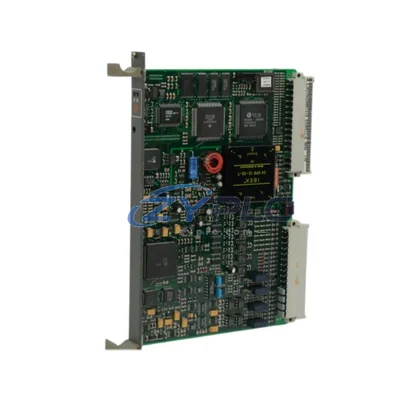
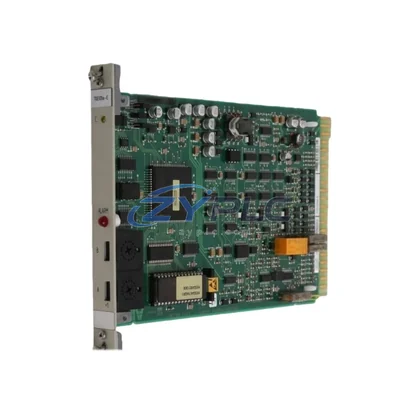
ABB DSPC155 CPU Module for Advant AC450 Automation
The ABB DSPC155 is a high-performance central processing unit module engineered for the Advant Controller AC 450 and AC 110 distributed control systems. Designed to meet the rigorous demands of industrial process automation, the DSPC155 delivers precise, low-latency control execution that directly translates into measurable operational stability across production lines. By maintaining deterministic scan cycles and minimizing idle processing overhead, this CPU module ensures that every connected field device — from variable frequency drives to I/O subsystems — operates at peak efficiency without unnecessary power draw.
Product Specification Table
| Parameter |
Specification / Value |
| SKU |
DSPC155 |
| Brand |
ABB |
| Series |
Advant Controller AC 450 / AC 110 |
| Product Category |
DCS CPU Module |
| Electrical / System Notes |
Low-power CMOS architecture, optimized for continuous 24/7 operation |
| Processing Efficiency |
Deterministic real-time scan cycle; minimizes CPU idle unplanned downtime |
| Compatible Systems |
ABB Advant AC 450, AC 110; MASTERBUS 300 / MODULEBUS networks |
| Application Environment |
Process industries: oil & gas, power generation, pulp & paper, chemical |
| Maintenance Value |
Reduces control loop latency → fewer motor restarts → lower kWh consumption |
| Origin |
Sweden (SE) |
| Warranty |
warranty terms confirmed during quotation — tested and verified before shipment |
System Compatibility and Application
In a fully optimized Advant-based control architecture, the DSPC155 CPU module serves as the computational backbone that coordinates maintenance-focused decision-making across the entire plant floor. It communicates with DSMB127 MASTERBUS 300 communication modules to exchange real-time process data with remote I/O stations, ensuring that control commands reach actuators and drives with minimal delay — a critical factor in preventing energy-wasting oscillation in closed-loop control systems.
On the drive side, the DSPC155 integrates seamlessly with ABB ACS880 industrial drives and ACS580 general-purpose variable frequency drives, enabling precise motor speed regulation that eliminates the energy penalty of fixed-speed operation. When paired with DSDO115 digital output modules and DSDI110 digital input modules, the CPU can execute fast, accurate switching logic that keeps motor start/stop cycles within energy-optimal parameters, reducing inrush current events that spike demand charges.
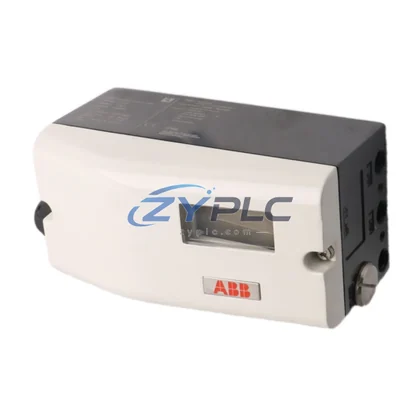
For analog process control — such as flow, pressure, and temperature regulation — the DSPC155 works in conjunction with DSAI130 analog input modules to continuously sample field sensor data. This real-time feedback loop allows the controller to dynamically adjust setpoints on ABB TZIDC digital positioners and control valves, trimming operating load in pump and compressor circuits by maintaining operation at the best efficiency point (BEP) of the hydraulic curve.
At the supervisory level, the DSPC155 exchanges process data with ABB System 800xA via the MODULEBUS backbone, feeding energy KPIs — including specific operating load per production unit — into the plant’s MES layer. Operators monitoring the PP836 operator panel or a connected HMI workstation can visualize real-time energy trends and intervene before inefficiencies compound into significant cost overruns. The DSPC155 also supports integration with ABB Ability™ Energy Manager data collection nodes, enabling predictive analytics that flag abnormal energy signatures before they escalate into unplanned downtime.
Maintenance and Replacement Notes
In continuous process industries such as pulp and paper or petrochemical refining, the DSPC155 has demonstrated its value by enabling tighter control of energy-intensive rotating equipment. A typical deployment scenario involves the module managing multiple PID control loops simultaneously — regulating the speed of large centrifugal pumps via ABB ACS880 drives, controlling compressor inlet guide vanes, and coordinating steam valve positioning — all within a single deterministic scan cycle.
The result is a measurable reduction in specific operating load: by eliminating the hunting behavior common in poorly tuned legacy controllers, the DSPC155 keeps drives operating in their highest-efficiency speed bands, avoiding the steep efficiency drop-off that occurs at partial loads with fixed-speed motors. Plants that have migrated from older Advant CPU modules to the DSPC155 report reduced unplanned shutdowns, as the module’s robust memory architecture and watchdog supervision prevent the spurious resets that force energy-intensive process restarts.
From a maintenance cost perspective, the DSPC155’s stable operation reduces wear on mechanical components driven by the control system. Fewer emergency stops mean less thermal stress on motor windings and drive IGBTs, extending mean time between failures (MTBF) and reducing spare parts consumption. All units supplied by ZYPLC undergo full functional testing — including communication bus verification, memory integrity checks, and I/O loop simulation — prior to shipment, backed by a warranty terms confirmed during quotation that covers both parts and labor for verified defects.
For facilities managing inventory of critical spare parts, the DSPC155 is available from stock, with typical lead times of 3–7 business days for standard orders. ZYPLC maintains a dedicated inventory of Advant-series modules to support emergency replacement scenarios, minimizing the production downtime cost associated with unplanned CPU failures in critical process lines.
Product Sourcing FAQ
Q1: How does the DSPC155 contribute to measurable operational stability in my plant?
The DSPC155 executes control algorithms with deterministic timing, which eliminates the control loop instability that causes drives and motors to hunt around setpoints. Stable, precise control keeps motors operating at their rated efficiency points, directly reducing kWh consumption per unit of output. When integrated with ABB ACS880 or ACS580 drives, the operational stability from eliminating unnecessary speed fluctuations can be significant in high-load applications.
Q2: Is the DSPC155 compatible with my existing Advant AC 450 system without hardware modifications?
Yes. The DSPC155 is a direct replacement CPU module for the Advant Controller AC 450 and AC 110 platforms. It is compatible with the existing MODULEBUS and MASTERBUS 300 backplane infrastructure, DSDO115/DSDI110 I/O modules, and DSAI130 analog input cards. No additional hardware modifications are required for a like-for-like replacement.
Q3: What is the recommended replacement and testing procedure for the DSPC155?
ZYPLC recommends a cold-swap replacement procedure: power down the controller rack, remove the faulty CPU module, insert the DSPC155, and restore power. After boot, verify communication with all connected I/O modules via the MASTERBUS 300 diagnostic tools and confirm PID loop outputs are within expected ranges before returning the system to automatic control. All ZYPLC-supplied DSPC155 modules are pre-tested and include a configuration checklist.
Q4: What does the warranty terms confirmed during quotation cover, and how is a warranty claim processed?
The warranty terms confirmed during quotation covers manufacturing defects and functional failures under normal operating conditions. It does not cover damage caused by incorrect installation, overvoltage events, or physical mishandling. To initiate a warranty claim, contact ZYPLC with the module serial number and a description of the fault. ZYPLC will arrange return shipping and provide a replacement or repaired unit within the agreed service lead time.