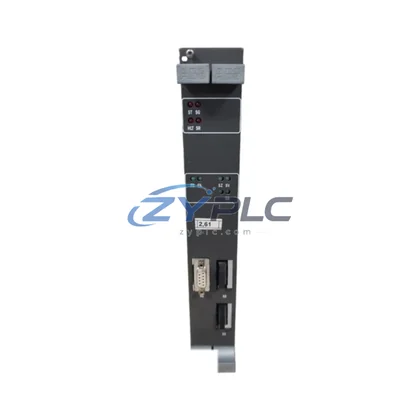
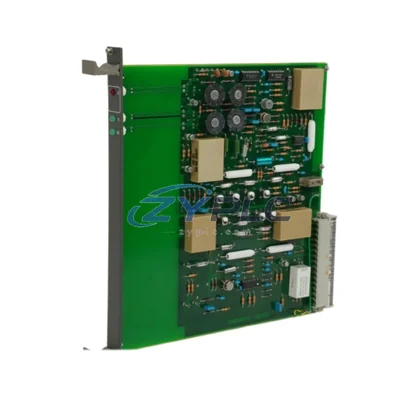
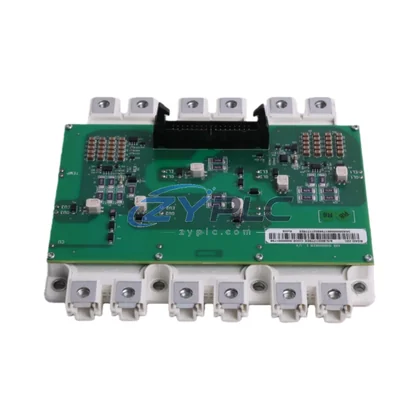
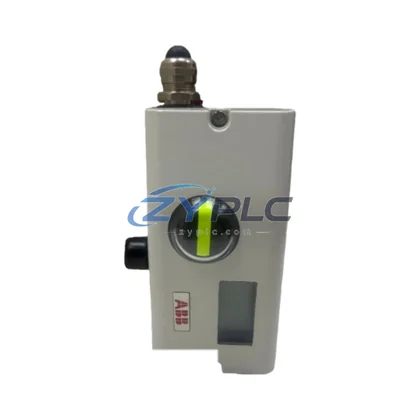
ABB DSQC239 Digital I/O Module for DSQC Series
The ABB DSQC239 Digital I/O Module is a precision-engineered signal interface component designed to operate within the layered control architecture of ABB’s DSQC Series robot controller platform. Rather than functioning as a standalone unit, the DSQC239 is conceived as an integral node within a coordinated automation system — one that bridges the control layer, the I/O layer, and the field execution layer in a unified, deterministic signal environment. For system integrators, automation engineers, and maintenance teams working with ABB IRC5 or S4C+ controller families, the DSQC239 represents a reliable, field-proven solution for expanding digital signal capacity without compromising system coherence or communication integrity.
In modern industrial control architectures, the digital I/O module occupies a critical position between the CPU processing layer and the physical field devices — sensors, actuators, solenoid valves, relay outputs, and safety interlocks. The DSQC239 fulfills this role by providing a structured, electrically isolated interface that ensures signal fidelity across high-noise industrial environments including welding cells, press lines, conveyor systems, and process control panels. Its compatibility with the DSQC Series backplane and rack infrastructure means it can be installed alongside modules such as the DSQC328A analog I/O module, the DSQC352A fieldbus communication module, and the DSQC540 power distribution unit without requiring additional signal conditioning or protocol conversion.
From a system architecture perspective, the DSQC239 supports the principle of modular scalability — a foundational requirement in any long-lifecycle automation deployment. As production demands evolve, additional I/O capacity can be introduced by adding DSQC239 units to the existing rack without modifying the controller’s core programming structure or replacing the DSQC508 main computer module. This modularity directly reduces engineering hours during system expansion and minimizes the risk of configuration errors that can arise when integrating incompatible third-party I/O hardware.
The module’s role in redundancy design is equally significant. In safety-critical applications — such as those governed by IEC 61508 or ISO 13849 — the DSQC239 can be deployed in parallel I/O configurations where signal mirroring and cross-checking between redundant controller paths is required. When paired with the DSQC611 safety board or integrated into a dual-channel safety architecture, the module contributes to a system-level SIL or PLd compliance posture without requiring external safety relays for every output channel.
Communication stability is maintained through the module’s direct integration with the DSQC Series internal bus, which eliminates the latency and packet-loss risks associated with external fieldbus adapters. For applications requiring deterministic cycle times — such as high-speed pick-and-place, synchronized multi-axis motion, or real-time press control — this internal bus architecture ensures that I/O scan times remain consistent regardless of network load on external Profibus, DeviceNet, or EtherNet/IP segments handled by dedicated communication modules like the DSQC378B or DSQC688.
Installation and commissioning of the DSQC239 follow ABB’s standard rack-mount procedure, with module addressing configured via onboard DIP switches or through the RobotWare software environment. Engineers familiar with the ABB FlexPendant or RobotStudio offline programming tool will find the I/O configuration workflow straightforward, with signal mapping, logical grouping, and cross-reference documentation generated automatically within the controller’s I/O database. This reduces commissioning time and supports accurate as-built documentation — a requirement in regulated industries such as pharmaceutical manufacturing, food processing, and energy generation.
For maintenance teams, the DSQC239’s hot-swap compatibility within supported rack configurations means that field replacement can be performed without a full system shutdown in certain controller configurations, significantly reducing mean time to repair (MTTR) and supporting continuous production targets. Spare module availability is a key factor in long-term maintenance planning, and ZYPLC maintains availability subject to RFQ confirmation of the DSQC239 with full functional testing completed prior to shipment.
Every DSQC239 unit supplied by ZYPLC is covered by a warranty terms confirmed during quotation, reflecting our commitment to verified quality and long-term customer support. Our technical team is available to assist with system compatibility assessment, rack configuration planning, and integration guidance for both new installations and legacy system upgrades.
Product Specification Table
| Parameter |
Specification |
| System Role |
Digital I/O Interface Module — DSQC Series Controller Architecture |
| Compatible Controller |
ABB IRC5, S4C+ with DSQC Series Rack |
| I/O Type |
Digital Input / Digital Output |
| Backplane Interface |
DSQC Series Internal Bus (Direct Rack Mount) |
| Electrical Isolation |
Optocoupler-isolated I/O channels |
| Operating Voltage |
24 VDC (nominal field supply) |
| Operating Temperature |
0°C to +55°C (standard industrial range) |
| Mounting |
DIN rail / rack-mount via DSQC Series backplane |
| Communication |
Internal DSQC bus; compatible with Profibus, DeviceNet via gateway modules |
| Certifications |
CE marked; manufactured to ABB industrial quality standards |
| Origin |
Sweden (ABB Robotics) |
| Warranty |
warranty terms confirmed during quotation — all units fully tested prior to shipment |
System Compatibility Notes
The DSQC239 achieves its full operational value when considered within the context of a complete ABB robot controller system. A typical DSQC Series control cabinet integrates the DSQC508 main computer module as the central processing unit, responsible for program execution, motion planning, and system supervision. The DSQC239 connects to this CPU layer via the internal rack bus, receiving I/O scan commands and returning field signal states within each controller cycle.
Power distribution within the cabinet is managed by the DSQC540 power supply unit, which provides regulated 24 VDC to both the controller electronics and the I/O field circuits. Proper power sequencing between the DSQC540 and the DSQC239 is essential during startup and fault recovery sequences to prevent false output activation.
Analog signal processing — for pressure transducers, temperature sensors, or position feedback — is handled by the DSQC328A analog I/O module, which operates in parallel with the DSQC239 on the same backplane. Together, these two modules provide a complete mixed-signal I/O environment capable of supporting complex process control and motion coordination tasks.
Fieldbus connectivity to external PLCs, SCADA systems, or distributed I/O networks is provided by communication gateway modules such as the DSQC352A Profibus adapter or the DSQC688 EtherNet/IP module, enabling the DSQC239’s digital signals to be mapped into higher-level network data structures without additional hardware conversion.
For human-machine interface integration, the ABB FlexPendant (DSQC679) provides real-time I/O status visualization, manual output forcing during commissioning, and alarm acknowledgment — all of which interact directly with the signal states managed by the DSQC239. In panel-based HMI configurations, third-party SCADA terminals connected via the DSQC688 can mirror the same I/O data for remote monitoring.
Safety architecture integration is supported through the DSQC611 safety board, which monitors emergency stop circuits, safety gate inputs, and enabling device states. The DSQC239 complements this safety layer by handling non-safety digital I/O — conveyor run signals, gripper control outputs, part-present sensor inputs — freeing the safety board to focus exclusively on SIL-rated functions.
Terminal block and wiring infrastructure within the control cabinet is typically organized using Phoenix Contact or Weidmüller DIN rail terminal modules, which interface between the DSQC239’s field connectors and the machine wiring harness. Proper terminal labeling and wire ferrule installation are critical for long-term maintenance accessibility and fault isolation efficiency.
Industrial Application Notes
The ABB DSQC239 finds application across a broad spectrum of industrial sectors where ABB robot controllers form the core of the automation architecture.
In automotive manufacturing, DSQC239 modules are deployed in body-in-white welding cells, where they manage gun open/close signals, weld complete confirmations, part clamp outputs, and safety fence monitoring inputs. The deterministic I/O scan time ensures that weld sequence interlocks are executed within the required cycle time without introducing signal jitter that could affect weld quality or robot path accuracy.
In electronics assembly and semiconductor handling, the module supports cleanroom-compatible robot systems where precise gripper control, vacuum confirmation, and tray-present detection are managed through the DSQC239’s digital channels. The module’s low-noise electrical design is well-suited to environments where EMI from servo drives and switching power supplies must be carefully managed.
In food and beverage packaging, DSQC239 units control pick-and-place robot outputs including suction cup activation, conveyor indexing signals, and reject gate control. Integration with upstream vision systems and downstream checkweighers is achieved through the digital I/O channels, with signal handshaking managed at the controller level.
In power generation and energy infrastructure, ABB robot systems equipped with DSQC239 modules perform inspection, maintenance, and assembly tasks in environments where reliability and long service intervals are paramount. The module’s proven field longevity and available spare stock make it a preferred choice for facilities with extended maintenance cycles.
In process industries including chemical, petrochemical, and water treatment, the DSQC239 supports robot-assisted sampling, valve actuation confirmation, and equipment status monitoring within larger DCS-integrated automation architectures. Its compatibility with Profibus and EtherNet/IP gateway modules enables seamless data exchange with Yokogawa, Honeywell, or Siemens DCS platforms.
Product Compatibility FAQ
Q1: Is the DSQC239 compatible with both IRC5 and S4C+ controller generations?
The DSQC239 is designed for use within the ABB DSQC Series rack and backplane infrastructure, which is shared across the S4C+ and IRC5 controller families. Compatibility depends on the specific rack configuration and software version in use. ZYPLC’s technical team can assist with compatibility verification based on your controller serial number and RobotWare version prior to purchase.
Q2: Can the DSQC239 be replaced in the field without a full system shutdown?
In certain DSQC Series rack configurations, module replacement can be performed with the controller in a safe-stopped state rather than requiring a full power-down of the entire cabinet. However, this depends on the power distribution architecture and whether the specific rack supports hot-swap operation. We recommend consulting the ABB IRC5 Product Manual and verifying the procedure with your system integrator before performing field replacement. All DSQC239 units from ZYPLC are pre-tested and include a warranty terms confirmed during quotation to support rapid field replacement with confidence.
Q3: How does the warranty terms confirmed during quotation apply to the DSQC239, and what does it cover?
Every DSQC239 unit supplied by ZYPLC carries a warranty terms confirmed during quotation covering functional defects identified under normal operating conditions consistent with ABB’s published specifications. Prior to shipment, each module undergoes functional verification testing. In the event of a warranty claim, ZYPLC provides replacement or repair support coordinated through our technical team. Contact us at plc.sales@zyplc.com or +86 19859288691 for warranty registration and support procedures.