ABB DSQC332 Digital Relay I/O for IRC5: Compatibility and Replacement Notes
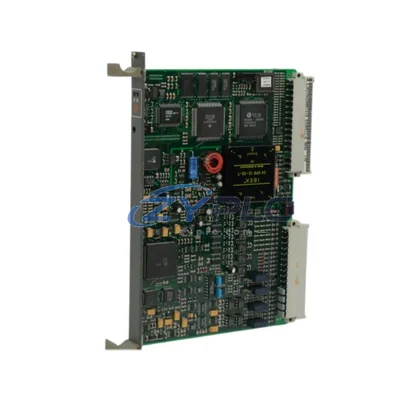
The ABB DSQC332 is a digital relay I/O module purpose-built for integration within ABB’s IRC5 and S4C+ robot controller platforms. Rather than functioning as a standalone component, the DSQC332 occupies a critical position within the layered automation architecture — bridging the control layer, I/O layer, and execution layer to deliver reliable, deterministic signal management across complex industrial environments. Its relay-based output design ensures electrical isolation between the controller logic and field-level actuators, making it an indispensable element in high-availability robotic cells, process automation lines, and safety-critical installations.
In a complete IRC5-based control system, the DSQC332 does not operate in isolation. It is coordinated with the IRC5 main computer unit (DSQC639 or DSQC645), the axis computer (DSQC668), and the I/O communication bus managed through the DSQC608 DeviceNet gateway or DSQC612 Profibus adapter. This tight integration ensures that relay output commands issued from the robot program are executed with minimal latency and full traceability through the system’s event log. The module slots directly into the IRC5 controller cabinet’s internal I/O rack, sharing the same backplane power distribution managed by the DSQC661 power supply unit, which provides stable 24 VDC to all I/O nodes.
From a signal flow perspective, the DSQC332 receives digital output commands from the IRC5 main computer via the internal I/O bus, energizes or de-energizes its relay contacts, and drives field devices such as solenoid valves, indicator lamps, conveyor interlocks, and safety gate circuits. On the input side, relay feedback signals and external digital inputs are routed back through the module to the controller, enabling closed-loop confirmation of actuator states. This bidirectional signal architecture supports the implementation of interlocking logic, sequence verification, and fault detection routines directly within RAPID program structures.
System architects integrating the DSQC332 into multi-robot or multi-controller environments will find it fully compatible with ABB’s RobotWare software stack, allowing I/O signal mapping, alias configuration, and cross-system signal sharing through the IRC5 FlexPendant (DSQC679) or RobotStudio offline programming environment. In coordinated cell architectures where multiple IRC5 controllers share a common safety PLC or area controller, the DSQC332’s relay outputs can be wired directly into the safety relay chain or the cell-level PLC’s digital input card, enabling seamless integration without additional signal conditioning hardware.
Product Specification Table
| Parameter |
Specification |
| Part Number / SKU |
DSQC332 |
| Brand |
ABB Robotics |
| Compatible Platform |
IRC5, S4C+ Robot Controller |
| Module Type |
Digital Relay I/O Module |
| System Role |
Field-level relay output and digital input interface within IRC5 I/O layer |
| Output Type |
Relay contact outputs (NO/NC) |
| Input Type |
Digital inputs (24 VDC nominal) |
| Supply Voltage |
24 VDC (via IRC5 internal backplane / DSQC661 PSU) |
| Communication Interface |
IRC5 internal I/O bus (DeviceNet-compatible architecture) |
| Mounting |
IRC5 controller cabinet internal I/O rack |
| Operating Temperature |
0°C to +50°C (standard industrial cabinet environment) |
| Origin |
Sweden (ABB Robotics) |
| Warranty |
warranty terms confirmed during quotation — covers hardware defects and functional failure under normal operating conditions |
| system integration |
Full system integration support — compatible with RobotWare I/O configuration, RAPID signal mapping, and RobotStudio engineering tools |
System Compatibility Notes
The DSQC332 achieves its full value when considered within the broader IRC5 system architecture. A typical IRC5 controller cabinet integrates the DSQC639 main computer board as the central processing unit, executing RAPID programs and managing all I/O transactions. The DSQC332 connects to this compute layer through the internal I/O bus, receiving output commands and returning input states in real time. Power integrity across the I/O rack is maintained by the DSQC661 power supply, which distributes regulated 24 VDC to all installed modules including the DSQC332, ensuring stable relay operation even under high-cycle-rate conditions.
For systems requiring fieldbus connectivity to external PLCs or SCADA systems, the DSQC608 DeviceNet master/slave unit or the DSQC612 Profibus DP adapter can be installed alongside the DSQC332 within the same controller, enabling the relay I/O states to be mirrored or supervised by an upstream Siemens S7, Allen-Bradley ControlLogix, or Mitsubishi MELSEC system controller. This cross-platform signal visibility is essential in large-scale manufacturing cells where the robot controller must report its I/O status to a plant-level DCS or MES system.
In redundant architecture designs, the DSQC332 can be paired with a safety-rated I/O module such as the DSQC643 safety I/O board, creating a layered I/O strategy where standard process signals are handled by the DSQC332 and safety-critical signals — such as emergency stop confirmation, light curtain feedback, and door interlock status — are managed through the dedicated safety channel. The FlexPendant (DSQC679) provides the human-machine interface layer, allowing operators to monitor relay output states, acknowledge faults, and execute manual I/O overrides during commissioning and maintenance windows. Terminal unit modules such as the DSQC355 or compatible third-party I/O terminal blocks complete the wiring layer, providing screw-terminal access to the DSQC332’s relay contacts for field cable termination.
Industrial Application Notes
Automotive & General Manufacturing: In robotic welding, assembly, and material handling cells, the DSQC332 manages conveyor interlock signals, part-present sensor inputs, and gripper solenoid outputs. Its relay contacts provide the electrical isolation required when interfacing 24 VDC robot logic with 110/220 VAC field devices such as pneumatic valve coils and indicator towers. The module’s deterministic response within the IRC5 I/O scan cycle ensures that sequence timing is maintained across multi-robot coordinated cells.
Power Generation & Electrical Utilities: In substation automation and power plant auxiliary systems where ABB robotics are deployed for inspection or maintenance tasks, the DSQC332 provides reliable digital I/O interfacing between the robot controller and plant-level protection relay panels. Its relay output isolation prevents ground loops and eliminates common-mode interference that could compromise sensitive protection circuits.
Petrochemical & Process Industries: In hazardous area applications where the IRC5 controller is installed in a purged and pressurized enclosure, the DSQC332 handles process valve control signals and field instrument digital inputs. Its robust relay contact design tolerates the inductive load switching associated with solenoid-operated control valves, reducing the risk of contact welding or premature wear in high-cycle process environments.
Water Treatment & Infrastructure: Municipal water treatment facilities deploying ABB robotic systems for sampling, chemical dosing, or inspection tasks rely on the DSQC332 to interface with pump motor starters, level switch inputs, and alarm annunciator outputs. The module’s compatibility with the IRC5 system’s remote I/O expansion architecture allows it to be used in distributed control configurations where the robot controller manages multiple field zones from a single cabinet.
Packaging & Palletizing Lines: High-speed packaging lines using IRC5-controlled robots for pick-and-place, case erecting, or palletizing operations depend on the DSQC332 for conveyor stop/start interlocking, reject gate control, and product presence confirmation. The relay output’s ability to switch both AC and DC loads makes it versatile across the diverse electrical environments found in packaging machinery.
Product Compatibility FAQ
Q1: Is the DSQC332 compatible with both IRC5 Single Cabinet and IRC5 Dual Cabinet controller configurations?
Yes. The DSQC332 is designed for installation within the IRC5 controller’s internal I/O rack and is compatible with both the IRC5 Single Cabinet (M2004 and later) and IRC5 Dual Cabinet configurations. In dual cabinet setups, the module is installed in the controller cabinet’s I/O section and communicates with the main computer via the standard internal I/O bus. It is also backward-compatible with S4C+ controller architectures, making it suitable for legacy system maintenance and mixed-generation fleet management. Always verify the RobotWare version and I/O configuration file (EIO.CFG) to ensure correct signal mapping before commissioning.
Q2: Can the DSQC332 be used alongside DeviceNet or Profibus fieldbus modules in the same IRC5 controller, and how are I/O addresses managed?
Yes. The DSQC332 coexists with fieldbus communication modules such as the DSQC608 (DeviceNet) or DSQC612 (Profibus DP) within the same IRC5 controller. I/O address management is handled through the IRC5 I/O configuration system, where each module is assigned a unique logical unit number and its signals are mapped to named I/O variables within the RAPID program. The DSQC332’s relay outputs and digital inputs appear as standard system I/O signals and can be cross-referenced with fieldbus-mapped signals for supervisory control or data mirroring to upstream PLC systems. RobotStudio’s I/O configuration editor provides a graphical interface for managing these assignments without manual EIO.CFG file editing.
Q3: What does the warranty terms confirmed during quotation cover for the DSQC332, and what support is available for long-term maintenance planning?
The warranty terms confirmed during quotation covers hardware defects, relay contact failure, and functional malfunctions arising under normal operating conditions from the date of purchase. It does not cover damage resulting from incorrect installation, overvoltage events, or use outside the module’s specified electrical ratings. For long-term maintenance planning, we recommend maintaining a spare DSQC332 unit in your critical spares inventory, as relay I/O modules in high-cycle applications may require periodic replacement of relay contact assemblies. Our technical team provides pre-sales compatibility verification, installation guidance, and post-sales support to ensure your IRC5 system maintains maximum uptime. Contact us at plc.sales@zyplc.com or +86 19859288691 for spare parts planning and system architecture consultation.