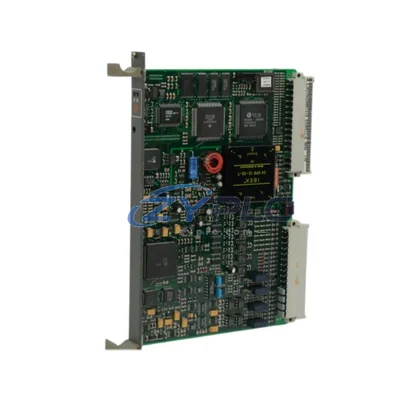
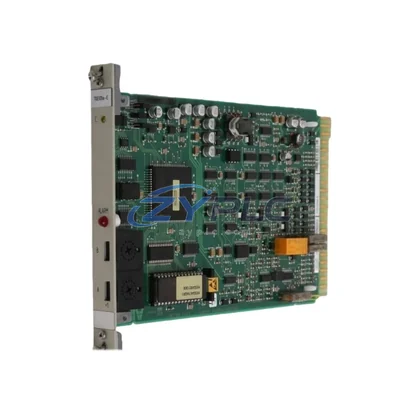
ABB DSQC651 3HAC025784-001 I/O Board for IRC5 Robot
The ABB DSQC651 (3HAC025784-001) is a dedicated digital I/O board engineered for seamless integration within the ABB IRC5 robot controller architecture. Rather than functioning as a standalone peripheral, this module occupies a critical position in the layered automation hierarchy — bridging the control layer, I/O layer, and field device layer to deliver deterministic signal management across complex robotic workcells. Whether deployed in a single-cabinet IRC5 configuration or a multi-robot IRC5P panel-mounted system, the DSQC651 ensures consistent I/O expansion capacity, reliable signal routing, and long-term architectural coherence across the full system lifecycle.
In modern industrial automation, the integrity of a robot control system depends not only on the CPU module but on the coordinated performance of every layer — from the main computer board down to the terminal units and field wiring. The DSQC651 addresses this requirement by providing a structured, rack-compatible I/O interface that aligns with ABB’s modular design philosophy, enabling engineers to scale I/O capacity without compromising system timing, communication stability, or cabinet layout integrity.
Product Specification Table
| Parameter |
Specification |
| Part Number |
3HAC025784-001 |
| Module Designation |
DSQC651 |
| System Role |
Digital I/O Expansion Board — IRC5 Control Architecture |
| Compatible Platform |
ABB IRC5 / IRC5P / IRC5 Compact Controller |
| I/O Type |
Digital Input / Digital Output |
| Communication Interface |
DeviceNet (internal backplane bus) |
| Operating Voltage |
24 VDC (nominal) |
| Operating Temperature |
0°C to +55°C |
| Mounting |
DIN rail / IRC5 cabinet rack-mount |
| Country of Origin |
Sweden |
| Product Category |
Industrial Robot Controller I/O Module |
| Warranty |
warranty terms confirmed during quotation — Fully tested before dispatch |
| system integration |
Yes — Compatible with IRC5 system architecture for direct drop-in replacement |
System Compatibility Notes
The DSQC651 does not operate in isolation. Its value is realized through its role within a fully coordinated IRC5 control system, where multiple modules work in concert to deliver precise, repeatable robotic motion and process control. At the core of the IRC5 architecture sits the DSQC1000 main computer board, which handles real-time motion planning and task execution. The DSQC651 connects to this core via the internal DeviceNet backplane, ensuring that all I/O signals are synchronized with the robot’s motion cycle without introducing latency or communication conflicts.
Power distribution within the IRC5 cabinet is managed by the DSQC661 power supply unit, which provides stable 24 VDC rails to the I/O boards including the DSQC651. Alongside the DSQC651, engineers frequently deploy the DSQC652 digital I/O board and the DSQC653 analog I/O board to handle mixed signal environments — combining discrete on/off signals with analog process variables such as pressure, temperature, or flow feedback from field instruments.
For applications requiring fieldbus connectivity beyond the internal DeviceNet bus, the DSQC688 PROFIBUS adapter or the DSQC689 EtherNet/IP adapter can be integrated into the same IRC5 cabinet, allowing the DSQC651’s I/O signals to be mapped and exposed to upstream SCADA systems, DCS platforms, or Siemens S7 / Allen-Bradley ControlLogix PLCs operating at the supervisory control layer. This cross-platform communication capability is essential in hybrid automation environments where ABB robots must coexist with third-party control infrastructure.
At the human-machine interface layer, the ABB FlexPendant (IRC5 variant) provides operators with real-time visibility into I/O states, allowing technicians to monitor the DSQC651’s input and output channels during commissioning, fault diagnosis, and routine maintenance cycles. The FlexPendant’s I/O monitoring screen can display the live status of all channels mapped to the DSQC651, significantly reducing troubleshooting time in production environments.
Terminal connectivity between the DSQC651 and field devices is typically achieved through DSQC355A or compatible terminal unit assemblies, which provide screw-terminal or spring-clamp wiring interfaces for sensors, actuators, solenoid valves, and safety relays. In redundant safety architectures, the DSQC651 is often paired with DSQC643 safety I/O boards to ensure that safety-critical signals — such as emergency stop circuits, light curtain inputs, and area scanner outputs — are handled through a dedicated, certified safety channel separate from the standard I/O path.
For system architects designing multi-robot cells, the DSQC651 supports consistent I/O addressing across multiple IRC5 controllers networked via the ABB MultiMove configuration, where coordinated motion between up to four robot arms requires synchronized I/O handshaking. In these architectures, maintaining identical I/O board configurations across all controllers — including the DSQC651 — is a best practice that simplifies programming, reduces commissioning time, and ensures that backup controllers can assume primary roles without reconfiguration.
Industrial Application Notes
The DSQC651 finds application across a broad spectrum of industrial sectors where ABB IRC5 robots are deployed as core automation assets:
Automotive Manufacturing: In body-in-white welding lines and paint shop automation, the DSQC651 manages discrete I/O signals for gun open/close confirmation, part presence detection, conveyor interlock signals, and weld completion feedback. Its deterministic DeviceNet communication ensures that I/O state changes are reflected in the robot program within the same motion cycle, preventing false triggers or missed signals in high-speed production environments.
Electronics Assembly: In PCB handling and component placement applications, the DSQC651 interfaces with vision system trigger outputs, vacuum gripper control signals, and tray indexer interlocks. The board’s stable 24 VDC I/O architecture is well-suited to the low-noise, high-precision signal environment typical of electronics manufacturing cleanrooms.
Petrochemical and Process Industries: In hazardous area applications where ABB robots perform inspection, sampling, or valve actuation tasks, the DSQC651 provides the I/O interface between the robot controller and intrinsically safe barriers or Zener barriers that isolate field instruments in Zone 1 or Zone 2 classified areas. The board’s robust operating temperature range supports deployment in temperature-variable process environments.
Metal Fabrication and Welding: In arc welding and laser cutting applications, the DSQC651 manages torch control signals, wire feed enable outputs, shielding gas valve commands, and seam tracking sensor inputs. Its integration with the IRC5 motion controller ensures that process signals are tightly coupled to robot path execution, maintaining weld quality across long production runs.
Packaging and Palletizing: In end-of-line packaging systems, the DSQC651 handles conveyor belt control signals, case erector interlocks, label applicator triggers, and pallet presence sensors. Its modular architecture allows packaging line engineers to expand I/O capacity incrementally as production line complexity grows, without requiring controller replacement or major cabinet redesign.
Water Treatment and Utilities: In automated water treatment facilities where ABB robots perform sampling, chemical dosing, or equipment inspection tasks, the DSQC651 provides reliable I/O interfacing in environments characterized by high humidity, chemical vapors, and variable ambient temperatures — conditions that demand robust, industrially rated hardware with proven long-term reliability.
Product Compatibility FAQ
Q1: Is the DSQC651 (3HAC025784-001) compatible with all IRC5 controller variants, including IRC5 Compact and IRC5P?
Yes. The DSQC651 is designed for use across the IRC5 controller family, including the standard IRC5 single-cabinet, IRC5P panel-mounted, and IRC5 Compact configurations. It connects via the internal DeviceNet backplane and is addressed through the robot’s I/O configuration in RobotStudio or the FlexPendant. When replacing an existing DSQC651, ensure that the I/O unit address and signal mapping in the robot configuration file (EIO.cfg) match the original settings to avoid reconfiguration of the robot program. Our warranty terms confirmed during quotation covers all hardware defects identified during installation and commissioning.
Q2: Can the DSQC651 be used in a redundant I/O architecture, and how does it interact with safety-rated I/O boards in the same cabinet?
The DSQC651 is a standard (non-safety-rated) I/O board and should not be used for safety-critical signal paths that require SIL 2 or PLd certification. In redundant architectures, the DSQC651 handles standard process I/O while safety signals are routed through dedicated safety I/O boards such as the DSQC643. For system redundancy at the controller level, ABB’s IRC5 supports hot-standby configurations where a secondary controller monitors the primary; in these setups, identical DSQC651 configurations on both controllers ensure seamless failover without I/O remapping. system integration of the DSQC651 within a validated redundant architecture is supported by our technical team throughout the warranty terms confirmed during quotation period.
Q3: What is the recommended procedure for replacing a DSQC651 in a live production environment, and what long-term maintenance considerations apply?
Before replacing a DSQC651, export the current robot system configuration from RobotStudio or the FlexPendant, including the EIO.cfg file, to preserve all I/O signal definitions and unit addresses. Power down the IRC5 controller following ABB’s lockout/tagout procedure, remove the faulty board, install the replacement DSQC651, and restore power. The controller will automatically recognize the board at the configured DeviceNet address. Verify all I/O signals using the FlexPendant’s I/O monitoring screen before resuming production. For long-term maintenance, we recommend keeping one spare DSQC651 per robot cell to minimize unplanned downtime. All units supplied by ZYPLC are covered by a warranty terms confirmed during quotation and have been fully tested under operational conditions prior to dispatch.