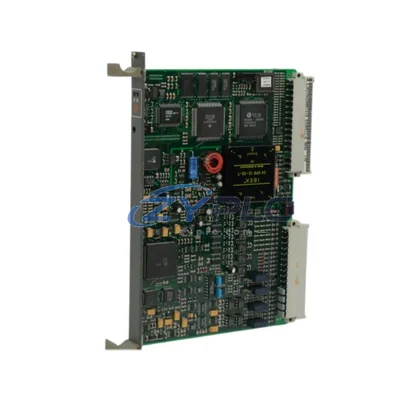
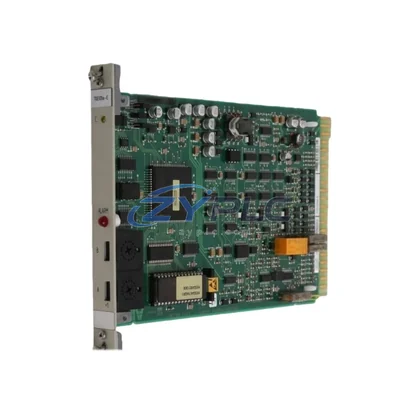
ABB DSTS 103 Drive Control for DSTS Series: Coordinated Control System Integration
The ABB DSTS 103 is a dedicated drive control module engineered for deployment within the ABB DSTS Series distributed control system architecture. Rather than functioning as a standalone component, the DSTS 103 is designed from the ground up to operate as a coherent element within a multi-layer automation hierarchy — coordinating signal flow between the control layer, I/O layer, network layer, power layer, HMI layer, and execution layer. Its role in the system is to provide reliable, deterministic drive control that maintains system consistency across the full operational lifecycle, from initial commissioning through long-term maintenance and eventual expansion.
In modern industrial control architectures, the integrity of the drive control layer is critical to overall system performance. The DSTS 103 addresses this requirement by offering tightly integrated communication with upstream controllers and downstream actuators, ensuring that command signals are transmitted and executed with minimal latency and maximum fidelity. This level of integration is essential in applications where process continuity, redundancy, and rapid fault recovery are non-negotiable engineering requirements.
Product Specification Table
| Parameter |
Specification |
| System Role |
Drive Control Module — DSTS Series DCS Architecture |
| Brand |
ABB |
| Full SKU |
DSTS 103 |
| Series |
DSTS Series |
| Product Type |
DCS Drive Control Module |
| Origin |
Sweden (SE) |
| Electrical Interface |
Compatible with DSTS Series backplane and rack power distribution |
| Communication Capability |
system integration with DSTS Series CPU and I/O modules via internal bus |
| Installation Environment |
Industrial control cabinet; DIN rail or rack-mount per DSTS Series mechanical standard |
| Operating Temperature |
0°C to +55°C (standard industrial range, per ABB DSTS Series specification) |
| Redundancy Support |
Compatible with DSTS Series redundant controller configurations |
| Warranty |
warranty terms confirmed during quotation — all units tested and verified prior to shipment |
System Compatibility Notes
The DSTS 103 achieves its highest value when deployed as part of a fully coordinated ABB DSTS Series control system. At the control layer, the DSTS 103 receives command signals from the DSTS Series central processing unit — typically a DSTS CPU module such as the DSTS 101 or DSTS 102 — which manages the overall process logic and issues drive reference values based on real-time process feedback. The DSTS 103 translates these high-level commands into precise drive control outputs, maintaining synchronization with the CPU’s scan cycle to ensure deterministic response times.
At the I/O layer, the DSTS 103 interfaces with analog and digital I/O modules within the DSTS Series rack, such as the DSTS AI module and DSTS DI/DO module, to receive process variable feedback and issue discrete control signals to field devices. This tight coupling between the drive control module and the I/O layer eliminates the signal conversion delays that can occur in loosely integrated architectures, improving overall system response and reducing the risk of process upsets.
The network layer of the DSTS Series architecture supports communication between the DSTS 103 and higher-level SCADA or DCS supervisory systems via standard industrial protocols. The DSTS Communication Gateway module provides the protocol translation and network isolation required for secure, reliable data exchange between the drive control layer and the plant-wide information network. This system integration capability ensures that the DSTS 103 can be fully monitored and managed from the control room without compromising the real-time performance of the drive control loop.
Power integrity is maintained through the DSTS Series power supply module, which provides regulated, filtered DC power to all modules in the rack, including the DSTS 103. The power supply module supports redundant power input configurations, ensuring that a single power source failure does not interrupt drive control operations. This is particularly important in continuous process industries where unplanned shutdowns carry significant economic and safety consequences.
At the HMI layer, the DSTS 103 drive status and control parameters are accessible through ABB’s DSTS Series operator panel or compatible third-party HMI terminals connected via the system’s communication backbone. Operators can monitor drive speed references, actual output values, fault codes, and diagnostic data in real time, enabling rapid identification and resolution of process anomalies. The DSTS terminal module and associated DSTS backplane provide the physical and electrical interconnection between the DSTS 103 and the rest of the rack assembly, ensuring signal integrity and mechanical stability in demanding industrial environments.
Industrial Application Notes
The ABB DSTS 103 is suited for deployment across a wide range of industrial automation applications where reliable drive control and system-level integration are essential engineering requirements.
In manufacturing and packaging production lines, the DSTS 103 provides precise speed and torque control for conveyor drives, indexing mechanisms, and process rollers, coordinating with upstream PLC or DCS controllers to maintain line synchronization and product quality. Its compatibility with the DSTS Series architecture allows engineering teams to standardize on a single control platform across multiple production lines, reducing spare parts inventory and simplifying maintenance procedures.
In power generation and electrical distribution applications, the DSTS 103 supports drive control for auxiliary systems such as cooling fans, feedwater pumps, and fuel handling conveyors. The module’s redundancy-compatible design allows it to be deployed in hot-standby configurations, ensuring that a single module failure does not interrupt critical plant auxiliary operations.
In petrochemical and refinery process control systems, the DSTS 103 integrates with the DSTS Series DCS architecture to provide closed-loop drive control for compressors, agitators, and transfer pumps. The module’s system integration capability ensures that drive control parameters are continuously synchronized with the process control strategy, enabling smooth transitions between operating modes and rapid response to process disturbances.
In water and wastewater treatment facilities, the DSTS 103 supports variable-speed drive control for pumping stations, aeration blowers, and sludge handling equipment. Its robust industrial design and warranty terms confirmed during quotation provide the reliability and serviceability required for continuous, unattended operation in remote or unmanned installations.
In mining, metallurgy, and mineral processing applications, the DSTS 103 delivers the high-current drive control capability required for heavy-duty conveyors, crushers, and mill drives, while maintaining full integration with the plant-wide DSTS Series control architecture for centralized monitoring and fault management.
Product Compatibility FAQ
Q1: Is the DSTS 103 compatible with existing DSTS Series racks and backplanes, and can it be added to an operational system without a full shutdown?
The DSTS 103 is designed for direct installation into standard DSTS Series racks using the existing backplane and power distribution infrastructure. In most DSTS Series configurations, module replacement or addition can be performed with minimal disruption to the overall system, provided that the affected drive control loop is placed in a safe state prior to module insertion. Engineering teams should consult the DSTS Series system manual for specific hot-swap and live-insertion guidelines applicable to their installed firmware version.
Q2: How does the DSTS 103 support redundant control architectures, and what happens in the event of a module fault?
The DSTS 103 is compatible with DSTS Series redundant controller configurations, where a standby CPU module continuously monitors the primary control path and assumes control in the event of a primary module fault. In redundant deployments, the DSTS 103 maintains its last valid output state during the switchover interval, minimizing process disturbance. Fault diagnostics are reported to the DSTS Series CPU and are accessible via the HMI and SCADA layers for rapid maintenance response. The warranty terms confirmed during quotation covers all manufacturing defects and ensures that replacement units are available to support fast system recovery.
Q3: What long-term maintenance and supply considerations apply to the DSTS 103, and how does ZYPLC support ongoing system availability?
ZYPLC maintains dedicated inventory of the ABB DSTS 103 and related DSTS Series components to support both planned maintenance and emergency replacement requirements. All units are tested and verified prior to shipment and are covered by a warranty terms confirmed during quotation. For engineering teams managing long-term system availability, ZYPLC offers technical consultation on compatible replacement modules, firmware compatibility, and system upgrade pathways to ensure that DSTS Series installations remain operational and supportable throughout their full service life. Contact our technical team at plc.sales@zyplc.com or +86 19859288691 for architecture-specific procurement support.