ABB FS300R12KE3/AGDR-71C Gate Driver for ACS800: Control System Coordination and system integration
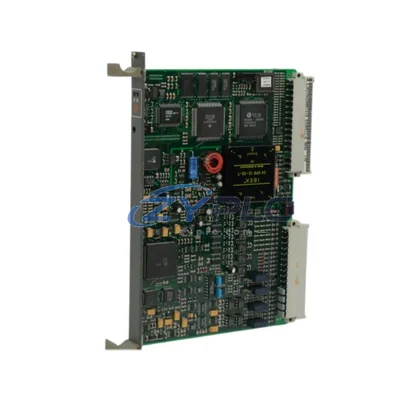
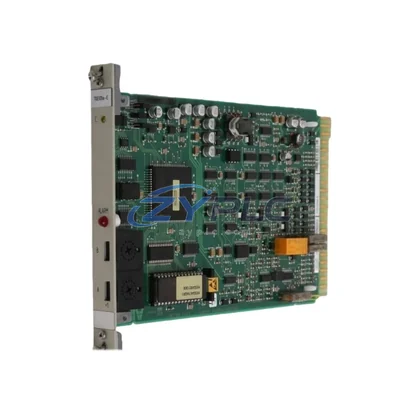
The ABB FS300R12KE3/AGDR-71C is a precision-engineered IGBT gate driver board designed as a system-compatible component within the ACS800 variable frequency drive architecture. Rather than functioning as a standalone replacement part, this module occupies a critical position in the power conversion layer of the drive system, directly governing the switching behavior of the IGBT power module (FS300R12KE3) and ensuring that gate signals are delivered with the timing accuracy, isolation integrity, and fault-response speed that industrial automation demands. Understanding this component requires viewing it through the lens of the complete ACS800 control architecture — from the RMIO control board at the top of the hierarchy down through the AINT interface board, the AGDR gate driver layer, and into the IGBT power stack itself.
Product Specification Table
| Parameter |
Specification |
| System Role |
IGBT Gate Driver — Power Conversion Layer |
| Compatible Drive Platform |
ABB ACS800 Series (Single Drive & Multi-Drive) |
| Matched IGBT Module |
FS300R12KE3 (300A / 1200V, Infineon) |
| Gate Drive Output Voltage |
+15V / -8V (typical bipolar gate drive) |
| Isolation Method |
Optical fiber signal isolation (HFBR interface) |
| Fiber Optic Interface |
Compatible with AINT / APOW fiber link topology |
| Fault Detection |
Desaturation (Vce-sat) protection, short-circuit response <2µs |
| Operating Temperature |
-10°C to +55°C (ambient, forced air cooling) |
| Mounting |
Direct-mount to IGBT module gate terminals, ACS800 power frame |
| Communication Layer |
Fiber optic link to AINT board; no fieldbus dependency |
| Applicable Standards |
IEC 61800-5-1, CE, UL recognized component |
| Warranty |
Warranty and support terms confirmed before quote — covered from date of shipment |
System Compatibility Notes
The ACS800 drive architecture is a layered system in which every component has a defined role, and the FS300R12KE3/AGDR-71C gate driver board is the critical interface between the digital control domain and the high-power switching domain. At the top of the control hierarchy, the RMIO-11 or RMIO-02 main control board executes the drive’s motor control algorithms — DTC (Direct Torque Control) in the case of ACS800 — and generates the PWM switching commands that ultimately reach the AGDR-71C. These commands travel via fiber optic cable to the AINT-02 or AINT-14 interface board, which distributes gate signals to each IGBT phase leg. The AGDR-71C receives these fiber signals, converts them to the bipolar gate drive voltages required by the FS300R12KE3 IGBT power module, and simultaneously monitors the collector-emitter saturation voltage for desaturation fault detection.
In a complete ACS800 power cabinet, the gate driver board works in close coordination with the APOW-01 auxiliary power supply board, which provides the isolated gate drive supply voltages. The AINT board’s fiber topology ensures that the high-voltage power stage is fully isolated from the low-voltage control electronics, a design principle that protects the RDCU-02C or RDCU-12C drive control unit from transient interference generated during IGBT switching. For multi-drive configurations using the ACS800-104 or ACS800-107 cabinet platform, multiple AGDR-71C boards operate in parallel across phase legs, with each board independently reporting fault status back through the fiber link to the AINT layer.
The NPBU-12C or NPBU-42C fieldbus adapter at the network layer communicates drive status and control references via PROFIBUS-DP, Modbus RTU, or DeviceNet to the plant-level PLC or DCS, but the gate driver itself operates entirely within the drive’s internal fiber architecture — insulated from fieldbus noise and immune to network latency. This separation of the gate drive layer from the communication layer is a deliberate architectural choice that ensures switching precision is never compromised by network events. For systems requiring redundancy, the ASTO-0x synchronization board coordinates parallel inverter modules, and the AGDR-71C’s fast fault response (sub-2µs desaturation detection) is essential to protecting the parallel IGBT stack from shoot-through conditions.
At the human-machine interface layer, operators monitor drive health through ABB CDP312R or ACS-CP-C control panels connected to the RMIO board. Fault codes generated by the AGDR-71C — such as overcurrent, short-circuit, or gate supply undervoltage — are propagated up through the AINT board to the RMIO and displayed on the panel, enabling rapid fault diagnosis without requiring physical inspection of the power stage. This system integration of the gate driver into the drive’s diagnostic architecture significantly reduces mean time to repair (MTTR) in production environments.
Industrial Application Notes
The FS300R12KE3/AGDR-71C gate driver board finds application across a wide range of heavy industrial sectors where the ACS800 drive platform is deployed for high-power motor control. In steel and metallurgical plants, ACS800 drives equipped with this gate driver control rolling mill main drives, coiler motors, and cooling fan systems, where the 300A IGBT rating and fast fault response are essential for protecting expensive motor assets during process upsets. In mining and mineral processing, the drive’s robustness under high ambient temperature and dusty conditions — combined with the AGDR-71C’s optical isolation — makes it the preferred solution for conveyor drives, crusher motors, and slurry pump systems.
In the oil and gas and petrochemical sector, ACS800 drives with this gate driver are used in compressor and pump motor control applications where SIL-rated safety systems interface with the drive via hardwired I/O or PROFIBUS, and where the gate driver’s desaturation protection provides an additional layer of hardware-level fault containment independent of the safety PLC. Water and wastewater treatment facilities use ACS800 drives for large centrifugal pump and blower motor control, where energy efficiency and long service intervals are prioritized — the Warranty and support terms confirmed before quote and availability of the AGDR-71C as a stocked replacement component directly supports planned maintenance strategies and minimizes unplanned downtime.
In power generation and utility applications, including wind turbine converters and hydroelectric auxiliary drives, the ACS800 platform’s DTC control and the AGDR-71C’s precise gate timing contribute to grid-quality output and compliance with harmonic distortion standards. Packaging and material handling lines in food, beverage, and consumer goods manufacturing also rely on ACS800 multi-drive systems where the AGDR-71C’s consistent performance across multiple parallel inverter modules ensures synchronized motion control across conveyor, palletizer, and wrapping machine drives.
Product Compatibility FAQ
Q1: Is the AGDR-71C directly interchangeable with other ABB gate driver boards such as the AGDR-61C or AGDR-81C in ACS800 systems?
The AGDR-71C is specifically matched to the FS300R12KE3 IGBT module and the ACS800 power frame geometry. While the AGDR-61C and AGDR-81C share the same fiber optic interface protocol and AINT board compatibility, they are matched to different IGBT current ratings and physical mounting configurations. Substitution requires verification of the IGBT module type, gate drive voltage requirements, and physical mounting compatibility within the specific ACS800 frame size. Always cross-reference the ACS800 hardware manual (3AFE64527592) before substituting gate driver variants.
Q2: What installation and commissioning steps are required when replacing the AGDR-71C in a live ACS800 system?
Replacement requires full de-energization of the drive cabinet, including discharge of the DC bus capacitors to below 50V (verified by measurement) before handling the gate driver board. The fiber optic connections to the AINT board must be carefully re-routed to avoid minimum bend radius violations. After installation, the drive should be powered up in local control mode with the motor disconnected to verify gate drive supply voltages and confirm no fault codes are active on the RMIO control board before reconnecting the load. Commissioning should follow ABB’s ACS800 maintenance manual procedures, and the Warranty and support terms confirmed before quote covers defects in materials and workmanship from the date of shipment under normal operating conditions.
Q3: How does the AGDR-71C support long-term maintenance planning and spare parts inventory strategy for ACS800 fleets?
For facilities operating multiple ACS800 drives of the same frame size, maintaining one or two AGDR-71C boards as critical spares is a standard best practice recommended by drive system engineers. The board’s role as the primary interface between the control electronics and the IGBT power module means that a gate driver failure will take the drive offline immediately, making spare availability directly tied to production continuity. The Warranty and support terms confirmed before quote on supplied boards provides assurance of quality for newly stocked spares, and the board’s compatibility across ACS800 frame sizes using the FS300R12KE3 IGBT module simplifies spare parts rationalization across mixed-vintage drive fleets. system integration with the ACS800’s diagnostic architecture means that fault history stored in the RMIO board can be used to predict gate driver degradation trends before catastrophic failure occurs.