ABB ICFC16L1 Remote I/O Unit for Freelance DCS: and Upstream-Downstream Coordination
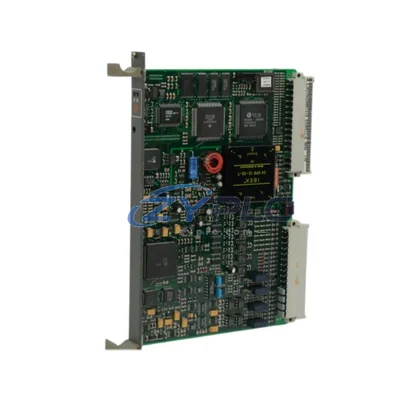
The ABB ICFC16L1 (catalog reference FPR3319102R1162) is a Flat I/O Remote Unit engineered for deployment within the ABB Freelance distributed control system (DCS) platform, specifically the AC700F and AC800F controller families. As a field-level I/O expansion module, the ICFC16L1 occupies a critical position in the I/O layer of a layered automation architecture, bridging the gap between field instrumentation and the central control logic. Its compact flat-panel form factor, deterministic signal handling, and native compatibility with the Freelance communication infrastructure make it an indispensable component for engineers designing scalable, maintainable, and redundancy-capable process control systems.
In modern industrial automation, no module operates in isolation. The ICFC16L1 is designed to function as part of a coherent system architecture where every layer — from the control layer down through the I/O layer, network layer, power layer, HMI layer, and actuator layer — must operate in synchronized coordination. Understanding the ICFC16L1’s role within this hierarchy is essential for system integrators, maintenance engineers, and procurement specialists who demand both performance and long-term supply continuity.
Product Specification Table
| Parameter |
Specification |
| System Role |
Flat I/O Remote Unit — Field I/O Layer (Distributed I/O Node) |
| Compatible Platform |
ABB Freelance DCS (AC700F / AC800F) |
| Catalog / Part Number |
ICFC16L1 / FPR3319102R1162 |
| I/O Channel Count |
16 Channels (Flat I/O configuration) |
| Signal Types |
Digital and Analog I/O (platform-dependent channel assignment) |
| Communication Interface |
Freelance fieldbus / PROFIBUS DP compatible backplane |
| Electrical Supply |
24 VDC nominal (system bus powered) |
| Isolation |
Galvanic channel isolation for signal integrity |
| Mounting |
DIN rail / panel-mount, compact flat-panel form factor |
| Operating Temperature |
0°C to +60°C (standard industrial range) |
| Protection Class |
IP20 (cabinet installation) |
| Certifications |
CE, cULus (ABB standard industrial certifications) |
| Warranty |
Warranty and support terms confirmed before quote — covered by ZYPLC from date of shipment |
System Compatibility Notes
The ICFC16L1 achieves its full potential when integrated within a complete Freelance DCS architecture. At the control layer, the AC800F process controller or the more compact AC700F controller serves as the central processing unit, executing control logic and managing communication with all remote I/O nodes. The ICFC16L1 connects to these controllers via the Freelance fieldbus backbone, ensuring deterministic, low-latency data exchange between field signals and the control program.
For power distribution, the system relies on dedicated 24 VDC power supply modules — such as the ABB ICSK20F1 power supply unit — to deliver stable, regulated voltage to the I/O backplane and connected modules. Proper power architecture is non-negotiable in process environments: voltage fluctuations or power interruptions at the I/O layer can cause false signal states, spurious trips, or data corruption. The ICFC16L1’s bus-powered design simplifies cabinet wiring while maintaining electrical isolation between field circuits and the control bus.
Within the I/O layer itself, the ICFC16L1 works alongside complementary modules such as the ICSI16E1 digital input module and the ICSO08Y1 digital output module, which together provide a complete discrete signal interface for field devices including proximity sensors, limit switches, solenoid valves, and motor contactors. For analog process variables — temperature, pressure, flow, and level — the ICSA08B5 analog input module integrates seamlessly into the same backplane, sharing the same communication infrastructure and engineering tool environment.
At the network layer, communication gateways such as the CI867AK01 PROFIBUS DP master module and the CI868AK01 PROFINET IO adapter extend the Freelance system’s connectivity to third-party field devices, variable frequency drives, and intelligent motor control centers. This protocol flexibility is essential in brownfield installations where legacy PROFIBUS devices must coexist with modern PROFINET-based instrumentation. The ICFC16L1’s native Freelance compatibility ensures that adding remote I/O nodes does not introduce protocol translation overhead or latency penalties.
For human-machine interface requirements, the Freelance platform integrates with ABB’s Panel 800 series operator panels and third-party SCADA systems via OPC-UA or Modbus TCP, providing operators with real-time process visualization, alarm management, and trend analysis. The ICFC16L1’s signal data flows transparently from the field through the I/O layer, across the control network, and into the HMI layer without requiring custom data mapping or intermediate conversion steps.
Redundancy design is a key consideration in high-availability applications. The Freelance platform supports controller redundancy using paired AC800F units with the TB840A termination board, enabling bumpless switchover in the event of a controller fault. At the I/O level, the ICFC16L1 can be deployed in redundant I/O configurations where dual-channel wiring and module-level redundancy protect against single-point failures in critical measurement and control loops. The SM560 communication module further enhances system resilience by providing redundant fieldbus paths between the controller and remote I/O stations.
From a maintenance and lifecycle perspective, the ICFC16L1’s modular design allows individual channel replacement and module hot-swap without requiring a full system shutdown, minimizing planned and unplanned downtime. The PM802F processor module’s diagnostic capabilities provide continuous health monitoring of all connected I/O nodes, enabling predictive maintenance strategies that reduce total cost of ownership over the system’s operational life.
Industrial Application Notes
The ICFC16L1 is deployed across a wide range of process industries where the Freelance DCS platform is the control system of choice. In power generation facilities — including thermal, hydroelectric, and combined-cycle plants — the module handles discrete and analog signals from turbine control systems, generator protection relays, and auxiliary equipment monitoring circuits. Its deterministic communication behavior and galvanic isolation make it suitable for high-noise electrical environments typical of power plant switchgear rooms.
In petrochemical and refinery applications, the ICFC16L1 manages signals from pressure transmitters, temperature sensors, control valves, and emergency shutdown (ESD) systems. The module’s compatibility with SIL-rated system architectures — when combined with appropriate safety-rated controllers and I/O modules — supports functional safety requirements under IEC 61511. Water and wastewater treatment plants use the ICFC16L1 to monitor pump stations, chemical dosing systems, and filtration process variables across geographically distributed remote I/O nodes connected via fiber-optic fieldbus extensions.
In mining and metallurgical processing, the module’s robust industrial design withstands the vibration, dust, and temperature extremes common in ore processing, smelting, and materials handling environments. Packaging and food processing lines benefit from the ICFC16L1’s fast scan cycle and precise timing, which are essential for coordinating high-speed conveyor systems, filling machines, and quality inspection stations.
Product Compatibility FAQ
Q1: Is the ICFC16L1 compatible with both AC700F and AC800F controllers, and can it be mixed with other Freelance I/O modules on the same backplane?
Yes. The ICFC16L1 is designed for native compatibility with the full ABB Freelance DCS controller range, including both the AC700F compact controller and the AC800F high-performance controller. It can be mixed with other Freelance-compatible I/O modules — such as the ICSI16E1, ICSO08Y1, and ICSA08B5 — on the same backplane, provided the total I/O node count and bus load remain within the controller’s supported configuration limits as defined in the Freelance system engineering guidelines.
Q2: What are the installation and commissioning requirements for integrating the ICFC16L1 into an existing Freelance DCS architecture?
Integration requires the ABB Freelance Engineering Tool (FET) for hardware configuration, I/O address assignment, and communication parameter setup. The module must be assigned a unique node address on the Freelance fieldbus, and its channel configuration must match the field wiring termination scheme. No special firmware update is required for standard Freelance platform versions; however, engineers should verify compatibility with the specific controller firmware revision in use. Cabinet installation follows standard DIN rail mounting procedures, and the module’s flat-panel form factor minimizes cabinet space requirements.
Q3: What does the Warranty and support terms confirmed before quote cover, and how does ZYPLC support long-term spare parts availability for the ICFC16L1?
ZYPLC’s Warranty and support terms confirmed before quote covers manufacturing defects, functional failures under normal operating conditions, and DOA (dead-on-arrival) units from the date of shipment. Warranty claims are processed with direct technical support from ZYPLC’s engineering team, with replacement units dispatched within agreed lead times. For long-term maintenance planning, ZYPLC maintains dedicated inventory of Freelance DCS components — including the ICFC16L1 and related modules — to support customers through system lifecycle extensions, plant expansions, and emergency replacement scenarios. system integration support is available to assist engineers in verifying module compatibility within their specific system architecture before purchase.