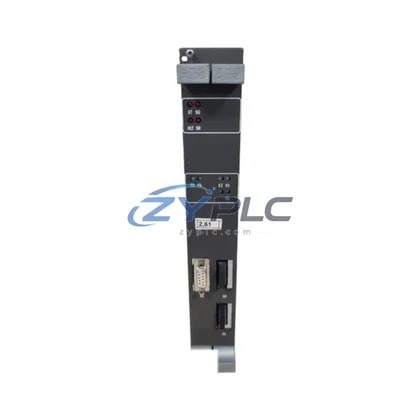
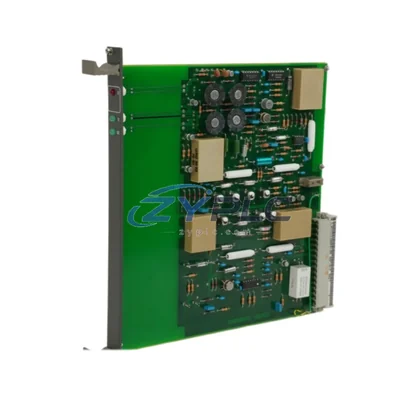
ABB NDBU-95 Communication Module ACS: Precision Drive Control for Optimized Automation
The ABB NDBU-95 is a DDCS (Distributed Drive Control System) fiber-optic branching unit engineered for high-demand industrial environments where drive communication integrity directly impacts energy efficiency and production throughput. Designed to interface seamlessly with ABB’s ACS800 and ACS880 series variable frequency drives, the NDBU-95 enables multi-drive topologies that reduce redundant signaling overhead, minimize latency in control loops, and support real-time condition monitoring across distributed motor systems.
In modern manufacturing, the cost of unplanned downtime and inefficient motor operation can account for 20–30% of total facility energy expenditure. The NDBU-95 addresses this by providing a reliable, low-loss optical communication backbone that keeps drive parameters synchronized, ensures accurate torque and speed feedback, and enables coordinated ramp-up/ramp-down sequences that protect both motors and mechanical loads. When integrated with ABB’s broader ACS drive ecosystem, this module becomes a critical node in an industrial automation system.
Product Specification Table
| Parameter |
Specification / Value |
| SKU |
NDBU-95 |
| Brand |
ABB |
| Series |
ACS800 / ACS880 DDCS |
| Product Category |
DDCS Fiber-Optic Branching Unit / Communication Module |
| Communication Protocol |
DDCS (Distributed Drive Control System) Fiber-Optic |
| Compatible Drive Systems |
ABB ACS800, ACS880, ACS600 (selected variants) |
| Topology Support |
Ring / Star multi-drive configurations |
| Signal Loss Reduction |
Optical fiber eliminates EMI-induced retransmissions |
| Application Environment |
Industrial automation, process control, maintenance planning |
| Maintenance Value |
Reduces drive communication errors → fewer fault trips → lower unplanned downtime from restarts |
| Origin |
Finland |
| Warranty |
warranty terms confirmed during quotation — tested prior to shipment |
System Compatibility and Application
The NDBU-95 functions as the communication hub in a multi-drive system, and its value is best understood within the context of a complete energy-optimized automation architecture. In a typical ACS880 multi-drive installation, the NDBU-95 connects the master drive controller to multiple inverter units via DDCS fiber-optic links. This eliminates the signal degradation and electromagnetic interference that plague copper-based communication in high-power drive cabinets, ensuring that torque references and speed feedback are transmitted with microsecond accuracy.
When paired with the ABB ACS880-07 cabinet drive, the NDBU-95 enables coordinated multi-motor control where energy regenerated by decelerating motors can be redistributed across the DC bus to accelerating motors — a technique known as common DC bus operation that can reduce net operating load by up to 15% in applications with opposing load profiles, such as winding/unwinding lines or crane systems.
For condition monitoring at the drive level, the NDBU-95 integrates with the ABB RDCO-03 DDCS communication adapter, which provides the physical interface between the drive’s control board and the NDBU-95 branching unit. Together, they form the data pathway through which real-time power consumption figures — including kWh counters, power factor readings, and harmonic distortion metrics — are transmitted to the supervisory control layer. This data feeds directly into maintenance planning dashboards built on platforms such as the ABB Ability™ Energy Manager, enabling facility managers to identify inefficient operating points and schedule maintenance before unplanned downtime escalates into equipment failure.
At the I/O and control execution layer, the NDBU-95 works alongside ABB AC500 PLC systems, which handle the high-level sequencing logic for production lines. The AC500’s communication modules, such as the CM579-ETHCAT EtherCAT master, coordinate with the DDCS network to synchronize drive commands with upstream process events — for example, triggering a controlled deceleration ramp on a conveyor drive when a downstream buffer reaches capacity, rather than allowing the motor to run at full speed against a mechanical stop. This kind of coordinated control directly reduces reactive operating load and mechanical wear.
In servo-driven axes where positioning accuracy is critical, the NDBU-95 supports communication with ABB MicroFlex e190 servo drives, enabling synchronized multi-axis motion profiles that minimize overshoot and settling time. Reduced settling time translates directly to shorter cycle times and higher OEE (Overall Equipment Effectiveness) without increasing installed motor power. The ABB ACSM1 motion control drive similarly benefits from the low-latency DDCS link provided by the NDBU-95 in applications requiring tight speed synchronization between multiple axes.
For power quality monitoring upstream of the drive system, the ABB M4M 20 power meter provides harmonic analysis and power factor data at the incoming supply point. When this data is correlated with drive-level consumption figures transmitted via the NDBU-95 network, maintenance engineers can distinguish between drive-induced harmonics and supply-side power quality issues — a distinction that is critical for correctly sizing line reactors and avoiding unnecessary energy losses in the distribution system. The ABB B23 energy meter complements this by providing per-circuit metering at the MCC (Motor Control Center) level, giving a granular view of which drive groups are consuming disproportionate energy during specific production phases.
At the HMI layer, operators interact with the drive system through ABB CP600 control panels, which display real-time drive status, operating load trends, and fault histories. The NDBU-95’s reliable communication backbone ensures that HMI data is always current, preventing operators from making control decisions based on stale or corrupted drive status information — a common cause of unnecessary manual interventions that disrupt production rhythm and waste energy through uncoordinated start/stop cycles.
Maintenance and Replacement Notes
Consider a paper mill application where multiple ACS880 drives control the main line sections — headbox, press section, dryer section, and winder. Each section operates at a different speed, and the speed ratios between sections must be maintained within tight tolerances to prevent web breaks. The NDBU-95 provides the communication infrastructure that allows the master speed reference to propagate to all section drives simultaneously, with the fiber-optic medium ensuring that propagation delay is consistent and immune to the electrical noise generated by the high-power drives themselves.
In this environment, a communication error that causes a single drive to miss a speed reference update can result in a web break — an event that requires the entire line to stop, the broken web to be threaded, and the line to be restarted. Each such event wastes 15–30 minutes of production time and consumes significant energy in the restart sequence. By providing a fault-tolerant, low-error-rate communication path, the NDBU-95 directly reduces the frequency of these events, improving both energy efficiency and production yield.
In a water treatment facility, the NDBU-95 enables coordinated control of pump drives across multiple pumping stations. By synchronizing pump speed references through the DDCS network, the control system can implement pressure-based flow control algorithms that keep system pressure within the optimal range — eliminating the unplanned downtime associated with throttling valves or running pumps at fixed speeds against variable demand. Variable speed pump control enabled by reliable drive communication typically reduces pump operating load by 30–50% compared to fixed-speed operation with valve throttling.
Predictive maintenance is another area where the NDBU-95 delivers measurable operational stability. By maintaining a continuous, high-integrity data link between drives and the supervisory system, the NDBU-95 ensures that drive diagnostic data — including motor thermal model outputs, bearing vibration estimates derived from current signature analysis, and insulation resistance trends — is reliably transmitted for analysis. Early detection of developing motor faults allows maintenance to be scheduled during planned downtime rather than responding to unexpected failures, avoiding the energy-intensive process of emergency restarts and the production losses associated with unplanned stops.
All NDBU-95 units supplied by ZYPLC are tested prior to shipment using drive communication test rigs that verify DDCS link integrity, optical power levels, and branching unit switching behavior under simulated multi-drive load conditions. This pre-shipment testing protocol ensures that units arrive ready for installation without the need for time-consuming on-site commissioning diagnostics. Each unit is covered by a warranty terms confirmed during quotation, providing assurance of long-term reliability in demanding industrial environments. ZYPLC supports RFQ sourcing for NDBU-95 units to support rapid deployment requirements, with typical lead times significantly shorter than OEM channels.
Product Sourcing FAQ
Q1: How does the NDBU-95 contribute to measurable operational stability in an ACS drive system?
The NDBU-95 reduces drive communication errors by using fiber-optic links that are immune to electromagnetic interference from high-power drive switching. Fewer communication errors mean fewer drive fault trips, which eliminates the energy-intensive restart sequences that follow unplanned stops. Additionally, by enabling reliable multi-drive coordination, the NDBU-95 supports advanced control strategies such as common DC bus energy sharing and pressure-optimized pump control that directly reduce net operating load.
Q2: Is the NDBU-95 compatible with both ACS800 and ACS880 drive platforms?
Yes. The NDBU-95 is designed for use with ABB’s DDCS-based drive platforms, including the ACS800 and ACS880 series. It is also compatible with selected ACS600 configurations. For specific compatibility with your drive firmware version and control board type, ZYPLC’s technical team can verify compatibility based on your drive nameplate data and RDCO adapter version prior to order confirmation.
Q3: What is the recommended replacement procedure when substituting an existing NDBU-95 in a running system?
The recommended approach is to perform the replacement during a planned maintenance window. Before removal, document the existing fiber-optic channel assignments and node addresses configured in the branching unit. After installing the replacement NDBU-95, restore the channel configuration and verify DDCS link status on all connected drives before returning the system to automatic operation. ZYPLC can provide configuration guidance based on your system topology if required.
Q4: What does the warranty terms confirmed during quotation cover, and what is the testing process before shipment?
The warranty terms confirmed during quotation covers defects in materials and workmanship under normal operating conditions. Prior to shipment, each NDBU-95 unit undergoes functional testing that verifies DDCS communication link establishment, optical signal integrity across all channels, and branching unit switching behavior. A test report is available upon request. Warranty claims are processed through ZYPLC’s after-sales support team, with replacement units dispatched from stock to minimize system downtime.