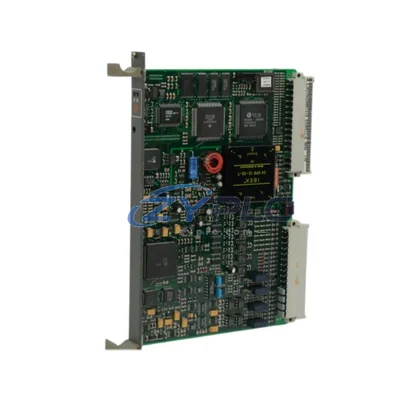
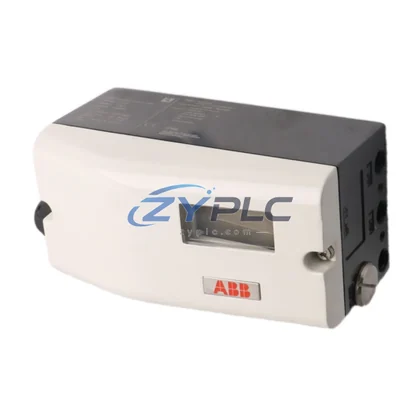
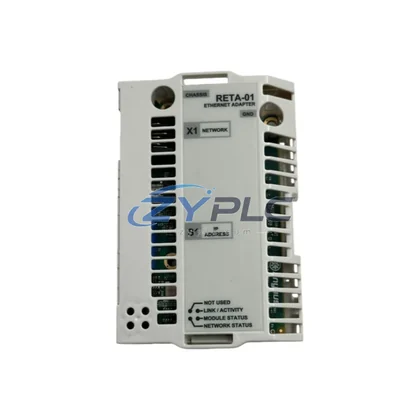
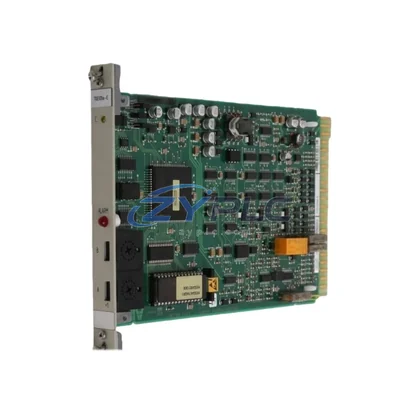
The ABB NKTT01-3 is a precision analog input termination unit engineered for ABB’s NKTT-series Distributed Control System (DCS) platforms. Designed to interface field-level process signals with the DCS controller backbone, the NKTT01-3 plays a critical role in industrial automation systems — enabling accurate signal acquisition, reducing measurement error-driven unplanned downtime, and supporting tighter closed-loop control across demanding industrial environments. Whether deployed in power generation, chemical processing, oil and gas, or heavy manufacturing, this module delivers the signal integrity that underpins every efficiency gain downstream.
Product Specification Table
| Parameter |
Specification |
| SKU / Part Number |
NKTT01-3 |
| Product Category |
Analog Input Termination Module |
| Series |
NKTT (ABB DCS Termination Series) |
| Compatible Systems |
ABB Symphony / Harmony DCS, AC800M, PM866 Controllers |
| Signal Type |
Analog Input (4–20 mA / 0–10 V field signals) |
| Operating Environment |
Industrial Control Panels, DCS Cabinets, Process Automation Racks |
| Maintenance Value |
Eliminates signal drift-induced overcorrection; reduces actuator hunting and unnecessary energy draw |
| Origin |
Germany (DE) |
| Condition |
Tested & Verified |
| Warranty |
warranty terms confirmed during quotation |
System Compatibility and Application
In a fully industrial Automation system, every layer of the control hierarchy contributes to energy efficiency — and the ABB NKTT01-3 anchors the signal acquisition layer with exceptional accuracy. Field transmitters measuring temperature, pressure, flow, and level feed their 4–20 mA signals directly into the NKTT01-3 termination board, which conditions and routes these inputs to the DCS processor without signal degradation.
Paired with the ABB NTAI05 Analog Input Module, the NKTT01-3 forms a high-fidelity measurement chain that feeds real-time process data to the ABB PM866 Controller — the computational core of the Symphony Plus DCS. The PM866 uses this data to execute PID control loops that regulate motor drives, valve actuators, and heating elements with minimal overshoot, directly reducing unplanned downtime from overcorrection cycles.
On the output side, the ABB NTDO02 Digital Output Module and NTDI02 Digital Input Module work alongside the NKTT01-3 to complete the I/O layer, enabling discrete control of pumps, fans, and compressors based on the analog measurements the NKTT01-3 delivers. When the DCS detects that a motor is running above its optimal load point — a condition only visible through accurate analog feedback — it can command the ABB ACS880 Variable Frequency Drive to reduce motor speed, cutting operating load by Actual operating results depend on the installed system, load profile, and commissioning parameters.
Communication between the DCS and plant-level SCADA systems is handled through the ABB CI830 PROFIBUS Communication Interface and TB840A Redundant Processor Module, ensuring that the energy data captured by the NKTT01-3 is available across the entire plant network. The ABB AC800M Controller can aggregate this data for plant-wide energy dashboards, while the ABB AO810 Analog Output Module translates optimized setpoints back into field-level control signals — closing the maintenance planning loop from sensor to actuator.
For facilities running ABB’s NPBA-12 PROFIBUS Adapter on their drive systems, the NKTT01-3’s clean analog inputs ensure that drive feedback signals remain free of noise artifacts that could trigger unnecessary speed corrections — a subtle but measurable source of energy loss in high-cycle production environments.
Maintenance and Replacement Notes
Consider a continuous process plant where dozens of temperature and flow control loops run simultaneously. Without accurate analog input termination, signal noise and ground loops introduce measurement errors that cause PID controllers to hunt — constantly adjusting valve positions and drive speeds in response to phantom process variations. Each unnecessary actuator movement consumes energy, accelerates mechanical wear, and disrupts production rhythm.
The ABB NKTT01-3 eliminates this problem at the source. By providing clean, properly terminated analog signal paths, it ensures that the DCS receives accurate process data on every scan cycle. Controllers respond only to real process changes, not measurement artifacts. The result is a measurable reduction in actuator duty cycles, smoother production line pacing, and lower aggregate operating load across the facility.
In motor-intensive applications — conveyors, mixers, pumps, and compressors — the NKTT01-3’s accurate flow and pressure feedback enables the DCS to maintain optimal operating points for variable frequency drives. Rather than running motors at fixed speeds with throttling valves absorbing excess energy, the system modulates drive output to match actual process demand. This approach, enabled by reliable analog input data from the NKTT01-3, typically reduces motor load by Actual operating results depend on the installed system, load profile, and commissioning parameters.
Predictive maintenance also benefits directly from the NKTT01-3’s signal quality. Vibration transmitters, bearing temperature sensors, and motor current transducers all feed their signals through analog input termination boards. When these signals are clean and accurate, condition monitoring algorithms can detect early-stage equipment degradation weeks before failure — allowing planned maintenance during scheduled downtime rather than emergency repairs that halt production and waste energy through unplanned restarts.
Every unit shipped from our inventory undergoes functional testing and verification before dispatch. With a warranty terms confirmed during quotation and availability confirmed by RFQ availability, the ABB NKTT01-3 supports rapid deployment in both new installations and replacement scenarios, minimizing the downtime cost associated with DCS component failures.
Product Sourcing FAQ
Q: How does the NKTT01-3 contribute to measurable operational stability?
A: By providing accurate, noise-free analog signal termination, the NKTT01-3 ensures DCS controllers receive precise process measurements. This eliminates control loop hunting — a common source of unnecessary actuator movement and unplanned downtime — and enables variable frequency drives to operate at optimal efficiency points based on real process demand rather than worst-case assumptions.
Q: Which ABB DCS systems is the NKTT01-3 compatible with?
A: The NKTT01-3 is designed for ABB’s Symphony and Harmony DCS platforms, and is compatible with the AC800M controller family including the PM866 processor. It interfaces with NTAI05 analog input modules and supports standard 4–20 mA and 0–10 V field signal ranges used across ABB’s industrial automation ecosystem.
Q: Can the NKTT01-3 be used as a direct replacement for a failed unit?
A: Yes. The NKTT01-3 is a drop-in replacement for existing NKTT-series termination boards in compatible DCS cabinets. All units in our inventory are tested and verified prior to shipment, and the warranty terms confirmed during quotation covers functional performance from the date of delivery. We recommend verifying the DCS firmware version and I/O channel configuration before installation.
Q: What is the testing and quality assurance process before shipment?
A: Each ABB NKTT01-3 unit undergoes a multi-point functional test covering signal path continuity, termination resistance verification, and input channel isolation checks. Units that pass all test criteria are tagged, documented, and shipped with a warranty terms confirmed during quotation. Expedited shipping options are available for urgent production line recovery scenarios.