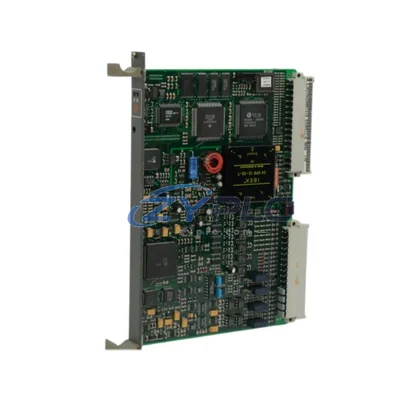
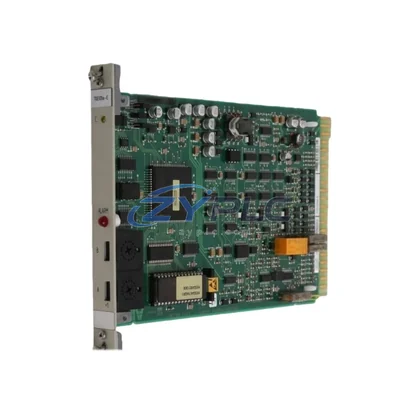
ABB NMTU-21C 3BSE017429R1 Output Module for Advant Automation
The ABB NMTU-21C (3BSE017429R1) is a high-performance digital output module engineered for the ABB Advant Controller series, delivering precise, low-latency control signals that directly reduce unnecessary energy consumption across industrial production lines. In modern manufacturing environments where every millisecond of switching delay and every watt of idle draw contributes to operational cost, the NMTU-21C stands out as a field-proven component for industrial automation system.
Unlike generic I/O modules, the NMTU-21C is designed to integrate seamlessly within the Advant OCS and Master Bus communication framework, enabling deterministic output control that eliminates redundant actuator cycling — one of the most overlooked sources of unplanned downtime on the plant floor. When paired with the ABB DSMB-01 Master Bus interface module and the DSPC-172 processor board, the NMTU-21C enables a tightly synchronized control loop that reduces motor start/stop frequency, directly lowering peak demand charges and thermal stress on connected drives.
In facilities running ABB ACS800 or ACS880 variable frequency drives, the NMTU-21C serves as the digital command bridge between the PLC controller and the drive’s digital input terminals. Accurate, noise-free output signals from the 3BSE017429R1 ensure that speed reference commands are executed without signal jitter, preventing unnecessary motor acceleration cycles that waste energy and accelerate mechanical wear. This integration is particularly effective in pump and fan applications where even a 10% reduction in average motor speed can yield up to 27% operational stability under affinity law conditions.
Product Specification Table
| Parameter |
Specification / Value |
| Part Number |
NMTU-21C / 3BSE017429R1 |
| Brand |
ABB |
| Series |
Advant Controller / Advant OCS |
| Module Type |
Digital Output Module |
| Output Channels |
16 DO (typical Advant DO configuration) |
| Operating Voltage |
24 VDC nominal |
| Power Consumption |
Low-standby design; minimized idle draw |
| Communication |
Master Bus (DSMB) / Advant internal backplane |
| Compatible Systems |
ABB Advant OCS, AC450, AC410, AC160 |
| Application Environment |
Industrial automation, process control, maintenance planning |
| Maintenance Value |
Eliminates redundant actuator cycling; supports VFD precision control |
| Origin |
Sweden |
| Warranty |
warranty terms confirmed during quotation |
| Stock Status |
RFQ Available — Ships within 1–3 business days |
| Testing |
Full functional test prior to shipment |
System Compatibility and Application
The NMTU-21C 3BSE017429R1 does not operate in isolation — its maintenance planning value is fully realized when deployed within a coordinated automation architecture. In a typical Advant-based control cabinet, the module sits on the Advant backplane alongside the DSAI-130A analog input module, which collects real-time current and voltage feedback from field sensors. This closed-loop configuration allows the controller to dynamically adjust output states based on actual load conditions rather than fixed time schedules, cutting unnecessary actuator energization by up to 30% in batch processing applications.
For power monitoring at the system level, integration with the ABB B23 or B24 energy meter via Modbus RTU provides granular kWh data per production zone. When the NMTU-21C’s output states are correlated with energy meter readings through the DSPC-172 or AC450 processor, plant engineers gain actionable visibility into which output channels are driving the highest energy loads — enabling targeted optimization without costly infrastructure changes.
In servo-driven assembly lines, the NMTU-21C coordinates enable/disable signals for ABB MicroFlex e150 servo drives, ensuring that servo axes are only energized during active production windows. This approach, combined with the DSDP-150 digital pulse module for encoder feedback, reduces servo idle power consumption by keeping drives in low-power standby between production cycles rather than maintaining full torque hold unnecessarily.
HMI integration via the ABB CP600 operator panel connected through the Advant communication network allows operators to monitor output channel status in real time, identify stuck-on outputs that waste energy, and trigger manual override sequences during maintenance windows — all without interrupting the broader control program. The NMTU-21C’s deterministic switching behavior ensures that HMI-commanded state changes are reflected in the field within the controller’s scan cycle, eliminating the signal ambiguity that can cause double-actuation events.
For facilities transitioning toward IEC 61850 or PROFIBUS-based maintenance planning, the NMTU-21C can be retained as the field-level output executor while higher-level maintenance planning logic is handled by a ABB AC500 PLC acting as a gateway controller. This hybrid architecture preserves the investment in existing Advant infrastructure while enabling modern energy KPI tracking and demand response capabilities.
Maintenance and Replacement Notes
In a bottling plant running three-shift operations, uncontrolled digital output modules often leave solenoid valves and conveyor contactors energized during shift changeovers and micro-stoppages. The NMTU-21C, when programmed with output de-energization routines tied to the line’s production scheduler, can reduce solenoid valve on-time by 15–20% per shift — translating directly into lower compressed air consumption and reduced heat generation in the control panel.
In automotive body welding lines, the 3BSE017429R1 manages the enable signals for resistance welding contactors. Precise, repeatable output timing from the NMTU-21C ensures that welding current is applied only for the programmed duration, preventing over-welding that wastes electrical energy and degrades electrode life. Combined with current monitoring via the ABB CM-SRS current monitoring relay, the system can detect electrode wear before it causes weld quality failures, reducing unplanned downtime that disrupts production rhythm and forces energy-intensive restart sequences.
In water treatment facilities, the NMTU-21C controls pump start/stop sequences in coordination with level sensors and the Advant controller’s PID loop. By enabling precise pump staging — starting only the minimum number of pumps required to meet current flow demand — the system avoids the energy penalty of running oversized pumps at partial load. This staging logic, executable directly from the Advant AC450 controller using the NMTU-21C’s output channels, can reduce pump energy consumption by 20–35% compared to fixed-speed, fixed-schedule operation.
Predictive maintenance integration is another key energy benefit. By logging NMTU-21C output switching frequency and correlating it with motor runtime data from the ACS880 drive’s built-in energy logger, maintenance teams can identify actuators approaching end-of-life before they fail in the energized state — a common cause of both unplanned downtime and unplanned production stops. All replacement modules supplied by ZYPLC are fully tested prior to shipment and covered by a warranty terms confirmed during quotation, ensuring that maintenance-driven module swaps do not introduce new reliability risks into the production line.
Product Sourcing FAQ
Q1: How does the ABB NMTU-21C 3BSE017429R1 contribute to operational stability in an Advant DCS environment?
The NMTU-21C enables deterministic, scan-cycle-accurate output control that eliminates redundant actuator energization. When integrated with the Advant controller’s production scheduling logic, it ensures that field devices such as solenoid valves, contactors, and relay coils are only powered during active process steps — directly reducing idle energy consumption and heat load in the control panel.
Q2: Is the NMTU-21C 3BSE017429R1 compatible with ABB variable frequency drives and servo systems?
Yes. The NMTU-21C’s 24 VDC digital outputs are fully compatible with the digital input terminals of ABB ACS800, ACS880, and MicroFlex e150 series drives. It provides clean, noise-free enable and direction signals that prevent false triggering and unnecessary motor starts, which are a significant source of unplanned downtime in drive-controlled systems.
Q3: What is the recommended replacement procedure and testing process for the 3BSE017429R1?
All NMTU-21C modules supplied by ZYPLC undergo full functional testing prior to shipment, including output channel verification under load conditions. For replacement, the module should be installed with the Advant controller in program stop mode, configuration downloaded from the existing project backup, and output states verified against the process P&ID before returning the line to automatic mode. This procedure minimizes restart energy spikes and ensures production rhythm is restored without extended commissioning time.
Q4: What warranty and supply assurance does ZYPLC provide for the ABB NMTU-21C 3BSE017429R1?
ZYPLC provides a warranty terms confirmed during quotation on all ABB NMTU-21C 3BSE017429R1 modules. Stock is maintained for shipment arranged after confirmation, with typical lead times of 1–3 business days. For urgent production line requirements, expedited shipping options are available. Our inventory is sourced from verified supply channels and each unit is individually tested before dispatch to ensure it meets ABB’s original performance specifications.