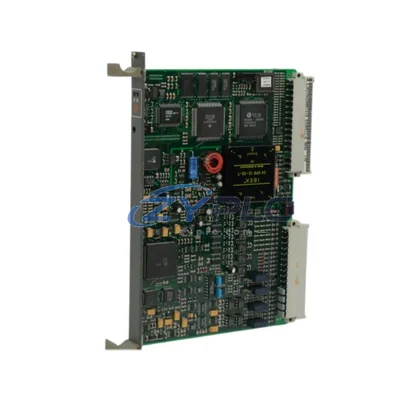
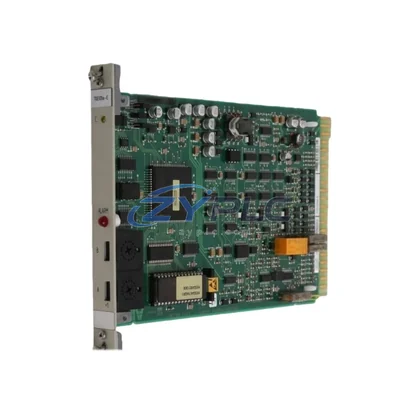
ABB NTDI01-A Digital I/O Module for Advant MOD 300 Automation
In modern industrial facilities where every kilowatt-hour counts, the ABB NTDI01-A stands out as a precision-engineered digital I/O termination unit purpose-built for the Advant and MOD 300 Distributed Control System (DCS) platforms. Rather than functioning as a passive signal conduit, the NTDI01-A plays an active role in reducing unnecessary energy draw across the I/O layer — the often-overlooked segment of a control architecture that, when poorly managed, contributes to measurable power inefficiency and increased heat dissipation in control cabinets.
The NTDI01-A interfaces directly with the Advant MOD 300 controller bus, enabling deterministic digital signal acquisition and output with minimal latency. This tight integration with the DCS backbone means that field devices — motors, actuators, solenoid valves, and discrete sensors — receive precisely timed commands without the signal overhead that plagues loosely coupled I/O architectures. In high-cycle production environments such as automotive assembly, chemical batch processing, and paper mill operations, this timing precision directly translates into reduced idle time, fewer false triggers, and lower cumulative energy consumption per production cycle.
Product Specification Table
| Parameter |
Specification / Value |
| Product SKU |
NTDI01-A |
| Brand |
ABB |
| Series |
Advant / MOD 300 DCS |
| Product Type |
Digital I/O Termination Module |
| Origin |
Germany (DE) |
| Operating Voltage |
24 VDC (nominal) |
| Power Consumption |
Low-draw design; optimized for cabinet thermal efficiency |
| Signal Channels |
Digital Input / Output (DI/DO) termination |
| Compatible Systems |
ABB Advant OCS, MOD 300, AC 450, AC 460 DCS platforms |
| Application Environment |
Process automation, maintenance planning, discrete manufacturing |
| Energy Saving Value |
Reduces I/O layer idle draw; supports demand-based signal cycling |
| Warranty |
warranty terms confirmed during quotation — tested and verified before shipment |
System Compatibility and Application
The NTDI01-A does not operate in isolation. Its maintenance planning value is fully realized when deployed within a coordinated Advant MOD 300 automation architecture. In a typical energy-conscious plant layout, the NTDI01-A termination unit connects upstream to the NTDO01-A digital output module, which governs actuator switching sequences. By synchronizing output timing through the DCS scan cycle, the NTDO01-A and NTDI01-A together eliminate redundant switching events that would otherwise generate reactive power spikes on the field bus.
On the analog side, the NTAI05 analog input module feeds real-time process variables — temperature, pressure, flow — into the MOD 300 controller. When these values are correlated with the digital states managed by the NTDI01-A, the control system can implement load-shedding logic: automatically reducing motor speed commands issued through the ABB ACS800 variable frequency drive when process demand drops below threshold. This closed-loop interaction between the I/O layer and the drive layer is where measurable operational stability are achieved in practice.
For servo-driven axes on packaging or CNC lines, the NTDI01-A provides the discrete handshake signals that coordinate motion sequencing with the ABB MicroFlex e190 servo drive. Precise start/stop signaling prevents unnecessary servo holding torque during inter-cycle pauses — a common source of wasted energy in high-speed pick-and-place applications.
Power quality monitoring is handled upstream by the ABB M2M energy meter integrated into the plant’s SCADA layer. The digital status outputs from the NTDI01-A feed alarm and interlock states into this monitoring chain, enabling the maintenance planning system to correlate equipment state changes with power consumption spikes. This data-driven approach supports predictive maintenance scheduling: when the NTDI01-A reports abnormal digital state cycling frequencies, it signals potential mechanical wear in field devices before a failure-induced production stop occurs.
Communication between the MOD 300 controller and higher-level systems is managed through the NKTU01 communication unit, which supports PROFIBUS and Modbus protocols. The NTDI01-A’s signal data, once processed by the controller, can be transmitted via the NKTU01 to MES or ERP platforms for production efficiency reporting. Complementing this, the NKMP01 module provides the master communication interface that coordinates multi-node data exchange across the Advant network, ensuring that I/O states from the NTDI01-A are available system-wide without polling delays that would otherwise inflate CPU load and energy use.
For cabinet power distribution, the NDBU95 branching unit manages the internal bus topology of the Advant I/O rack. Proper bus loading — which the NTDI01-A is designed to minimize — reduces the thermal output of the NDBU95 and extends the service life of adjacent modules including the NTCL01 communication link module. Reduced thermal load in the control cabinet directly lowers the duty cycle of cabinet cooling systems, contributing to facility-level operational stability that compound over time.
Maintenance and Replacement Notes
Consider a continuous process plant running three shifts with 200+ field devices connected across multiple Advant MOD 300 I/O racks. Without properly terminated and efficiently managed digital I/O, signal noise and ground loops introduce spurious interrupts that force the DCS to execute unnecessary control actions — each one consuming CPU cycles and triggering field device responses that draw power. The NTDI01-A’s robust termination design eliminates this noise at the source, reducing false-positive digital events by providing clean, well-defined signal thresholds.
In motor control applications, the NTDI01-A manages the discrete interlock chain that governs motor start permissives. By ensuring that motors only start when all process conditions are genuinely met — rather than responding to noisy or bouncing digital inputs — the module prevents the high inrush current events associated with unnecessary motor starts. In facilities with dozens of large motors, eliminating even two or three unnecessary starts per shift can produce significant reductions in peak demand charges on the electricity bill.
Downtime reduction is another dimension of maintenance planning. When a production line stops unexpectedly, the energy consumed during restart — bringing conveyors, pumps, and drives back to operating speed — often exceeds the energy that would have been used during normal continuous operation. The NTDI01-A’s reliable signal integrity reduces nuisance trips caused by I/O faults, keeping lines running and avoiding the energy-intensive restart cycle.
For predictive maintenance programs, the module’s consistent digital state reporting provides the baseline data needed to detect degradation trends in field devices. A valve that begins to show slow response times will produce characteristic digital state transition patterns that, when logged over time, allow maintenance teams to schedule replacement during planned downtime rather than reacting to failures. This shift from reactive to predictive maintenance reduces both unplanned downtime from degraded equipment and the operational disruption of unplanned stops.
Every NTDI01-A unit supplied by ZYPLC undergoes functional testing prior to shipment, verifying channel integrity, signal threshold accuracy, and bus communication compliance. This pre-shipment validation ensures that the module performs to specification from day one, avoiding the energy and productivity losses associated with commissioning a faulty I/O module in a live production environment.
Product Sourcing FAQ
Q1: How does the NTDI01-A contribute to measurable operational stability in an Advant MOD 300 system?
The NTDI01-A reduces unplanned downtime at the I/O layer by providing clean digital signal termination that eliminates spurious switching events. Fewer false triggers mean fewer unnecessary actuator and motor operations, directly reducing energy consumption per production cycle. When integrated with variable frequency drives such as the ABB ACS800, the precise digital handshaking from the NTDI01-A enables demand-responsive speed control that further cuts energy use during low-load periods.
Q2: Is the NTDI01-A compatible with both Advant OCS and MOD 300 platforms?
Yes. The NTDI01-A is designed for use across the ABB Advant family including the Advant OCS, MOD 300, AC 450, and AC 460 DCS platforms. It interfaces with the standard Advant I/O bus and is compatible with the NDBU95 branching unit and NKTU01 communication modules used in these systems. If you are migrating from an older MOD 300 rack to a newer Advant configuration, the NTDI01-A can typically be reused without modification.
Q3: What is the recommended replacement or upgrade path if the NTDI01-A is end-of-life in my system?
For systems where the NTDI01-A is being phased out, ABB’s 800xA migration path offers compatible I/O modules that maintain signal compatibility with existing field wiring. However, for facilities that wish to maintain their current Advant MOD 300 infrastructure, ZYPLC supports RFQ sourcing for tested NTDI01-A units, allowing direct like-for-like replacement without the cost and risk of a full DCS migration. Contact our technical team to confirm compatibility with your specific rack and controller revision.
Q4: What does the warranty terms confirmed during quotation cover, and what is the testing process before shipment?
Every NTDI01-A supplied by ZYPLC is subject to pre-shipment functional testing that verifies digital channel operation, bus communication integrity, and signal threshold accuracy. The warranty terms confirmed during quotation covers defects in materials and workmanship under normal operating conditions. If a unit fails within the warranty period, ZYPLC will provide a replacement or repair at no additional cost. Our testing process ensures that only verified, fully functional modules leave our facility, minimizing commissioning risk and protecting your production uptime.