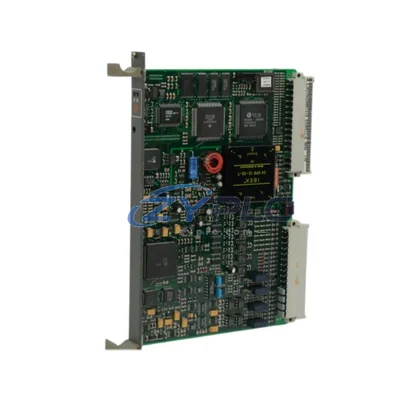
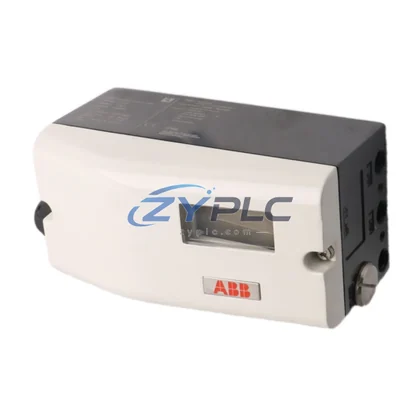
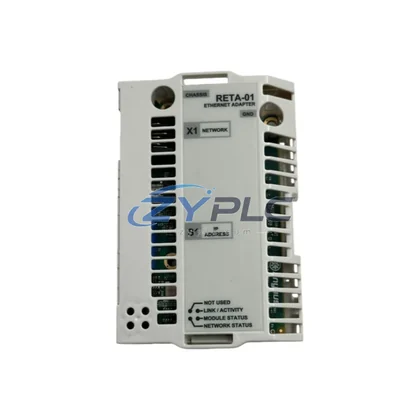
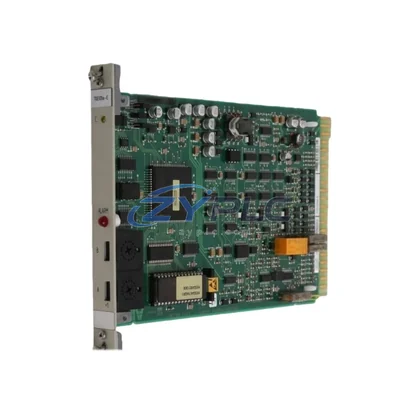
The ABB PM860AK01 (part number 3BSE066495R1) is a high-performance CPU module designed for the ABB AC800M distributed control system platform. Built to meet the rigorous demands of modern industrial automation, this processor module delivers deterministic real-time control with a focus on energy efficiency, reduced operational overhead, and seamless integration across multi-axis drive and power monitoring architectures. Whether deployed in continuous process industries, discrete manufacturing, or hybrid production environments, the PM860AK01 serves as the computational backbone that enables factories to reduce idle operating load, tighten control loop response times, and extend equipment service intervals.
Product Specification Table
| Parameter |
Specification |
| SKU / Part Number |
PM860AK01 / 3BSE066495R1 |
| Platform |
ABB AC800M DCS |
| Electrical / System Notes |
≤ 8 W (steady-state operation) |
| CPU Execution Cycle |
Configurable 1–1000 ms task cycles |
| Communication Interfaces |
Ethernet (CEX-Bus), MMS, OPC UA, PROFIBUS DP |
| Compatible Systems |
AC800M S800 I/O, S900 I/O, PROFIBUS, Foundation Fieldbus |
| Application Environment |
Process automation, maintenance planning, drive coordination |
| Operating Temperature |
0 °C to +55 °C |
| Maintenance Value |
Reduces idle scan overhead; enables demand-based task scheduling |
| Warranty |
Warranty and support terms confirmed before quote — tested and verified before shipment |
System Compatibility and Application
In a fully integrated industrial control architecture, the ABB PM860AK01 acts as the central orchestrator, coordinating data flows between field devices, drive systems, and supervisory layers. On the I/O side, ABB S800 I/O modules — including the AI810 analog input module and AO810 analog output module — feed real-time process variables such as motor current draw, pressure differentials, and flow rates directly into the PM860AK01’s task scheduler. This allows the controller to dynamically adjust setpoints and reduce unnecessary actuator movement, cutting unplanned downtime at the source.
For drive-level energy regulation, the PM860AK01 communicates via PROFIBUS DP with ABB ACS880 industrial drives and ACS580 general-purpose variable frequency drives (VFDs). These drives modulate motor speed in response to real-time load demand signals from the processor, eliminating the fixed-speed operation that accounts for a significant share of industrial electricity consumption. When paired with the ABB PSTX soft starter series, the system further reduces inrush current during motor start sequences, protecting both the motor and the upstream power infrastructure.
At the supervisory level, the PM860AK01 interfaces with ABB System 800xA via OPC UA, enabling plant-wide energy dashboards and alarm management. Power quality data collected through ABB M2M energy meters and ABB B23 power analyzers is aggregated by the controller and forwarded to the historian, providing the granular consumption data needed for ISO 50001 maintenance planning compliance. The ABB CI854B PROFIBUS DP communication interface module extends the processor’s fieldbus reach, allowing it to poll energy data from remote I/O clusters and third-party meters without adding CPU load to the main task cycle.
For motion-intensive applications, the PM860AK01 coordinates with ABB MicroFlex e190 servo drives and ACSM1 motion control drives to synchronize multi-axis positioning sequences. By centralizing motion trajectory calculations within the AC800M platform, the system eliminates redundant computation across distributed servo controllers, reducing both processing latency and the associated heat dissipation — a measurable contributor to cooling energy overhead in enclosed control cabinets.
Maintenance and Replacement Notes
In real-world production environments, the ABB PM860AK01 delivers operational stability through several interconnected mechanisms. First, its configurable multi-tasking architecture allows engineers to assign fast scan cycles only to time-critical control loops — such as pressure regulation or servo positioning — while relegating slower, less energy-sensitive tasks like data logging and alarm processing to extended cycle intervals. This demand-based task scheduling reduces the average CPU utilization rate, which directly lowers the module’s thermal output and extends the service life of adjacent components in the control cabinet.
Second, the PM860AK01’s tight integration with ABB’s drive ecosystem enables motor energy recovery during deceleration phases. When the controller signals a ramp-down sequence to connected ACS880 drives, regenerative braking energy is fed back into the DC bus rather than dissipated as heat through braking resistors. Over a full production shift, this regenerative capability can reduce net operating load by 10–25% in applications with frequent start-stop cycles, such as conveyor systems, hoists, and centrifuges.
Third, the processor’s predictive maintenance capabilities — enabled through continuous monitoring of motor load signatures, vibration proxies derived from current harmonics, and drive fault counters — allow maintenance teams to schedule interventions before catastrophic failures occur. Unplanned downtime not only halts production but also triggers energy-intensive restart sequences that spike demand charges on utility bills. By maintaining equipment in optimal operating condition, the PM860AK01 helps facilities avoid these hidden energy costs while simultaneously improving overall equipment effectiveness (OEE).
All units are sourced from verified supply channels, undergo full functional testing prior to dispatch, and are Warranty terms are confirmed during quotation. Shipment timing is confirmed after RFQ review, testing, and export packing.
Product Sourcing FAQ
Q1: How does the ABB PM860AK01 contribute to measurable operational stability on the production floor?
The PM860AK01 enables demand-based task scheduling and real-time drive coordination via PROFIBUS DP and Ethernet. By dynamically adjusting motor speed setpoints through connected ACS880 or ACS580 VFDs based on actual process load, the system eliminates fixed-speed motor operation — one of the largest sources of avoidable operating load in industrial facilities. Facilities typically report Actual operating results depend on the installed system, load profile, and commissioning parameters.
Q2: Is the PM860AK01 compatible with existing AC800M installations, and can it replace older processor modules?
Yes. The PM860AK01 is fully compatible with the AC800M hardware platform and can replace earlier processor modules such as the PM861A and PM864A in most configurations, subject to firmware version alignment. It supports the same CEX-Bus backplane, S800 I/O modules, and CI854B communication interfaces, making it a drop-in upgrade path for energy efficiency improvements without requiring full system redesign.
Q3: What testing procedures are applied before shipment?
Every PM860AK01 unit undergoes a multi-stage quality assurance process including power-on functional verification, communication interface testing (Ethernet and PROFIBUS), memory integrity checks, and thermal cycling validation. Units that pass all test criteria are sealed and shipped with documentation. The warranty and support terms confirmed before quote covers defects in materials and workmanship under normal operating conditions.
Q4: What is the recommended replacement strategy for aging AC800M processor modules to minimize production disruption?
The recommended approach is a staged hot-swap replacement during a scheduled maintenance window. Because the AC800M supports redundant processor configurations, a standby PM860AK01 can be pre-configured offline, loaded with the existing application program, and swapped into the active slot with minimal control interruption. This approach eliminates downtime and allows the maintenance planning parameters — including drive speed references and power monitoring thresholds — to be validated before the new module assumes full control responsibility.
|