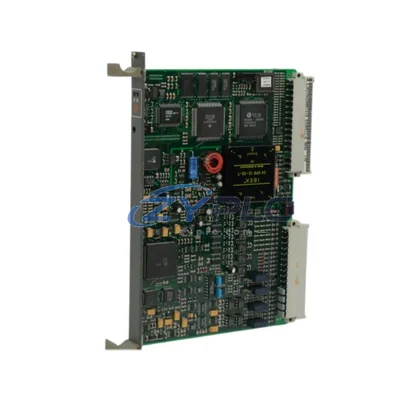
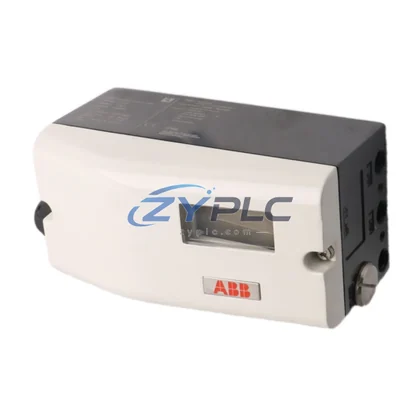
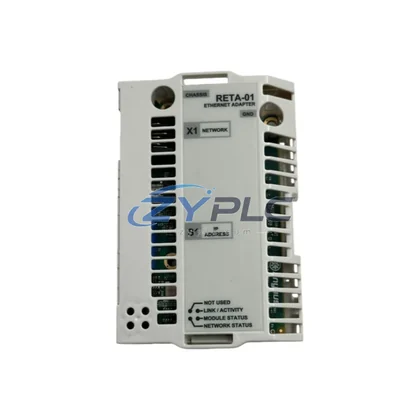
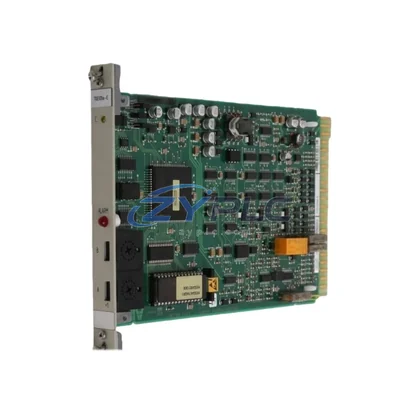
ABB PM866AK01 3BSE076939R1 Processor for AC 800M Automation
The ABB PM866AK01 (3BSE076939R1) is a high-performance central processing unit designed for the ABB AC 800M Distributed Control System (DCS) platform. In modern industrial facilities where equipment uptime and replacement lead time directly affect production continuity, the PM866AK01 serves as the intelligent core that coordinates maintenance-focused control strategies across the entire production line. By executing real-time process logic with minimal latency, this processor module enables factories to reduce unnecessary motor run time, eliminate idle-state unplanned downtime, and synchronize multi-axis drive operations for peak efficiency.
Unlike generic controllers, the PM866AK01 is engineered to handle the computational demands of closed-loop maintenance planning — from coordinating variable frequency drives (VFDs) such as the ABB ACS880 series to managing feedback loops from power monitoring units like the ABB B23 energy meter. Its deterministic scan cycle ensures that control commands reach actuators and drives within the required time window, directly supporting production line rhythm optimization and reducing the mechanical stress that leads to unplanned downtime.
Product Specification Table
| Parameter |
Specification / Value |
| SKU |
PM866AK01 / 3BSE076939R1 |
| Brand |
ABB |
| Series |
AC 800M |
| Product Type |
Processor Module (CPU) |
| Processor Speed |
High-speed real-time execution |
| Communication Interfaces |
Ethernet, PROFIBUS, Modbus, OPC UA |
| Power Consumption |
Low-power design, optimized for 24 VDC backplane |
| Operating Efficiency |
Deterministic scan cycle for real-time energy control |
| Compatible Systems |
ABB AC 800M DCS, Symphony Plus, 800xA |
| Application Environment |
Process industries, power generation, oil & gas, water treatment, manufacturing |
| Maintenance Value |
Reduces idle motor runtime, synchronizes VFD control, minimizes reactive power losses |
| Origin |
Sweden |
| Warranty |
warranty terms confirmed during quotation |
| Stock Status |
RFQ Available — Ships within 1–3 business days |
| Testing |
Full functional test before shipment |
System Compatibility and Application
The PM866AK01 operates at the center of a tightly integrated automation architecture. In a typical energy-optimized plant layout, it communicates directly with the ABB CI854A PROFIBUS DP communication interface to exchange real-time data with field devices, including smart motor starters and distributed I/O nodes. This communication backbone allows the processor to dynamically adjust setpoints on ABB ACS880 variable frequency drives, reducing motor speed during low-demand periods and recovering energy that would otherwise be lost as heat.
On the I/O side, the PM866AK01 interfaces with ABB AI810 analog input modules and ABB DI810 digital input modules to collect live sensor data — current draw, temperature, pressure, and flow — feeding this information into energy balance calculations executed within the controller’s application program. When paired with the ABB B23 112-100 energy meter, the system gains granular visibility into per-circuit power consumption, enabling operators to identify energy hotspots and schedule load-shedding routines automatically.
For servo-driven axes requiring precise torque and position control, the PM866AK01 coordinates with ABB MicroFlex e190 servo drives via EtherNet/IP, ensuring that acceleration and deceleration ramps are optimized to minimize peak current draw — a key factor in reducing demand charges on industrial electricity tariffs. The ABB CP635 HMI panel provides operators with a real-time energy dashboard, displaying kWh consumption trends, drive efficiency ratings, and alarm states that indicate abnormal energy usage patterns.
At the system level, the PM866AK01 integrates seamlessly with ABB System 800xA for plant-wide maintenance planning, enabling centralized reporting, historian logging of energy KPIs, and automated demand response workflows. The ABB TB820V2 ModuleBus modem extends the controller’s reach to remote I/O clusters, reducing the need for long cable runs and the associated signal losses that can degrade control accuracy in large facilities.
Maintenance and Replacement Notes
In continuous process industries such as pulp and paper, chemical processing, and water treatment, the PM866AK01 delivers measurable operational stability by enabling model-predictive control (MPC) strategies that anticipate load changes before they occur. Rather than reacting to deviations after the fact, the processor executes feedforward algorithms that pre-adjust drive speeds and valve positions, keeping the process within its optimal energy operating window at all times.
For batch manufacturing environments, the PM866AK01 supports production line rhythm optimization by synchronizing conveyor speeds, robotic arm cycles, and packaging machine timing through a unified control program. This eliminates the micro-stoppages and speed mismatches that cause energy spikes and mechanical wear. Maintenance teams benefit from the processor’s ability to log runtime hours, cycle counts, and fault events for each connected drive and motor starter, enabling predictive maintenance schedules that prevent costly unplanned shutdowns.
The module’s redundancy-ready architecture supports hot-standby configurations, ensuring that maintenance planning programs continue running without interruption even during controller maintenance windows. This is particularly valuable in facilities where stopping the control system even briefly results in significant unplanned downtime from process restarts and equipment re-homing cycles.
Every PM866AK01 unit supplied by ZYPLC undergoes a comprehensive functional test protocol prior to shipment, verifying communication integrity, I/O response times, and program execution accuracy. Units are sourced from verified supply channels, held in climate-controlled inventory, and shipped with full traceability documentation. A warranty terms confirmed during quotation covers all supplied modules against defects in materials and workmanship.
Product Sourcing FAQ
Q1: How does the PM866AK01 contribute to reducing factory operating load?
The PM866AK01 executes real-time control logic that dynamically adjusts drive speeds, motor start/stop sequences, and process setpoints based on actual demand. By eliminating unnecessary motor runtime and synchronizing equipment cycles, it directly reduces kWh consumption without sacrificing throughput.
Q2: Is the PM866AK01 compatible with existing ABB AC 800M systems?
Yes. The PM866AK01 is fully compatible with the ABB AC 800M platform and integrates with existing CI854A communication interfaces, AI/DI/DO I/O modules, and System 800xA supervisory software. No hardware modifications to the existing rack or backplane are required in most upgrade scenarios.
Q3: What is the recommended replacement or upgrade path for older AC 800M processors?
The PM866AK01 is a direct upgrade for earlier AC 800M CPU variants. It offers higher processing capacity and improved communication throughput, making it suitable for facilities expanding their condition monitoring scope or adding new drive control loops. ZYPLC can advise on compatibility with your specific firmware and I/O configuration.
Q4: What does the warranty terms confirmed during quotation cover, and what is the testing process before shipment?
All PM866AK01 units are fully function-tested before dispatch, including communication port verification, program load/run testing, and I/O channel checks. The warranty terms confirmed during quotation covers hardware defects and operational failures under normal industrial use conditions. Replacement or repair is arranged promptly to minimize any impact on your production schedule.