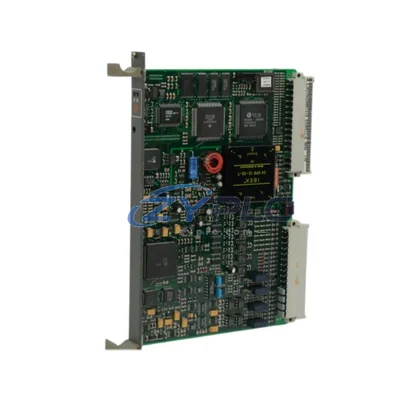
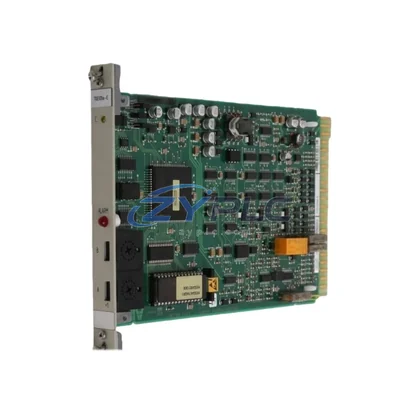
ABB PPC902CE101 Processor Module for AC800M Automation
In modern industrial facilities where equipment uptime and replacement lead time directly affect production continuity, the ABB PPC902CE101 (3BHE028959R0101) processor module delivers the computational backbone that keeps AC800M-based distributed control systems running at peak efficiency. Designed for demanding process automation environments — from power generation and chemical processing to pulp and paper and oil & gas — this processor module enables precise, low-latency control execution that eliminates unnecessary energy consumption caused by control lag, over-cycling, and uncoordinated actuator response.
Unlike generic controllers, the PPC902CE101 is engineered to operate within ABB’s AC800M architecture, where every scan cycle, every I/O poll, and every communication handshake is optimized to reduce CPU overhead and minimize idle power draw. When paired with the PM891 processor module in redundant configurations, the system maintains continuous control without the energy spikes associated with cold-start failovers. The result is a control platform that not only protects production continuity but actively contributes to a leaner energy profile across the entire automation layer.
Product Specification Table
| Parameter |
Specification / Value |
| Product SKU |
PPC902CE101 / 3BHE028959R0101 |
| Brand |
ABB |
| Series |
AC800M |
| Product Type |
Processor Module |
| Origin |
Germany (DE) |
| Electrical / System Notes |
Low-power embedded processor architecture |
| Control Execution Efficiency |
High-speed deterministic scan cycle, minimized idle overhead |
| Compatible Systems |
ABB AC800M DCS, Symphony Plus, 800xA |
| Application Environments |
Power, Chemical, Oil & Gas, Pulp & Paper, Water Treatment |
| Maintenance Value |
Reduces control lag, eliminates over-cycling, supports predictive maintenance |
| Warranty |
Warranty and support terms confirmed before quote — Tested & Verified Before Shipment |
| Availability |
Confirmed via RFQ before quotation |
System Compatibility and Application
The PPC902CE101 does not operate in isolation — its maintenance planning value is fully realized when integrated within a well-structured AC800M control architecture. On the communication side, the CI867K01 PROFINET controller module enables high-speed, deterministic data exchange between the processor and field devices, reducing polling latency and the associated CPU wake cycles that inflate energy consumption. For installations using PROFIBUS, the CI873K01 PROFIBUS DP master module provides equivalent deterministic communication with legacy field instrumentation, ensuring that drive systems and actuators receive commands precisely when needed — not after costly retransmission cycles.
On the I/O layer, the AI830A analog input module and AO820 analog output module feed real-time process data — flow rates, temperatures, pressures — directly into the PPC902CE101’s control loops. Accurate, low-noise analog data means the processor can make fine-grained control decisions rather than compensating for signal drift with aggressive actuator corrections that waste energy. Digital I/O is handled by the DO820 digital output module, which coordinates on/off switching of motors, valves, and contactors with millisecond precision, preventing the energy-wasting chatter that occurs when switching logic is poorly synchronized.
Backplane connectivity is managed through the TB820V2 ModuleBus modem, which links the processor to distributed I/O clusters across the plant floor. Combined with the TU830V1 termination unit, field wiring is organized and isolated in a way that reduces signal interference — a common hidden cause of increased scan times and elevated processor load. For power supply integrity, the SA811F power supply module provides stable, conditioned DC power to the processor rack, protecting the PPC902CE101 from voltage transients that can trigger unnecessary resets and the associated energy-intensive restart sequences.
When the control system is connected to variable frequency drives — such as ABB’s ACS880 or ACS580 series — the PPC902CE101 enables closed-loop speed regulation that matches motor output precisely to process demand. This eliminates the fixed-speed operation that causes motors to run at full power regardless of load, often the single largest source of avoidable downtime in industrial facilities.
Maintenance and Replacement Notes
Consider a continuous process line in a chemical plant where multiple pumps, compressors, and agitators run simultaneously. Without precise processor-level coordination, each drive system responds to its own local setpoint, creating load imbalances that force individual motors to compensate — drawing excess current and generating heat that accelerates wear. The PPC902CE101, executing control logic at deterministic scan rates, coordinates these drives in real time, flattening the load curve and reducing peak demand charges that represent a significant portion of industrial energy bills.
In batch manufacturing environments, production line rhythm — or takt time — is directly tied to how quickly the control system can detect a process state change and issue the next command. Slow processors introduce dead time between steps, forcing operators to build in conservative buffers that extend cycle times and reduce equipment utilization rates. The PPC902CE101’s fast execution architecture compresses this dead time, allowing production lines to run closer to their theoretical maximum throughput without increasing energy input per unit produced.
Predictive maintenance is another dimension where the processor’s efficiency pays dividends. By continuously monitoring control loop performance — tracking valve response times, drive current signatures, and sensor drift patterns — the AC800M system with PPC902CE101 can flag developing faults before they cause unexpected shutdowns. Unplanned stops are among the most energy-intensive events in industrial operations: restarting cold equipment, purging lines, and re-establishing process conditions all consume disproportionate energy compared to steady-state operation. Preventing even one unplanned stop per month can yield measurable reductions in monthly energy consumption.
Every unit supplied by ZYPLC undergoes full functional testing prior to shipment, including processor boot verification, communication port validation, and I/O channel integrity checks. This ensures that the PPC902CE101 arrives prepared for installation after site verification, eliminating the commissioning delays and repeated power cycling that add unnecessary energy load during system startup. Warranty terms are confirmed during quotation.
Product Sourcing FAQ
Q1: How does the PPC902CE101 contribute to measurable operational stability on a production line?
The processor reduces unplanned downtime by enabling precise, deterministic control execution that eliminates over-cycling of actuators, coordinates variable speed drives to match actual process demand, and compresses dead time between production steps — all of which directly reduce energy consumed per unit of output.
Q2: Is the PPC902CE101 compatible with existing AC800M racks and I/O modules?
Yes. The PPC902CE101 is designed for the AC800M platform and is compatible with standard AC800M racks, ModuleBus I/O modules (including AI830A, AO820, DO820), and communication modules such as CI867K01 and CI873K01. Always verify firmware compatibility with your system integrator before installation.
Q3: What is the recommended replacement process for an existing processor module?
For a like-for-like replacement, the existing application program and configuration can typically be restored from the engineering station backup. ZYPLC recommends verifying the firmware version of the replacement unit matches the installed base, and performing a controlled switchover during a planned maintenance window to avoid unplanned process interruptions.
Q4: What does the warranty and support terms confirmed before quote cover, and how is the unit tested before shipment?
Every PPC902CE101 unit is tested for processor functionality, communication port operation, and physical integrity before dispatch. The warranty and support terms confirmed before quote covers manufacturing defects and functional failures under normal operating conditions. ZYPLC maintains Availability confirmed by RFQ inventory to support rapid exchange in the event of a warranty claim, minimizing production downtime.