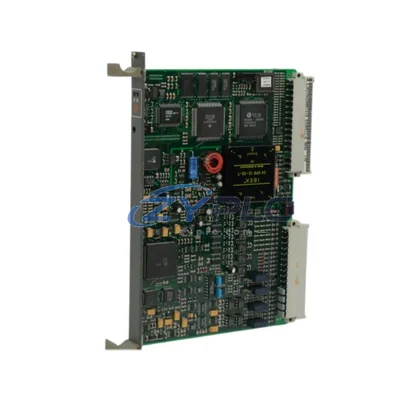
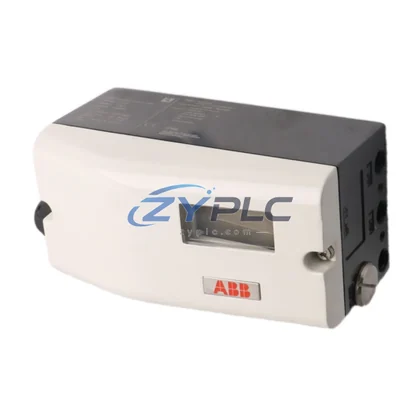
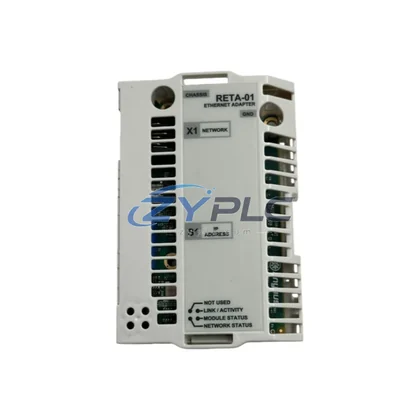
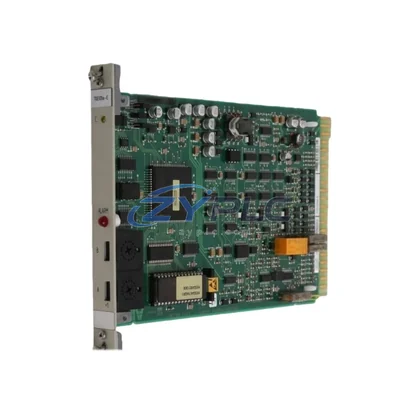
ABB RXMVB4 Industrial Network Interface for RX Series Systems: Enabling Reliable Data Links Across Smart Factory Architectures
In modern industrial environments where uptime, data integrity, and cross-system communication are non-negotiable, the ABB RXMVB4 bistable relay stands as a critical switching and signal-routing component within the RX Series ecosystem. Designed to operate reliably in demanding automation networks, the RXMVB4 bridges field-level devices and higher-level control systems — forming an essential node in the industrial data chain that connects sensors, PLCs, remote I/O modules, HMI panels, SCADA platforms, and edge gateways.
The RXMVB4’s bistable (latching) mechanism ensures that its switching state is maintained even during power interruptions, making it particularly valuable in fail-safe control architectures and maintenance-focused automation designs. This characteristic is especially important in distributed control systems where signal continuity across communication loops must be preserved without continuous power draw — a key requirement in IEC 61131-3 compliant PLC environments and IEC 61850 substation automation networks.
Compatibility & Integration Notes
| Parameter |
Specification / Value |
| SKU |
RXMVB4 |
| Brand / Series |
ABB / RX Series |
| Product Type |
Bistable (Latching) Industrial Relay |
| Communication Protocol Compatibility |
Modbus RTU, Profibus DP, PROFINET, IEC 61850, DeviceNet (via gateway) |
| Interface Type |
Plug-in relay socket compatible; DIN rail mountable |
| Signal Transmission |
Discrete I/O switching; compatible with 24VDC and 110/230VAC control circuits |
| Network Compatibility |
Integrates with ABB AC500 PLC, ABB Ability SCADA, Modbus-based RTU networks |
| System Applications |
PLC output relay, SCADA field node, Remote I/O switching, HMI-driven control loops |
| Origin |
Sweden (ABB Group) |
| Warranty |
Warranty and support terms confirmed before quote |
| Availability |
Confirmed via RFQ before quotation |
Connected Automation Data Flow
The ABB RXMVB4 operates at the intersection of field-level signal switching and network-driven control logic. In a typical smart factory deployment, the data flow begins at the sensor layer — where temperature transmitters, pressure transducers, and proximity switches feed analog and digital signals into remote I/O modules such as the ABB CI854 PROFIBUS communication interface or the ABB TU515 terminal unit. These signals are then aggregated and processed by a PLC controller — commonly the ABB AC500-eCo or ABB AC500 PM573 — which issues switching commands through its digital output modules.
The RXMVB4 relay receives these discrete output signals and executes the corresponding switching action — latching in its new state without requiring continuous coil energization. This bistable behavior reduces heat generation and power consumption in panel environments, which is critical in high-density relay panels used in motor control centers (MCCs) and distribution automation cabinets.
Upstream, the switching events and relay status data are transmitted via Modbus RTU or PROFINET communication links to SCADA systems such as ABB Ability System 800xA or third-party platforms like Wonderware InTouch and Ignition SCADA. HMI panels — including the ABB CP600 series — display real-time relay states, alarm conditions, and historical switching logs, enabling operators to monitor field device status without physical inspection.
In remote monitoring scenarios, the RXMVB4’s switching data is routed through industrial edge gateways — such as the ABB Edge Controller EC2000 — which aggregate field data and transmit it securely to cloud-based MES or ERP platforms via OPC-UA or MQTT protocols. This end-to-end data chain — from sensor signal to cloud dashboard — exemplifies the RXMVB4’s role as a reliable, protocol-agnostic switching node in IIoT-enabled factory architectures.
For drive and motor control applications, the RXMVB4 is frequently deployed alongside ABB ACS580 variable frequency drives (VFDs), where it handles auxiliary switching functions such as motor run/stop confirmation, fault relay outputs, and safety interlock circuits. The relay’s compatibility with standard DIN rail socket bases — including the ABB RXZE2M114 socket — ensures straightforward integration into existing panel layouts without rewiring.
Solving Data Isolation in Industrial Sites
One of the most persistent challenges in industrial automation is data isolation — the condition where field devices, control systems, and enterprise platforms operate in disconnected silos, preventing real-time visibility and coordinated control. The ABB RXMVB4 addresses this challenge at the hardware switching layer, ensuring that control signals from PLC outputs are faithfully executed at the field level and that switching events are reliably reported back through the communication network.
Protocol Unification: Many legacy industrial sites operate with a mix of Modbus RTU, PROFIBUS, and proprietary communication protocols. The RXMVB4, when integrated with ABB’s communication gateway modules, bridges these protocol boundaries — allowing a single SCADA platform to monitor and control relay switching events across heterogeneous network segments. This eliminates the need for parallel wiring infrastructure and reduces commissioning complexity.
Real-Time Monitoring and Alarm Feedback: In process industries where relay switching events must be logged with millisecond-level timestamps, the RXMVB4’s deterministic switching behavior ensures that SCADA alarm systems receive accurate event data. This is critical for root cause analysis, predictive maintenance scheduling, and regulatory compliance reporting in sectors such as oil and gas, water treatment, and pharmaceutical manufacturing.
Remote Diagnostics: Through integration with ABB’s remote monitoring infrastructure, maintenance engineers can query relay switching counts, coil activation history, and contact wear indicators without dispatching field technicians. This capability significantly reduces mean time to repair (MTTR) and extends planned maintenance intervals — directly improving overall equipment effectiveness (OEE).
Production Line Transparency: By connecting the RXMVB4’s switching data to MES platforms via OPC-UA gateways, production managers gain real-time visibility into machine states, cycle counts, and downtime events. This data transparency supports lean manufacturing initiatives, enables dynamic production scheduling, and provides the operational intelligence needed for continuous improvement programs.
System Scalability: The RXMVB4’s plug-in socket design and DIN rail compatibility make it straightforward to expand relay panels as production capacity grows. New relay positions can be added without disrupting existing wiring, and the standardized ABB socket ecosystem ensures long-term spare parts availability — a critical consideration for facilities with 10–20 year equipment lifecycles.
All units are pre-tested prior to shipment, with full functional verification of bistable switching operation, coil resistance, and contact continuity. Each RXMVB4 is supplied with a warranty and support terms confirmed before quote covering manufacturing defects and premature component failure under normal operating conditions.
Industrial Connectivity FAQ
Q1: Does the ABB RXMVB4 support direct integration with PROFINET or Modbus TCP networks?
The RXMVB4 is a discrete switching relay and does not natively communicate over Ethernet-based protocols such as PROFINET or Modbus TCP. However, when installed in a PLC output circuit connected to an ABB AC500 controller with a PROFINET communication module (e.g., CM579-PNIO), the relay’s switching state can be monitored and controlled via the PLC’s network interface. For direct fieldbus integration, ABB’s CI840A or CI854 communication interface modules provide the protocol gateway functionality required.
Q2: What is the communication latency when the RXMVB4 is controlled via a SCADA system?
End-to-end command latency depends on the communication architecture. In a typical Modbus RTU configuration with a 19200 baud rate and a 10ms PLC scan cycle, total latency from SCADA command issuance to relay switching is typically under 50ms. For PROFINET-based systems with IRT (Isochronous Real-Time) mode, latency can be reduced to under 1ms at the PLC output level. The RXMVB4’s own mechanical switching time is approximately 10ms, which is well within the response requirements of most industrial control applications.
Q3: Is the ABB RXMVB4 compatible with third-party SCADA and HMI platforms?
Yes. Since the RXMVB4 operates as a standard discrete output device controlled by PLC digital outputs, it is compatible with any SCADA or HMI platform that can interface with the host PLC — including Siemens WinCC, Wonderware System Platform, Ignition by Inductive Automation, and GE iFIX. The relay’s switching status can be mapped to PLC data registers and exposed via OPC-UA or Modbus TCP for consumption by any compliant SCADA client.
Q4: What does the warranty and support terms confirmed before quote cover, and what is the process for warranty claims?
The warranty and support terms confirmed before quote covers manufacturing defects, premature contact failure, coil open-circuit faults, and bistable mechanism malfunctions under normal operating conditions as specified in the ABB RX Series datasheet. Warranty claims are processed through our technical support team at plc.sales@zyplc.com. Upon receipt of the defective unit and verification of the fault, a replacement unit is dispatched within 5 business days. Warranty does not cover damage resulting from incorrect installation, overvoltage events, or operation outside rated parameters.