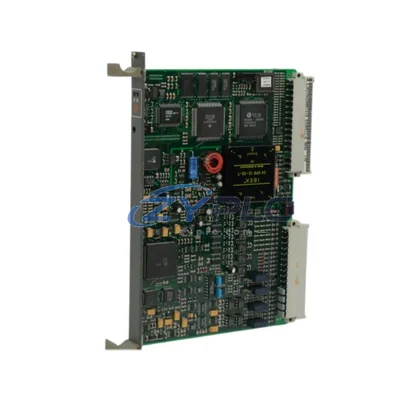
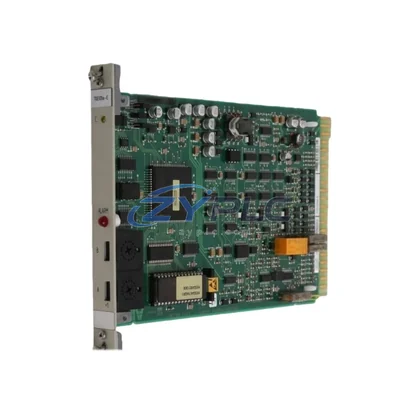
ABB S900 DX910S Digital I/O for S900: Compatibility and Replacement Notes
In modern distributed control system (DCS) deployments, every module must be evaluated not as a standalone component but as a functional node within a layered automation hierarchy. The ABB S900 DX910S is a digital I/O module engineered specifically for the ABB S900 remote I/O system, designed to deliver deterministic signal acquisition and output control across the full spectrum of process automation environments. Its role within the S900 architecture spans the I/O layer, the field signal layer, and the communication backbone — making it a critical element in any system that demands high availability, modular scalability, and long-term maintainability.
The S900 DX910S integrates seamlessly into the S900 station framework, operating alongside the S900 power supply modules, communication interface modules, and backplane assemblies that define the physical and electrical architecture of the remote I/O station. When deployed in conjunction with the ABB S900 CI920S or CI930S communication interface modules, the DX910S participates in PROFIBUS DP or PROFINET IO communication cycles, ensuring that digital field signals are transmitted to the host DCS controller — typically an ABB AC800M or AC800F controller — with minimal latency and full protocol compliance. This tight integration between the I/O module, the communication gateway, and the controller platform is what defines the S900 system’s value in high-reliability process control applications.
Product Specification Table
| Parameter |
Specification |
| System Role |
Digital I/O Module — S900 Remote I/O Station |
| Compatible Series |
ABB S900 DCS Remote I/O System |
| Signal Type |
Digital Input / Digital Output (mixed channel configuration) |
| Communication Protocol |
PROFIBUS DP / PROFINET IO (via S900 CI interface module) |
| Supply Voltage |
24 V DC (via S900 station power rail) |
| Isolation |
Galvanic isolation between field and system bus |
| Operating Temperature |
-20°C to +70°C |
| Protection Rating |
IP20 (panel/cabinet installation) |
| Mounting |
S900 backplane / DIN rail via S900 station assembly |
| Host Controller Compatibility |
ABB AC800M, AC800F, Symphony Plus |
| Certification |
CE, UL, ATEX (zone-dependent configuration) |
| Warranty |
warranty terms confirmed during quotation — Tested, verified, and ready for system integration |
System Compatibility Notes
The ABB S900 DX910S does not operate in isolation. Its value is realized through its position within a coordinated, multi-layer control architecture. At the controller layer, the ABB AC800M PM866 or PM891 processor module serves as the central execution engine, running control applications that depend on accurate, real-time digital signal data sourced from field devices through the S900 I/O station. The DX910S feeds this data stream reliably, ensuring that the controller’s scan cycle receives consistent, validated digital states from limit switches, solenoid valves, motor contactors, and discrete sensors distributed across the plant.
At the communication layer, the ABB CI854A PROFIBUS DP interface module or the CI871A PROFINET IO adapter connects the S900 station to the controller backplane network, providing the protocol translation and timing synchronization that allows the DX910S to participate in deterministic I/O cycles. This communication architecture supports redundant media configurations, ensuring that a single cable fault does not interrupt the signal path between the field and the controller.
At the power layer, the ABB S900 SD812 or SD823 power supply module provides the regulated 24 V DC rail that energizes the DX910S and adjacent I/O modules within the same station. Proper power architecture — including redundant power feeds and capacitive hold-up circuits — ensures that the DX910S maintains its output states and input scanning functions even during brief supply interruptions, a critical requirement in continuous process industries.
At the HMI and supervisory layer, operator workstations running ABB 800xA System software receive the digital signal data processed by the DX910S through the controller and OPC DA/UA server infrastructure. This end-to-end data path — from field device through DX910S, through the CI interface, through the AC800M controller, and up to the 800xA HMI — represents the complete system integration architecture that defines modern DCS deployments. Engineers can configure alarm thresholds, signal filtering, and I/O forcing directly from the 800xA engineering workspace, without physical access to the S900 station.
At the terminal and wiring layer, ABB S900 TB820 or compatible terminal base modules provide the mechanical and electrical interface between the DX910S module and the field wiring. These terminal bases support hot-swap module replacement, allowing maintenance teams to exchange a DX910S without de-energizing the station or interrupting adjacent I/O channels — a significant advantage in continuous production environments where planned shutdowns are infrequent.
Industrial Application Notes
The ABB S900 DX910S is deployed across a wide range of industrial sectors where digital signal integrity and system architecture consistency are non-negotiable requirements.
In power generation and transmission applications, the DX910S monitors breaker status, transformer tap positions, and protection relay outputs, providing the DCS with real-time visibility into the electrical network state. Its galvanic isolation and wide operating temperature range make it suitable for both indoor switchgear rooms and outdoor substation enclosures.
In oil and gas and petrochemical facilities, the DX910S is integrated into emergency shutdown (ESD) and fire and gas (F&G) system architectures, where it monitors discrete inputs from flame detectors, gas sensors, and manual call points. Its compatibility with ATEX-rated enclosures and its support for SIL-capable system configurations make it a preferred choice for safety-instrumented system (SIS) applications where the S900 platform is deployed in a safety role.
In water and wastewater treatment plants, the DX910S controls pump start/stop sequences, valve open/close commands, and level switch monitoring across distributed pump stations and treatment basins. Its remote I/O architecture allows a single AC800M controller to manage multiple S900 stations distributed across a large treatment facility, reducing controller hardware costs while maintaining centralized supervisory control.
In mining and minerals processing operations, the DX910S is used in conveyor control systems, crusher interlock circuits, and mill protection logic, where the harsh environment demands robust module construction and reliable signal isolation. The S900 system’s modular design allows maintenance teams to replace individual DX910S modules without affecting the overall conveyor control architecture.
In pharmaceutical and food processing facilities, the DX910S supports batch control architectures where digital signals from agitator motors, dosing pumps, and CIP valve manifolds must be logged with timestamp accuracy for regulatory compliance. The 800xA system’s audit trail functionality captures every DX910S signal change with operator identity and timestamp, supporting 21 CFR Part 11 and GAMP 5 compliance requirements.
Product Compatibility FAQ
Q1: Is the ABB S900 DX910S compatible with both PROFIBUS DP and PROFINET IO communication architectures?
The S900 DX910S itself is a passive I/O module that does not implement the communication protocol directly. Protocol selection is determined by the S900 communication interface module installed in the same station — the CI920S or CI930S for PROFIBUS DP, or the CI951 for PROFINET IO. The DX910S is compatible with all S900 communication interface variants, allowing the same I/O module to be deployed in either PROFIBUS or PROFINET architectures without hardware modification. This flexibility supports phased migration projects where an existing PROFIBUS S900 installation is being upgraded to PROFINET without replacing the I/O modules.
Q2: Can the ABB S900 DX910S be replaced during live plant operation without shutting down the entire I/O station?
Yes. The S900 system supports hot-swap module replacement when the DX910S is installed on a compatible terminal base module. During a hot-swap operation, the communication interface module continues to report the last known signal states for the affected channels to the host controller, and the controller application can be configured to hold output states or transition to a safe state during the replacement interval. This capability is essential in continuous process industries where unplanned shutdowns carry significant production and safety costs. The warranty terms confirmed during quotation provided with each DX910S module covers both the module itself and its compatibility with the S900 station architecture.
Q3: What is the recommended spare parts strategy for ABB S900 DX910S modules in a large DCS installation?
For installations with more than 10 S900 stations, a minimum spare holding of 5–10% of the installed DX910S population is recommended, with at least two modules held as immediate-availability hot spares at the plant site. Given the S900 system’s modular architecture, a single spare DX910S can replace any failed module across all stations in the installation, regardless of the specific I/O channel configuration — simplifying spare parts management and reducing inventory carrying costs. ZYPLC supports RFQ sourcing for ABB S900 DX910S modules with a warranty terms confirmed during quotation, tested and verified for immediate deployment. Contact our technical team to discuss volume pricing and consignment stock arrangements for large installations.