ABB SAFT112POW Industrial Network Interface for SAFT Series: Powering the Industrial Data Link in Smart Factory Environments
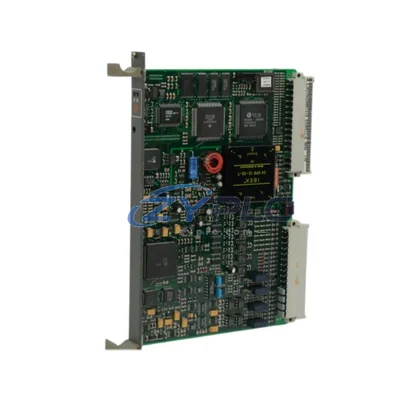
The ABB SAFT112POW is a precision-engineered power supply board designed for the SAFT series drive and control systems, widely deployed in industrial automation, process control, and smart factory environments. As a critical hardware node within the ABB drive ecosystem, the SAFT112POW ensures stable, regulated power delivery to the control electronics of ABB’s AC drive platforms — enabling uninterrupted data communication, real-time signal processing, and seamless integration across the full automation data chain.
In modern industrial sites, the power supply board is far more than a passive component. It is the foundation upon which protocol conversion, network transmission, and real-time diagnostics depend. Without a reliable power source at the drive controller level, the entire data link — from field sensors through PLC controllers to SCADA and HMI systems — becomes vulnerable to instability, packet loss, and unplanned downtime. The SAFT112POW addresses this challenge with robust design, tested output stability, and compatibility with ABB’s broader SAFT series control architecture.
Compatibility & Integration Notes
| Specification |
Details |
| SKU |
SAFT112POW / SAFT 112 POW |
| Brand |
ABB |
| Series |
SAFT Series (AC Drive Control Boards) |
| Product Type |
Power Supply Board |
| Protocol Support |
Compatible with DDCS, Modbus RTU, Profibus DP (via drive gateway modules) |
| Interface Type |
Internal drive backplane interface; SAFT series board slot |
| Transmission Capability |
Stable DC power delivery to control electronics; supports real-time control loop integrity |
| Network Compatibility |
ABB SAFT series drive platforms; DCS integration via DDCS fiber link |
| System Application |
AC Drive Control, DCS Power Node, Process Automation, Smart Factory Power Infrastructure |
| Origin |
Sweden (ABB) |
| Warranty |
warranty terms confirmed during quotation — All units shipped after full functional testing |
Connected Automation Data Flow
In a typical smart factory deployment, the SAFT112POW sits at the heart of the ABB drive control stack. Consider a process line where field-level sensors — such as pressure transmitters and flow meters — feed analog signals into remote I/O modules. These signals are aggregated and passed to an ABB AC800M controller running process logic over a DDCS fiber network. The AC800M communicates with the drive layer, where ABB ACS800 or ACS600 series variable frequency drives are managed through their SAFT series control boards, including the SAFT121 (main control board) and SAFT122 (I/O extension board).
The SAFT112POW provides the regulated power rail that keeps the SAFT121 and associated communication adapters — such as the RDCO-02 DDCS Communication Module — operating within specification. Without stable power at this node, the DDCS fiber link between the drive and the AC800M controller degrades, causing communication timeouts that propagate upstream to the ABB 800xA SCADA/DCS platform, triggering false alarms and interrupting real-time monitoring dashboards.
Further up the data chain, the 800xA system integrates with plant-level HMI panels — often ABB CP600 series operator panels — where production engineers monitor drive status, energy consumption, and fault diagnostics in real time. The SAFT112POW’s role in maintaining power integrity at the drive level directly supports the quality of data flowing to these HMI displays and to historian servers used for predictive maintenance analytics.
In multi-drive configurations, such as those found in paper mills, cement plants, or steel rolling lines, the SAFT112POW is deployed across multiple drive cabinets simultaneously. Each cabinet may house an AINT-02 AC Drive Interface Board and a DSMB-01 Drive System Memory Board alongside the SAFT112POW, forming a complete control electronics stack. The power supply board ensures that all these modules receive clean, stable voltage — a prerequisite for reliable Profibus DP or Modbus RTU communication through gateway adapters connected to the plant’s industrial Ethernet backbone.
Edge gateways installed at the cabinet level can then forward drive telemetry — speed references, torque feedback, fault codes, and energy data — to cloud-based MES or ERP systems, completing the data link from field device to enterprise layer. The SAFT112POW is the silent enabler of this entire connected automation architecture.
Solving Data Isolation in Industrial Sites
One of the most persistent challenges in legacy industrial environments is data isolation — where drives, PLCs, and field devices operate on incompatible protocols, preventing unified monitoring and control. The ABB SAFT series platform, powered by boards like the SAFT112POW, addresses this through its compatibility with DDCS (Distributed Drives Communication System), a fiber-optic protocol that enables high-speed, noise-immune data exchange between drives and master controllers.
When the SAFT112POW fails or degrades, the entire SAFT series control board stack loses power integrity, causing the drive to drop off the DDCS network. This creates an immediate data island — the drive becomes invisible to the AC800M controller and the 800xA SCADA system, making remote diagnostics impossible and forcing on-site intervention. Replacing the SAFT112POW with a tested, genuine unit restores network visibility instantly, eliminating the data silo and re-establishing the full monitoring chain.
For sites undergoing digital transformation, the SAFT112POW also supports system expansion. As new drives are added to the DDCS ring network, each requires a functioning power supply board to participate in the communication loop. Stocking spare SAFT112POW units ensures that expansion projects and emergency replacements do not stall production lines or delay commissioning schedules.
ZYPLC maintains ready inventory of the SAFT112POW, with all units subjected to pre-shipment functional testing to verify output voltage stability and board integrity. This ensures that replacement units perform identically to factory-new boards, minimizing re-commissioning time and reducing the risk of secondary failures caused by substandard components.
Industrial Connectivity FAQ
Q1: Does the SAFT112POW affect communication latency in DDCS networks?
Yes. An unstable or failing SAFT112POW can introduce voltage ripple that causes the SAFT121 control board and RDCO-02 DDCS module to experience intermittent resets, increasing communication latency and causing packet retransmissions on the DDCS fiber ring. A properly functioning SAFT112POW maintains the clean power rail required for deterministic, low-latency DDCS communication.
Q2: Is the SAFT112POW compatible with all ABB SAFT series drives?
The SAFT112POW is designed for the ABB SAFT series control board platform, used in ACS600 and ACS800 series drives. Compatibility should be verified against the specific drive type and firmware version. ZYPLC’s technical team can assist with cross-referencing the correct board variant for your application.
Q3: How does replacing the SAFT112POW restore SCADA network stability?
When the SAFT112POW is replaced with a tested unit, the SAFT series control stack regains stable power, allowing the DDCS communication module to re-establish its fiber link to the AC800M controller. The 800xA SCADA system then automatically re-discovers the drive node, restoring real-time data visibility, alarm monitoring, and remote diagnostic capability without requiring a full system restart.
Q4: What warranty and testing does ZYPLC provide for the SAFT112POW?
All SAFT112POW units supplied by ZYPLC carry a warranty terms confirmed during quotation and are shipped only after passing pre-shipment functional testing. Testing verifies output voltage levels, board power-up behavior, and absence of component faults. Availability is confirmed via RFQ for shipment arranged after confirmation, supporting urgent maintenance and planned replacement programs globally.