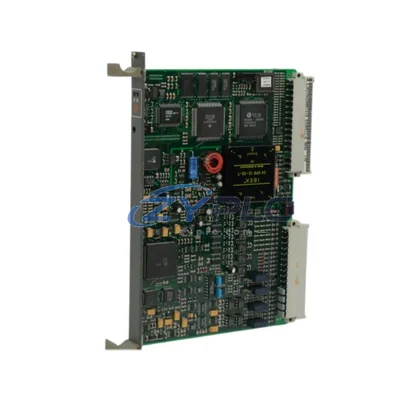
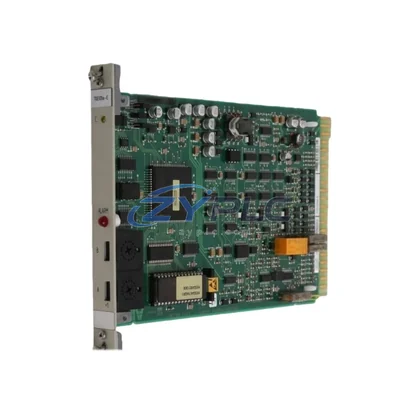
ABB SCYC55830 DCS Controller for Symphony Plus
In a modern distributed control system, every layer of the architecture must communicate with precision and reliability. The ABB SCYC55830 (part number 58063282) is a high-performance DCS controller module engineered specifically for ABB’s Symphony Plus platform — a control architecture trusted across power generation, oil and gas, chemical processing, water treatment, and pulp and paper industries worldwide. This module does not operate in isolation; it is the structural backbone that connects the control layer to the I/O layer, the network layer, and the supervisory systems above it, ensuring that signal flow, data integrity, and command execution remain consistent across the entire plant.
The SCYC55830 sits at the heart of the Symphony Plus control hierarchy. It interfaces directly with the Symphony Plus S+ Operations SCADA environment, enabling real-time process visualization, alarm management, and operator intervention from a centralized HMI station. When paired with the SPNIS81 network interface module, the controller gains access to the plant-wide Ethernet backbone, allowing seamless data exchange with engineering workstations, historian servers, and remote diagnostic tools. This system integration across control layers is what makes the SCYC55830 a preferred choice for engineers designing scalable, maintainable automation systems.
Product Specification Table
| Parameter |
Specification |
| System Role |
DCS Controller Module — Control Layer |
| Compatible Platform |
ABB Symphony Plus (S+) |
| Part Number |
SCYC55830 / 58063282 |
| Communication Protocols |
Ethernet/IP, PROFIBUS DP, Modbus TCP/RTU, IEC 61850 |
| Network Interface |
Dual-port Ethernet, redundant ring topology support |
| I/O Expansion |
Compatible with SPNIS, SPNII, and SPDSI I/O modules |
| Redundancy Support |
Hot-standby controller redundancy |
| Operating Voltage |
24 VDC (via Symphony Plus power supply module) |
| Operating Temperature |
0°C to 60°C |
| Mounting |
Symphony Plus rack / backplane |
| Origin |
Sweden |
| Warranty |
warranty terms confirmed during quotation — Tested before shipment |
System Compatibility Notes
The SCYC55830 is designed to function within a fully coordinated Symphony Plus rack assembly. At the power layer, the SPSPF1 power supply module provides stable 24 VDC to the backplane, ensuring that the controller and all co-installed modules receive clean, regulated power even during grid fluctuations. The controller communicates with the SPNIS81 network interface module to route process data upstream to the S+ Operations server, where operators monitor live trends, configure setpoints, and acknowledge alarms through the Symphony Plus HMI environment.
On the field side, the SCYC55830 coordinates with SPDSI digital input modules and SPDSO digital output modules to acquire discrete signals from field instruments — limit switches, proximity sensors, solenoid valves, and motor starters. For analog process variables such as temperature, pressure, flow, and level, the SPASI analog input module feeds 4–20 mA signals directly into the controller’s scan cycle, where they are processed against configured control strategies and PID loops. The SPASO analog output module then translates controller commands into field-level actuator signals, closing the loop between measurement and control.
For applications requiring high-speed serial communication with third-party devices — variable frequency drives, intelligent motor control centers, or remote terminal units — the SCYC55830 supports PROFIBUS DP and Modbus RTU through the SPNIS communication gateway module. This allows the Symphony Plus architecture to absorb legacy field devices without requiring protocol converters or additional middleware, reducing both engineering complexity and potential failure points in the communication chain.
In redundant system designs, a second SCYC55830 unit operates in hot-standby mode on a mirrored rack. The two controllers synchronize their memory states continuously, so that in the event of a primary controller fault, the standby unit assumes control within milliseconds — with no process interruption and no operator intervention required. This redundancy architecture is particularly critical in power plant boiler control, refinery distillation column management, and water treatment dosing systems where unplanned downtime carries significant safety and financial consequences.
Industrial Application Notes
Across industries, the SCYC55830 has proven its value in layered automation environments where system consistency and long-term maintainability are non-negotiable. In thermal power generation, the module manages burner management sequences, turbine governor interfaces, and boiler drum level control — all within a single Symphony Plus rack that also hosts the SPNIS81 network module and SPSPF1 power supply. The tight integration between these components eliminates inter-vendor compatibility risks and simplifies spare parts management for plant maintenance teams.
In petrochemical and refinery applications, the SCYC55830 handles continuous process control loops for reactor temperature, column pressure differential, and feed flow regulation. Its support for IEC 61850 communication makes it compatible with modern digital substation architectures, allowing process control and electrical protection systems to share a common network infrastructure. For water and wastewater treatment facilities, the module’s ability to manage both analog PID control and discrete sequence logic within a single controller reduces the number of hardware platforms that operators must be trained on and maintained.
Mining and minerals processing operations benefit from the SCYC55830’s robust operating temperature range and its compatibility with the Symphony Plus remote I/O architecture, which allows control cabinets to be distributed across large plant footprints without signal degradation. In packaging and food processing lines, the module’s deterministic scan cycle ensures that high-speed conveyor sequencing, fill-level control, and reject gate actuation are executed with the timing precision that modern production rates demand.
Product Compatibility FAQ
Q1: Is the SCYC55830 compatible with both older Symphony and current Symphony Plus racks?
The SCYC55830 is designed for the Symphony Plus (S+) platform and its associated rack and backplane infrastructure. While ABB has maintained a degree of architectural continuity between Symphony and Symphony Plus, direct backward compatibility with legacy Symphony racks should be verified against the specific rack revision and firmware version in your installation. ZYPLC’s technical team can assist with compatibility verification prior to shipment.
Q2: Can the SCYC55830 be used in a hot-standby redundant configuration, and what additional modules are required?
Yes. The SCYC55830 supports hot-standby redundancy when paired with a second controller unit and the appropriate redundancy synchronization module within the Symphony Plus rack. The two controllers continuously mirror their process data and control states, enabling bumpless switchover in the event of a primary unit failure. Contact ZYPLC for a complete redundant architecture bill of materials.
Q3: What does the warranty terms confirmed during quotation cover, and how is the module tested before shipment?
Every SCYC55830 unit supplied by ZYPLC undergoes functional testing prior to dispatch, including power-on verification, communication port integrity checks, and I/O channel validation where applicable. The warranty terms confirmed during quotation covers manufacturing defects and functional failures under normal operating conditions. Warranty claims are processed directly through ZYPLC’s after-sales support team, with replacement units dispatched via DHL or FedEx express to minimize system downtime.