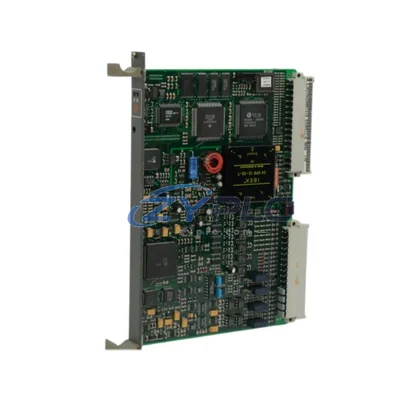
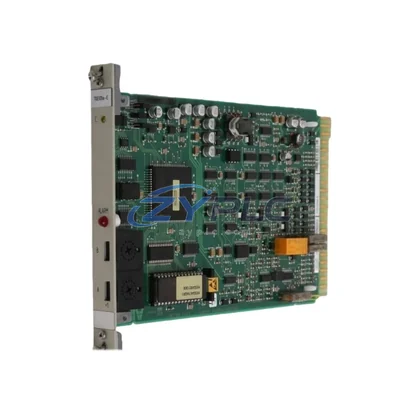
The ABB SD32D is a high-efficiency PLC expansion module engineered for the Advant OCS (Open Control System) platform — one of ABB’s most enduring distributed control architectures in industrial automation. Designed to extend the operational life of legacy control systems while actively contributing to energy reduction strategies, the SD32D delivers reliable I/O expansion, deterministic scan cycle performance, and seamless integration with ABB’s broader automation ecosystem. For factories seeking to reduce idle operating load, improve equipment utilization rates, and lower total cost of ownership, the SD32D represents a proven, cost-effective solution backed by a warranty terms confirmed during quotation and full pre-shipment testing.
In modern industrial environments, energy efficiency is no longer a secondary consideration — it is a core KPI. The SD32D addresses this directly by enabling tighter control loop integration, reducing unnecessary actuator cycling, and supporting more granular data acquisition from field devices. When deployed alongside ABB’s AC500 series PLCs or integrated into an existing Advant OCS rack, the SD32D allows engineers to consolidate I/O points, reduce wiring complexity, and minimize the energy overhead associated with redundant or oversized control hardware.
Product Specification Table
| Parameter |
Specification / Value |
| SKU |
SD32D |
| Brand |
ABB |
| Series |
Advant OCS |
| Product Type |
PLC Expansion Module |
| Origin |
Germany (DE) |
| Compatible Systems |
ABB Advant OCS, AC500, Freelance DCS |
| Application Environment |
Industrial automation, process control, motor drive systems, condition monitoring |
| Power Consumption |
Low-power design; optimized for rack-level energy budgeting |
| Operating Efficiency |
Deterministic I/O scan; minimizes CPU overhead and idle energy draw |
| Maintenance Value |
Reduces redundant I/O hardware; supports demand-based control strategies |
| Warranty |
warranty terms confirmed during quotation (includes pre-shipment functional testing) |
| Stock Status |
RFQ Available — shipment arranged after confirmation |
System Compatibility and Application
The SD32D does not operate in isolation — its true value emerges when it is integrated into a well-designed, industrial automation system. In a typical Advant OCS installation, the SD32D expansion module works in concert with the ABB PM864A processor module, which handles the main control logic and communicates with field devices via the MasterBus 300 or PROFIBUS DP network. This communication backbone allows real-time energy data to flow from field instruments back to the control layer without latency, enabling faster corrective action when energy anomalies are detected.
On the drive side, the SD32D is frequently deployed alongside ABB ACS880 industrial drives and ACS580 general-purpose drives, which provide variable frequency control for motors ranging from pump systems to conveyor lines. By feeding precise digital output signals from the SD32D to these drives, engineers can implement demand-based speed control — one of the most effective strategies for reducing motor load, often yielding savings of 20–50% compared to fixed-speed operation.
For power quality monitoring, the SD32D integrates naturally with ABB M2M energy meters and the ABB Ability Energy Manager platform, which aggregates consumption data across multiple production zones. When combined with ABB CP600 HMI panels, operators gain a real-time visual dashboard of energy flows, drive status, and I/O states — all from a single operator interface. This visibility is critical for identifying unplanned downtime during shift changeovers, machine warm-up cycles, and unplanned idle periods.
In distributed control topologies, the SD32D can be paired with ABB S800 I/O modules for remote I/O expansion, extending the control reach of the Advant OCS system to satellite equipment without requiring additional PLC hardware. For safety-critical zones, integration with ABB Pluto safety PLCs ensures that energy isolation and emergency stop functions are handled with the required SIL compliance, while the SD32D continues to manage standard process I/O in adjacent zones.
Communication flexibility is another key advantage. The SD32D supports integration with systems using Modbus RTU and PROFIBUS DP protocols, making it compatible with third-party energy meters, smart sensors, and SCADA platforms. This interoperability allows the SD32D to serve as a bridge between legacy Advant OCS infrastructure and modern IIoT-enabled monitoring systems, extending the useful life of existing capital equipment while enabling data-driven maintenance planning.
Maintenance and Replacement Notes
In real-world production environments, the ABB SD32D delivers measurable impact across several dimensions of energy and operational efficiency. Consider a mid-scale manufacturing facility running three-shift operations with mixed discrete and process control requirements. In such an environment, uncoordinated I/O expansion — using mismatched modules from different generations — introduces scan cycle jitter, increases CPU load, and forces the control system to operate at conservative cycle times that waste energy through over-actuation of valves, motors, and heating elements.
By standardizing on the SD32D within the Advant OCS rack, engineers eliminate this jitter, reduce the average scan cycle time, and allow the control system to respond more precisely to process demands. The result is fewer unnecessary actuator operations per shift, lower compressed air consumption in pneumatic systems, and reduced thermal cycling in heating and cooling applications — all of which translate directly into lower energy bills and reduced wear on mechanical components.
From a maintenance perspective, the SD32D’s proven reliability in Advant OCS environments means fewer unplanned stoppages. Predictive maintenance strategies — supported by continuous I/O health monitoring and integration with ABB’s condition monitoring tools — allow maintenance teams to schedule interventions during planned downtime windows rather than reacting to failures mid-production. This shift from reactive to predictive maintenance not only reduces unplanned downtime associated with emergency restarts and re-qualification runs but also improves overall equipment effectiveness (OEE) by keeping production lines running at their designed throughput rates.
For facilities managing multiple production lines, the SD32D’s compatibility with ABB’s distributed I/O architecture means that maintenance planning strategies can be rolled out consistently across all lines without requiring hardware redesign. Centralized condition monitoring, combined with line-level I/O data from the SD32D, gives energy managers the granularity they need to identify which lines, machines, or time periods are responsible for peak energy demand — enabling targeted interventions that deliver the highest return on investment.
All SD32D units supplied by ZYPLC are sourced from verified supply channels, undergo full functional testing prior to shipment, and are covered by a warranty terms confirmed during quotation. Delivery lead times are confirmed at the time of order, and our technical team is available to support integration planning, compatibility verification, and system commissioning.
Product Sourcing FAQ
Q1: How does the ABB SD32D contribute to operational stability in an Advant OCS system?
The SD32D enables more precise I/O control, reducing unnecessary actuator cycling and allowing demand-based control strategies to be implemented more effectively. When paired with ABB variable frequency drives such as the ACS880, it supports motor speed optimization that can reduce operating load by 20–50% compared to fixed-speed operation.
Q2: Is the SD32D compatible with modern ABB systems and communication protocols?
Yes. The SD32D is designed for the Advant OCS platform and supports integration with PROFIBUS DP and Modbus RTU networks. It can coexist with newer ABB components including AC500 PLCs, S800 I/O modules, and CP600 HMI panels, making it suitable for hybrid legacy-modern automation architectures.
Q3: What is the recommended replacement or upgrade path if the SD32D is no longer sufficient for expanded I/O requirements?
For facilities requiring higher I/O density or migration to a more current platform, ABB’s AC500 series with S500 I/O modules offers a compatible upgrade path. ZYPLC can advise on migration strategies that preserve existing wiring infrastructure and minimize production disruption during the transition.
Q4: What testing and warranty coverage does ZYPLC provide for the SD32D?
Every SD32D unit is functionally tested prior to shipment to verify I/O channel integrity, communication response, and power rail stability. All units are covered by a warranty terms confirmed during quotation from the date of delivery. In the event of a confirmed defect within the warranty period, ZYPLC will arrange replacement or repair at no additional cost to the customer.
—