ABB SDCS-UCM-1C Drive Control for SDCS: Compatibility and Replacement Notes
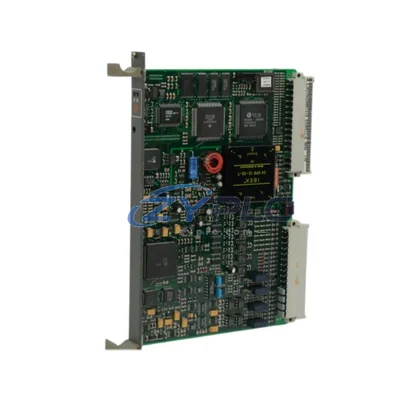
The ABB SDCS-UCM-1C is a dedicated DC drive control module engineered for seamless integration within the ABB SDCS Series drive platform. Rather than functioning as a standalone component, the SDCS-UCM-1C is designed from the ground up to serve as a critical node within a layered industrial automation architecture — coordinating signal flow between the control layer, I/O layer, power conversion layer, and field device layer. Its role in the system is to provide precise, real-time control of DC motor drives while maintaining full contextual awareness of upstream command signals and downstream feedback loops.
In modern industrial control system design, the reliability of a DC drive control module is inseparable from the architecture it inhabits. The SDCS-UCM-1C addresses this by offering deterministic control response, robust communication compatibility, and a hardware design that supports long-term maintenance efficiency. Whether deployed in a new greenfield installation or integrated into an existing SDCS-based control cabinet, this module delivers consistent performance across demanding industrial environments including manufacturing lines, power distribution systems, petrochemical processing, water treatment facilities, mining operations, metallurgical plants, and packaging automation.
Within the SDCS Series architecture, the SDCS-UCM-1C operates in close coordination with the SDCS-POW-1 and SDCS-POW-4 power supply boards, which provide the regulated DC bus voltage required for stable module operation. The control module interfaces directly with the SDCS-CON-2 and SDCS-CON-4 converter control boards, enabling closed-loop speed and torque regulation with high dynamic response. Signal conditioning and feedback processing are handled in conjunction with the SDCS-FEX-2 field excitation board, ensuring accurate motor field current control across the full operating range.
At the I/O layer, the SDCS-UCM-1C supports integration with SDCS-IOB-3 and SDCS-IOB-21 I/O extension boards, expanding the module’s analog and digital I/O capacity to accommodate complex process control requirements. This modular I/O architecture allows engineers to scale the system without replacing the core control hardware, significantly reducing lifecycle costs and simplifying future capacity expansions. The module’s signal interface is compatible with standard 24 VDC digital I/O levels and supports both current-loop and voltage-mode analog inputs, making it adaptable to a wide range of field instrumentation.
From a network and communication perspective, the SDCS-UCM-1C supports integration with ABB’s DDCS (Distributed Drive Control System) fiber-optic communication protocol, enabling high-speed, noise-immune data exchange between the drive control module and the master controller — typically an ABB AC500 or AC800M PLC platform. This fiber-optic link eliminates ground loop interference common in electrically noisy industrial environments and supports real-time parameter monitoring, fault diagnostics, and remote configuration without interrupting drive operation.
For human-machine interface integration, the SDCS-UCM-1C is fully compatible with ABB’s Panel Builder and DriveWindow Light software environments, allowing operators and maintenance engineers to visualize drive status, configure control parameters, and perform trend analysis directly from an HMI or engineering workstation. This integration supports the broader goal of system integration — ensuring that the drive control module is not an isolated device but a fully visible, manageable element within the plant-wide automation hierarchy.
Redundancy and fault tolerance are key design considerations for the SDCS-UCM-1C in critical process applications. The module supports watchdog timer functions and hardware fault detection that trigger controlled shutdown sequences in the event of communication loss or internal fault conditions. When paired with redundant power supply configurations using dual SDCS-POW-4 boards, the system can maintain drive availability even during single-point power supply failures — a critical requirement in continuous process industries such as petrochemical refining and water treatment.
Installation and commissioning of the SDCS-UCM-1C follow ABB’s standardized SDCS Series mechanical interface, with DIN rail and panel mounting options available. The module’s connector layout is consistent across the SDCS product family, reducing the risk of wiring errors during installation and simplifying replacement procedures during scheduled maintenance. All configuration parameters are stored in non-volatile memory, ensuring that drive settings are retained through power cycles and module replacements without requiring full recommissioning.
Long-term maintenance efficiency is further supported by the module’s comprehensive self-diagnostic capability. Fault codes are logged with timestamps and accessible via the DDCS communication link or local keypad interface, enabling maintenance teams to perform root-cause analysis without specialized test equipment. Spare parts availability is maintained through ZYPLC’s inventory management program, ensuring that replacement SDCS-UCM-1C modules are available for rapid dispatch to minimize unplanned downtime. All units supplied by ZYPLC are covered by a warranty terms confirmed during quotation, providing assurance of module quality and operational reliability from the date of delivery.
Product Specification Table
| Parameter |
Specification |
| System Role |
DC Drive Control Module — SDCS Series Architecture |
| Compatible Platform |
ABB SDCS Series DC Drive Systems |
| Control Function |
Speed & Torque Regulation, Field Excitation Control |
| Communication Protocol |
DDCS Fiber-Optic (ABB Distributed Drive Control System) |
| Digital I/O Compatibility |
24 VDC Standard Digital I/O |
| Analog I/O Compatibility |
Current Loop & Voltage Mode Analog Inputs |
| Mounting |
DIN Rail / Panel Mount — SDCS Standard Mechanical Interface |
| Operating Environment |
Industrial Control Cabinet, IP20 Enclosure Minimum |
| Parameter Storage |
Non-Volatile Memory (Retained Through Power Cycles) |
| Fault Diagnostics |
Timestamped Fault Logging via DDCS or Local Interface |
| Country of Origin |
Finland |
| Warranty |
warranty terms confirmed during quotation (ZYPLC Supply) |
System Compatibility Notes
The SDCS-UCM-1C achieves its full performance potential when deployed as part of a coordinated SDCS Series control system. In a typical drive cabinet configuration, the module operates alongside the SDCS-POW-1 auxiliary power supply board, which provides the 24 VDC logic supply required for control electronics. For higher-power applications, the SDCS-POW-4 dual-channel power supply board is used, supporting redundant power architectures that eliminate single points of failure in the power layer.
Converter control is managed through the SDCS-CON-2 or SDCS-CON-4 converter control boards, which handle the firing pulse generation for the thyristor bridge and implement the inner current control loop. The SDCS-FEX-2 field excitation board works in parallel with the UCM-1C to regulate motor field current, enabling field-weakening operation for extended speed range applications. I/O expansion is achieved through the SDCS-IOB-3 and SDCS-IOB-21 boards, which add analog and digital channels for process signal integration.
At the network layer, the DDCS fiber-optic link connects the SDCS-UCM-1C to an ABB AC500 PLC or AC800M controller, enabling supervisory control and real-time data exchange. For installations requiring fieldbus integration, an ABB RDCO-02 DDCS communication adapter can bridge the SDCS drive system to PROFIBUS DP or Modbus TCP networks, extending the drive’s connectivity to third-party SCADA and DCS platforms. HMI visualization is supported through ABB CP600 operator panels running Panel Builder software, providing operators with real-time drive status and alarm management at the machine level.
Industrial Application Notes
In steel and metallurgical rolling mill applications, the SDCS-UCM-1C is deployed in multi-drive configurations where precise speed synchronization between roughing, intermediate, and finishing stands is critical to product quality. The module’s high-bandwidth current control loop and DDCS communication ensure that speed references from the master PLC are executed with minimal latency, maintaining strip tension within tight tolerances across the full rolling schedule.
In water treatment and pumping station applications, the SDCS-UCM-1C controls DC-driven pump motors in raw water intake and sludge handling systems where variable flow control is required. The module’s fault logging and remote diagnostic capability allow water utility operators to monitor drive health from a central SCADA system, reducing the need for on-site inspection and enabling predictive maintenance scheduling.
In petrochemical and refinery environments, the SDCS-UCM-1C is used in compressor and extruder drive applications where continuous operation is mandatory. The module’s redundant power supply compatibility and non-volatile parameter storage ensure that drive configuration is preserved through power interruptions, minimizing restart time after unplanned outages. The warranty terms confirmed during quotation provided by ZYPLC supports the procurement requirements of EPC contractors and plant operators who require documented quality assurance for critical drive components.
In mining and mineral processing applications, the module controls conveyor belt drives, crusher drives, and hoist systems operating in high-dust, high-vibration environments. The SDCS Series’ robust hardware design and the UCM-1C’s self-diagnostic capability reduce maintenance intervention frequency, supporting the extended maintenance intervals typical of remote mining operations.
Product Compatibility FAQ
Q1: Is the SDCS-UCM-1C compatible with both SDCS-CON-2 and SDCS-CON-4 converter control boards?
Yes. The SDCS-UCM-1C is designed to operate within the full SDCS Series hardware ecosystem and is compatible with both the SDCS-CON-2 (single converter) and SDCS-CON-4 (dual converter) control boards. The specific converter board selection depends on the drive topology — single quadrant, two-quadrant, or four-quadrant — required by the application. System architects should verify the firmware revision compatibility between the UCM-1C and the converter board during the design phase to ensure parameter set alignment.
Q2: Can the SDCS-UCM-1C be integrated into a PROFIBUS DP or Modbus TCP network without replacing the existing DDCS communication infrastructure?
Yes. The SDCS-UCM-1C communicates natively via the DDCS fiber-optic protocol. Integration with PROFIBUS DP or Modbus TCP fieldbus networks is achieved by adding an ABB RDCO-02 or compatible DDCS-to-fieldbus gateway adapter to the drive system. This approach preserves the existing DDCS communication backbone while extending the drive’s connectivity to plant-level DCS or SCADA systems, avoiding the need for hardware replacement or re-cabling of the control cabinet.
Q3: What does the warranty terms confirmed during quotation cover, and how does ZYPLC support long-term spare parts availability for the SDCS-UCM-1C?
The warranty terms confirmed during quotation provided by ZYPLC covers manufacturing defects and operational failures under normal industrial operating conditions from the date of delivery. In the event of a warranty claim, ZYPLC provides replacement module dispatch to minimize system downtime. For long-term spare parts planning, ZYPLC maintains inventory of SDCS Series modules including the SDCS-UCM-1C to support planned maintenance programs and emergency replacement requirements. Customers are encouraged to contact ZYPLC’s technical sales team to discuss multi-unit procurement and consignment stock arrangements for critical drive applications.