ABB SNAT601TAI: Industrial Data Link and Smart Factory Connectivity for SNAT Series Systems
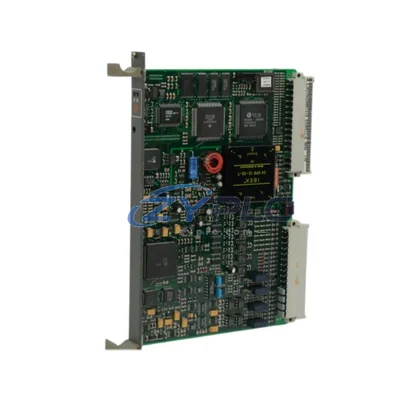
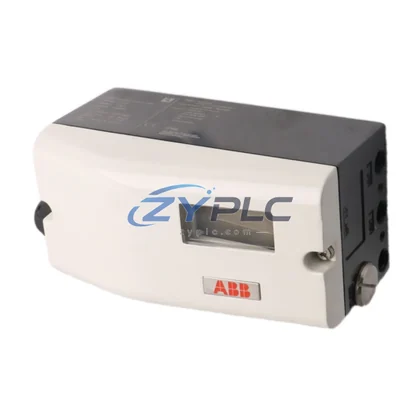
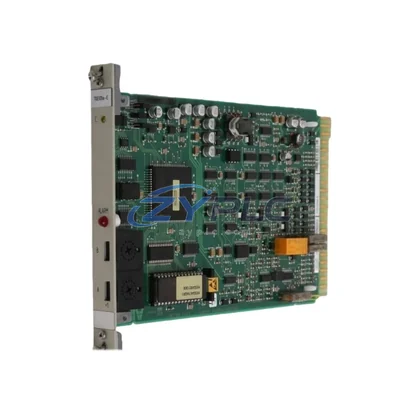
The ABB SNAT601TAI is a high-performance thyristor (SCR) power controller engineered for demanding industrial environments where precise power regulation, seamless protocol integration, and uninterrupted network communication are mission-critical. As part of ABB’s established SNAT Series, the SNAT601TAI serves as a pivotal node in the industrial data chain — bridging field-level power devices with supervisory control systems, enabling real-time visibility from the sensor layer all the way to the enterprise SCADA platform.
In modern smart factory architectures, power controllers are no longer isolated devices. The SNAT601TAI is designed to participate actively in the plant-wide communication fabric, supporting integration with ABB AC500 PLC controllers, distributed I/O modules, and industrial Ethernet backbones. Its communication-ready design allows engineers to embed it within existing automation networks without costly infrastructure overhauls, making it an ideal choice for both greenfield installations and brownfield upgrades.
Compatibility & Integration Notes
| Parameter |
Specification |
| SKU |
SNAT601TAI |
| Brand |
ABB |
| Series |
SNAT Series |
| Product Type |
Thyristor (SCR) Power Controller |
| Protocol Support |
Fieldbus / Industrial Ethernet compatible (PROFIBUS, PROFINET, Modbus RTU/TCP) |
| Interface Type |
Serial / Digital I/O / Communication Module Port |
| Transmission Capability |
Real-time process data, alarm status, diagnostic feedback |
| Network Compatibility |
DCS, SCADA, PLC-based industrial networks |
| System Application |
Heating control, furnace management, process temperature regulation, smart factory automation |
| Origin |
Finland (FI) |
| Warranty |
warranty terms confirmed during quotation |
| Availability |
RFQ Available — Global Shipping |
Connected Automation Data Flow
The SNAT601TAI operates at the intersection of power control and industrial communication, making it a cornerstone component in connected automation architectures. In a typical smart factory deployment, the data flow begins at the field level: temperature sensors and process transmitters feed real-time signals into the SNAT601TAI, which regulates thyristor firing angles to maintain precise load power. These process values — current, voltage, power factor, and alarm states — are simultaneously transmitted upstream through the communication interface.
When paired with an ABB AC500 PLC or a compatible ABB Freelance DCS controller, the SNAT601TAI enables closed-loop control with millisecond-level response times. The PLC reads live power data from the SNAT601TAI via Modbus RTU or a PROFIBUS DP adapter module, processes the control logic, and issues setpoint adjustments — all within a single scan cycle. This tight integration eliminates the latency associated with manual operator intervention and ensures that process deviations are corrected before they escalate into quality or safety events.
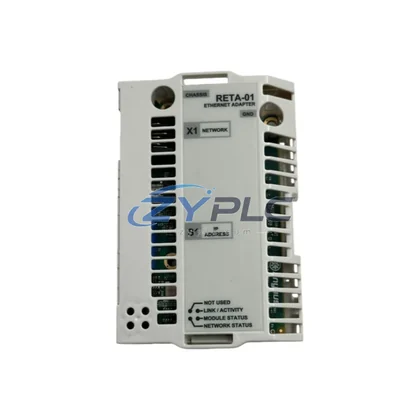
For facilities running PROFINET-based networks, the SNAT601TAI can be connected through an ABB NPBA-12 PROFIBUS Adapter or equivalent gateway module, bridging the device-level fieldbus to the plant Ethernet backbone. Industrial managed switches — such as those in the ABB EKS series — provide the network infrastructure to route data packets between the SNAT601TAI, the PLC rack, the HMI panel (e.g., ABB CP600 series), and the SCADA server. This multi-layer network topology ensures that operators at the control room level have continuous, real-time visibility into every power controller on the production floor.
Remote I/O modules connected to the same fieldbus segment can aggregate digital and analog signals from proximity sensors, flow meters, and pressure transmitters, feeding contextual process data alongside the SNAT601TAI’s power metrics into the SCADA historian. This consolidated data stream supports advanced analytics, predictive maintenance algorithms, and maintenance planning routines — all hallmarks of Industry 4.0 smart manufacturing. Edge gateway devices can further pre-process this data locally before forwarding aggregated reports to cloud-based MES or ERP platforms, completing the digital thread from field device to enterprise system.
Variable frequency drives (VFDs) operating on the same production line can be coordinated with the SNAT601TAI through the shared PLC controller, enabling synchronized power management across motor loads and resistive heating elements. This coordination is particularly valuable in industries such as glass manufacturing, chemical processing, semiconductor fabrication, and food & beverage, where simultaneous control of multiple energy-intensive processes is required. The ABB ACS880 drive series, for example, can share the same PROFIBUS or PROFINET segment as the SNAT601TAI, with the PLC orchestrating both devices from a unified control program.
Solving Data Isolation in Industrial Sites
One of the most persistent challenges in industrial automation is the fragmentation of communication protocols across different generations of equipment. Older thyristor controllers often operate as standalone analog devices with no digital communication capability, creating data islands that are invisible to the plant SCADA system. The ABB SNAT601TAI directly addresses this problem by providing a structured communication interface that integrates with both legacy fieldbus networks and modern industrial Ethernet infrastructures.
Protocol heterogeneity — where one section of the plant runs Modbus RTU, another uses PROFIBUS DP, and the control room expects PROFINET or OPC-UA data — is resolved through gateway and adapter modules that sit between the SNAT601TAI and the upper-level network. This protocol bridging capability means that the SNAT601TAI can be deployed in mixed-protocol environments without requiring a full network standardization project, dramatically reducing integration costs and project timelines.
Remote monitoring and diagnostics are enabled by the SNAT601TAI’s ability to report fault codes, load current anomalies, thyristor health status, and communication errors directly to the SCADA system. Maintenance engineers can diagnose issues from the control room or even remotely via VPN-connected SCADA clients, reducing the need for on-site troubleshooting visits and minimizing unplanned downtime. Alarm management workflows can be configured to trigger automatic notifications via the SCADA platform when the SNAT601TAI detects an overcurrent condition, a thyristor failure, or a communication timeout.
Production line transparency is further enhanced by integrating the SNAT601TAI’s power data into the plant’s overall energy management system. Real-time power consumption data from each SNAT601TAI unit can be aggregated at the SCADA level to generate energy usage reports, identify inefficiencies, and support ISO 50001 energy management compliance. System expansion is straightforward: additional SNAT601TAI units can be added to the fieldbus segment with minimal configuration, and the PLC program can be extended to include new control loops without disrupting existing operations.
Every SNAT601TAI unit supplied by ZYPLC undergoes pre-shipment functional testing to verify communication interface integrity, thyristor firing accuracy, and alarm output behavior. Units are shipped with full documentation and are backed by a warranty terms confirmed during quotation, with availability confirmed by RFQ availability ensuring short lead times for urgent project requirements.
Industrial Connectivity FAQ
Q1: What communication protocols does the ABB SNAT601TAI support, and how does it integrate with existing SCADA systems?
The SNAT601TAI is compatible with standard industrial fieldbus and Ethernet protocols including Modbus RTU, PROFIBUS DP, and PROFINET through appropriate adapter modules. Integration with SCADA systems such as ABB System 800xA, Wonderware, or Ignition is achieved by mapping the controller’s process variables and alarm states to the SCADA tag database via the PLC or a dedicated communication gateway. This allows operators to monitor power setpoints, actual load values, and fault status in real time from the SCADA HMI.
Q2: How does the SNAT601TAI maintain network stability in high-noise industrial environments?
The SNAT601TAI is designed to operate reliably in electrically noisy industrial environments typical of thyristor-controlled heating applications. Its communication interface incorporates noise filtering and signal isolation to prevent electromagnetic interference from affecting data transmission. When deployed on a PROFIBUS or Modbus network, proper cable shielding, termination resistors, and network topology design further ensure stable, error-free communication even in the presence of high-frequency switching noise from adjacent power electronics.
Q3: Can the SNAT601TAI be expanded or integrated into a larger multi-zone control system?
Yes. Multiple SNAT601TAI units can be networked on a single fieldbus segment, each assigned a unique device address, and managed collectively by a single PLC or DCS controller. This makes it straightforward to scale from a single-zone heating application to a multi-zone process with dozens of independently controlled power channels. The PLC program can be structured to handle each SNAT601TAI as a separate function block, enabling modular system design and simplified commissioning.
Q4: What does the warranty terms confirmed during quotation cover, and how is pre-shipment testing conducted?
Every ABB SNAT601TAI unit supplied by ZYPLC is covered by a warranty terms confirmed during quotation against manufacturing defects and functional failures under normal operating conditions. Prior to shipment, each unit undergoes functional verification including communication interface testing, thyristor gate trigger verification, and alarm output checks. Units are packaged in anti-static, shock-resistant materials to prevent transit damage. In the event of a warranty claim, ZYPLC provides technical support and replacement coordination to minimize disruption to your production operations.