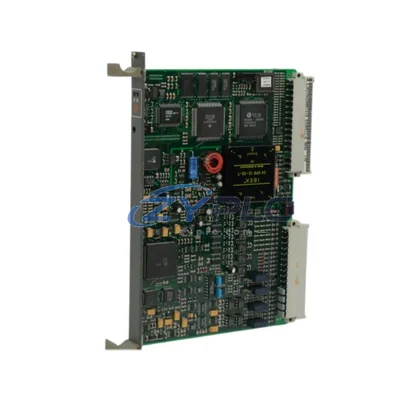
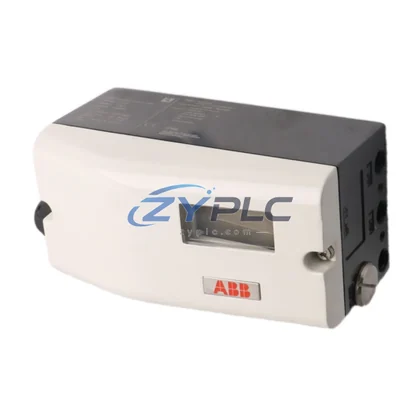
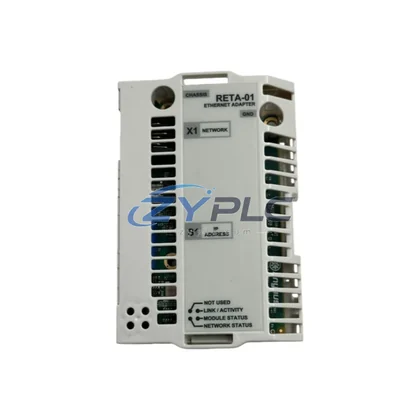
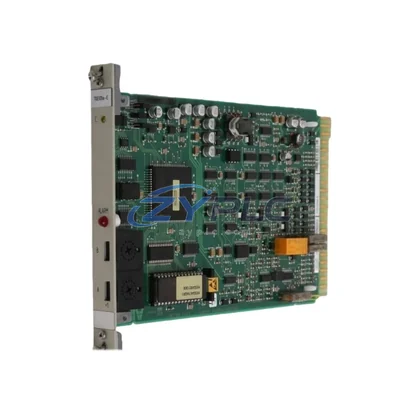
The ABB SPCIS22 is a high-performance Control I/O Module engineered for the ABB INFI 90 Distributed Control System (DCS). Designed to meet the rigorous demands of modern industrial automation, the SPCIS22 serves as a critical interface between field instrumentation and the central control architecture — enabling precise signal acquisition, real-time process feedback, and maintenance-focused control execution. In facilities where uptime and replacement lead time matter, the SPCIS22 delivers the signal integrity and response speed necessary to eliminate wasteful control cycles and keep production lines running at peak efficiency.
At ZYPLC, every ABB SPCIS22 unit is sourced from verified supply channels, subjected to rigorous functional testing prior to shipment, and backed by a warranty terms confirmed during quotation. Whether you are maintaining an existing INFI 90 installation or expanding your DCS infrastructure, the SPCIS22 provides a reliable, drop-in solution with confirmed compatibility across the INFI 90 platform.
Product Specification Table
| Parameter |
Specification / Value |
| Model / SKU |
ABB SPCIS22 |
| Series / Platform |
INFI 90 DCS |
| Module Type |
Control I/O Module |
| Power Consumption |
Low-power design; optimized for continuous 24/7 DCS operation |
| Operating Efficiency |
High-speed I/O scanning with minimal CPU overhead; reduces redundant polling cycles |
| Compatible Systems |
ABB INFI 90, Harmony, and compatible Bailey DCS architectures |
| Application Environment |
Power generation, oil & gas, chemical processing, pulp & paper, water treatment |
| Maintenance Value |
Enables closed-loop energy feedback; reduces idle motor run time and over-cycling |
| Country of Origin |
Sweden |
| Warranty |
warranty terms confirmed during quotation — All units tested before shipment |
| Availability |
RFQ Available — shipment arranged after confirmation |
System Compatibility and Application
The SPCIS22 does not operate in isolation — it is the connective tissue of an energy-optimized INFI 90 control loop. In a typical high-efficiency plant architecture, the SPCIS22 interfaces directly with field transmitters and actuators, feeding real-time process values into the ABB IMMFP12 Multi-Function Processor, which executes the PID and advanced control strategies that govern operating load across the plant. Upstream, the ABB INICT13 communication interface module ensures that I/O data is transmitted across the control network with minimal latency, preserving the timing accuracy that energy-efficient closed-loop control depends on.
On the drive side, the SPCIS22 output signals are frequently used to command ABB ACS880 series variable frequency drives (VFDs), which regulate motor speed in response to real-time process demand rather than running at fixed full speed. This dynamic speed adjustment — enabled by accurate I/O feedback from the SPCIS22 — is one of the most impactful operational-efficiency measures available in industrial motor control, often reducing motor load by 20–50% in pump and fan applications.
For servo-driven axes requiring precise positioning and torque control, the SPCIS22 works alongside ABB MicroFlex e190 servo drives, providing the digital I/O handshaking needed for coordinated motion sequences without unnecessary hold states or energy-wasting dwell periods. In parallel, power quality and consumption data from ABB M2M energy meters and ABB B23 series power analyzers feed back into the INFI 90 system, allowing operators to correlate I/O events with actual energy draw — a foundation for data-driven energy reduction strategies.
The SPCIS22 also integrates seamlessly with ABB AC500 PLC platforms in hybrid control architectures where INFI 90 DCS handles process control while AC500 manages discrete machine logic. Communication between these layers is handled via ABB CI854 PROFIBUS DP communication interface modules, ensuring that energy setpoints, alarm states, and production targets are synchronized across the entire control hierarchy. Operator visibility is maintained through ABB Panel Builder 800 HMI terminals, where energy KPIs, I/O status, and drive performance data are displayed in real time, enabling shift operators to make informed decisions that directly impact operating load.
Maintenance and Replacement Notes
In a power generation facility running continuous boiler feed pump systems, the SPCIS22 monitors flow, pressure, and temperature signals from dozens of field instruments simultaneously. By delivering clean, high-integrity I/O data to the INFI 90 controller, it enables the control system to modulate pump speed via VFD commands in real time — eliminating the throttling losses that occur when pumps run at full speed against partially closed control valves. The result is a measurable reduction in auxiliary power consumption, often representing hundreds of megawatt-hours saved annually in large installations.
In chemical processing plants, where batch cycle efficiency directly determines production cost per unit, the SPCIS22 enables tighter control of reaction vessel conditions. Accurate I/O response means that heating and cooling systems are activated and deactivated at precisely the right moments, preventing the unplanned downtime associated with overshoot and undershoot in temperature control loops. Faster loop response also shortens batch cycle times, improving overall equipment effectiveness (OEE) without additional energy input.
From a maintenance perspective, the SPCIS22’s reliable signal handling reduces the incidence of spurious trips and false alarms that force unnecessary shutdowns. Every unplanned shutdown carries an energy cost — restarting large motors, reheating process vessels, and re-establishing stable operating conditions all consume significant power. By maintaining consistent I/O integrity, the SPCIS22 contributes directly to reduced unplanned downtime and the lower energy overhead that comes with stable, continuous operation.
ZYPLC maintains ready inventory of the ABB SPCIS22 to support urgent maintenance and expansion requirements. All units undergo pre-shipment functional testing to verify I/O channel performance, communication integrity, and power rail stability — ensuring that every module delivered is ready for immediate installation without additional commissioning delays.
Product Sourcing FAQ
Q1: How does the ABB SPCIS22 contribute to operational stability in an INFI 90 DCS environment?
The SPCIS22 provides high-integrity I/O signal acquisition that enables the INFI 90 controller to execute precise, responsive control strategies. Accurate process feedback reduces control loop overshoot, eliminates unnecessary actuator cycling, and allows VFDs and other drive systems to operate at demand-matched speeds rather than fixed full-load conditions — directly reducing operating load across motors, pumps, fans, and compressors.
Q2: Is the ABB SPCIS22 compatible with both legacy INFI 90 and newer ABB Harmony DCS platforms?
Yes. The SPCIS22 is designed for the INFI 90 platform and is compatible with Bailey and Harmony DCS architectures that share the INFI 90 hardware standard. For integration with newer ABB System 800xA environments, compatibility should be verified against the specific system configuration. ZYPLC technical support can assist with compatibility assessment prior to purchase.
Q3: What is the recommended replacement or upgrade path if the SPCIS22 is no longer available for my system?
For systems where a direct SPCIS22 replacement is required, ZYPLC recommends sourcing genuine ABB SPCIS22 modules from verified aftermarket channels to maintain system integrity. In cases where a platform migration is under consideration, ABB’s System 800xA with compatible I/O modules offers a modern alternative with enhanced condition monitoring and analytics capabilities. ZYPLC can advise on both direct replacement and migration strategies.
Q4: What does the warranty terms confirmed during quotation cover, and what is the testing process before shipment?
Every ABB SPCIS22 supplied by ZYPLC is covered by a warranty terms confirmed during quotation against manufacturing defects and functional failures under normal operating conditions. Prior to shipment, each unit undergoes a structured functional test protocol that verifies I/O channel operation, communication bus integrity, and power supply performance. Units that do not meet specification are quarantined and not shipped. This process ensures that customers receive a module that is ready for immediate installation and reliable long-term operation.