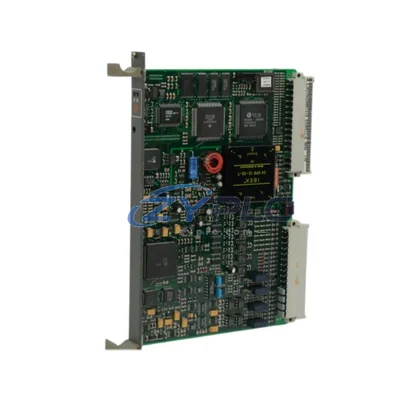
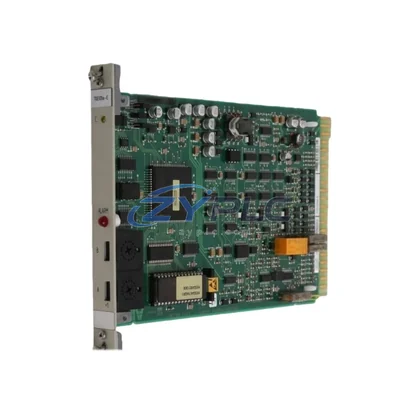
The ABB SPDSI14 is a high-density digital input module purpose-built for deployment within the ABB Symphony Plus distributed control system (DCS) architecture. Designed to operate seamlessly within the Symphony Plus S+ Control and S+ Operations framework, the SPDSI14 serves as a critical signal acquisition node at the I/O layer, collecting discrete field signals from sensors, switches, valve position feedback, and protective relay contacts, then transmitting structured data upward through the control hierarchy to the CPU and operator interface layers. Its role in the overall system is not merely signal collection — it is a foundational element of a coherent, scalable, and maintainable control architecture.
In modern industrial automation, the integrity of a distributed control system depends on the precise coordination of every layer: the control layer, the I/O layer, the network layer, the power layer, the human-machine interface (HMI) layer, and the field execution layer. The SPDSI14 occupies the I/O layer with precision, providing deterministic signal conditioning and status reporting that allows the Symphony Plus controller modules — such as the SPCTRL or SPMC140 — to execute logic with full confidence in the accuracy of field data. This system integration capability ensures that the SPDSI14 does not function as an isolated component but as an active participant in the system’s real-time decision-making chain.
Product Specification Table
| Parameter |
Specification |
| System Role |
Digital Input Module — I/O Layer, Symphony Plus DCS |
| SKU / Part Number |
SPDSI14 |
| Brand |
ABB |
| Series |
Symphony Plus (S+ Control) |
| Input Channels |
14 Digital Input Channels (typical configuration) |
| Signal Type |
Discrete / Digital (dry contact, wet contact) |
| Electrical Interface |
24 VDC nominal field voltage |
| Communication |
Internal Symphony Plus backplane bus |
| Mounting |
Symphony Plus I/O rack / carrier module |
| Installation Environment |
Control cabinet, DIN rail compatible rack, indoor industrial |
| Operating Temperature |
0°C to 60°C (standard industrial range) |
| Origin |
Sweden (ABB SE) |
| Warranty |
warranty terms confirmed during quotation — tested, verified, ready for deployment |
System Compatibility Notes
The SPDSI14 achieves its full value when integrated within a complete Symphony Plus control cabinet architecture. At the control layer, the module interfaces directly with ABB Symphony Plus controller units such as the SPMC140 or SPMC410 master controllers, which execute the process logic and issue commands to the field execution layer based on the digital status signals received from the SPDSI14. The module’s data is transmitted via the Symphony Plus internal backplane, ensuring low-latency, deterministic communication without the overhead of external fieldbus wiring.
At the power layer, the SPDSI14 relies on stable 24 VDC field power supplied through dedicated power supply modules such as the SPSPB01 or compatible Symphony Plus power distribution units. Proper power architecture — including redundant power feeds — ensures that the digital input module maintains continuous operation even during single-point power failures, a critical requirement in process industries where signal loss can trigger unplanned shutdowns.
For I/O expansion, the SPDSI14 is typically installed alongside complementary modules including the SPDSO14 digital output module, the SPASI01 analog input module, and the SPASO01 analog output module, all mounted within the same Symphony Plus I/O rack or carrier assembly. This modular co-location reduces wiring complexity, simplifies cabinet layout, and allows maintenance engineers to swap individual modules without disrupting adjacent channels — a significant advantage in high-availability process environments.
At the network and communication layer, the Symphony Plus architecture supports integration with higher-level SCADA and MES systems via the SPNIS01 network interface module or OPC-UA gateways, allowing the digital status data collected by the SPDSI14 to be aggregated into plant-wide historian databases and real-time dashboards. This connectivity supports predictive maintenance programs and regulatory compliance reporting without requiring additional field wiring or protocol converters.
At the HMI layer, operators interact with the digital input signals through ABB’s System 800xA or Symphony Plus Operations workstations, where the status of each SPDSI14 channel is displayed in real time with alarm management, trend logging, and event sequencing. The tight integration between the I/O module and the HMI layer eliminates the data translation delays common in heterogeneous systems, ensuring that operators receive accurate, up-to-date field status at all times.
For redundancy-critical applications, the SPDSI14 can be deployed in architectures that include redundant controller modules and redundant I/O carriers, supported by the Symphony Plus redundancy framework. This design ensures that a single module failure does not interrupt process monitoring, as the redundant path automatically assumes signal acquisition responsibilities within milliseconds.
Industrial Application Notes
The ABB SPDSI14 is deployed across a wide range of industrial sectors where reliable digital signal acquisition is essential to process safety and operational continuity.
In power generation and electrical utilities, the SPDSI14 monitors breaker status, relay trip signals, and interlock feedback across generator protection panels and substation automation systems. Its deterministic response time ensures that protective relay actions are captured and logged with the precision required for post-event analysis and regulatory reporting.
In oil, gas, and petrochemical processing, the module acquires discrete signals from emergency shutdown (ESD) systems, high-level switches, pressure switch contacts, and motor run/stop feedback. Integrated within a Symphony Plus safety-instrumented architecture, the SPDSI14 contributes to SIL-rated process protection strategies by providing reliable, auditable signal paths from field devices to the safety logic controller.
In water and wastewater treatment, the SPDSI14 collects pump run status, valve open/close confirmation, and flow switch signals across distributed pump stations and treatment facilities. Its ability to operate within extended temperature ranges and harsh electrical environments makes it suitable for outdoor control cabinets and remote unmanned installations.
In mining, metallurgy, and mineral processing, the module monitors conveyor belt status, crusher interlock signals, and hopper level switches within high-vibration, high-dust environments. The Symphony Plus architecture’s inherent noise immunity and the SPDSI14’s robust signal conditioning ensure reliable operation even in electrically noisy industrial environments.
In pharmaceutical and food processing, the SPDSI14 supports batch control architectures by capturing discrete process events — door interlocks, agitator status, CIP valve positions — and feeding them into the Symphony Plus batch management system for recipe execution and audit trail generation.
Product Compatibility FAQ
Q1: Is the SPDSI14 compatible with both Symphony Plus S+ Control and legacy Symphony Harmony architectures?
The SPDSI14 is designed specifically for the Symphony Plus (S+ Control) platform and its associated I/O carrier and backplane infrastructure. While ABB has provided migration pathways from Symphony Harmony to Symphony Plus, direct hardware interchangeability between the two generations is not guaranteed. Engineers migrating from Harmony to Symphony Plus should verify rack and carrier compatibility and consult ABB’s migration documentation before substituting modules. For new installations, the SPDSI14 is fully supported within the current Symphony Plus hardware catalog.
Q2: Can the SPDSI14 be installed in a hot-swap or online replacement procedure without shutting down the controller?
Symphony Plus supports online module replacement in architectures configured with redundant I/O carriers and controller modules. In a properly configured redundant system, the SPDSI14 can be removed and replaced while the redundant module continues to acquire field signals, minimizing process disruption. For non-redundant configurations, module replacement requires coordination with the control system operator to place the affected channels in a safe state prior to removal. All replacement procedures should follow ABB’s published maintenance guidelines and site-specific safety protocols.
Q3: What does the warranty terms confirmed during quotation cover, and how does it support long-term maintenance planning?
Every SPDSI14 supplied by ZYPLC is covered by a warranty terms confirmed during quotation that includes functional testing, electrical verification, and confirmation of communication integrity prior to shipment. This warranty provides assurance that the module will perform to ABB’s published specifications from the moment it is installed. For maintenance engineers managing aging DCS infrastructure, the warranty terms confirmed during quotation reduces the risk associated with sourcing replacement modules from the secondary market and supports the development of predictive maintenance schedules. ZYPLC maintains RFQ-confirmed sourcing of Symphony Plus I/O modules to support rapid deployment and minimize system downtime during unplanned failures.