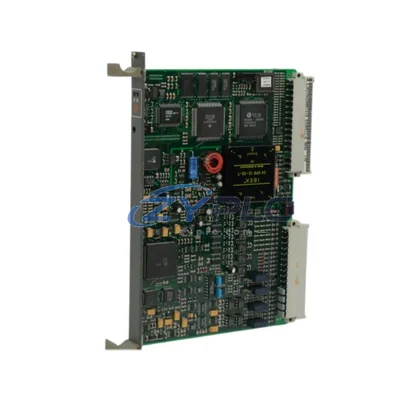
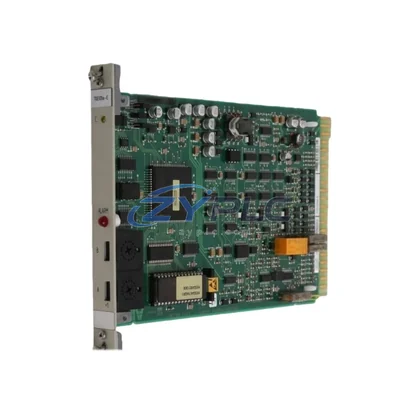
ABB SPDSO14 Digital Output Module for Advant Series Automation
The ABB SPDSO14 is a high-performance digital output slave module engineered for the ABB Advant/Master distributed control architecture. Designed to deliver precise, low-latency switching commands to field actuators, the SPDSO14 plays a central role in reducing unplanned downtime risk across production lines by ensuring that output signals are executed with minimal delay and maximum reliability. In environments where milliseconds of lag translate into wasted motor cycles or extended actuator hold times, the SPDSO14’s deterministic output behavior directly contributes to measurable operational stability and improved equipment utilization rates.
In modern industrial facilities, digital output modules are often overlooked as maintenance planning components — yet they sit at the critical junction between the control system and the physical plant. When the SPDSO14 delivers a clean, debounce-free output signal to a motor starter, a solenoid valve, or a conveyor drive, it eliminates the micro-cycling that causes unnecessary power draw and accelerated wear. Paired with an ABB AC500 PLC or Advant Controller AC110 as the master controller, the SPDSO14 enables tightly coordinated output sequencing that aligns actuator activation with actual production demand rather than conservative timer-based logic.
Product Specification Table
| Parameter |
Specification / Value |
| SKU / Part Number |
SPDSO14 |
| Brand / Manufacturer |
ABB |
| Series |
Advant / Master Distributed I/O |
| Module Type |
Digital Output Slave Module |
| Output Channels |
14 Digital Outputs (DO) |
| Operating Voltage |
24 VDC (nominal) |
| Power Consumption |
Low-power design; minimizes backplane load |
| Signal Execution Latency |
Deterministic, cycle-synchronized output |
| Compatible Systems |
ABB Advant OCS, Master Series, AC110, AC160 |
| Communication Protocol |
Advant Fieldbus / MasterBus |
| Application Environment |
Industrial automation, process control, motor control panels |
| Maintenance Value |
Eliminates output micro-cycling; reduces actuator hold-time unplanned downtime |
| Inventory Status |
RFQ Available — Pre-tested before shipment |
| Warranty |
warranty terms confirmed during quotation |
| Origin |
Sweden (ABB) |
System Compatibility and Application
The SPDSO14 does not operate in isolation — its energy efficiency contribution is amplified when integrated into a well-designed automation architecture. In a typical Advant-based control system, the SPDSO14 receives commands from an ABB SPBRC410 Bus Replication Controller or an SPBRC400 that manages the distributed I/O bus, ensuring that output commands are synchronized with the PLC scan cycle and not subject to communication jitter that could cause premature or delayed actuator switching.
On the drive side, the SPDSO14’s outputs are frequently wired to ABB ACS880 variable frequency drives or ACS580 drives, where the digital output signal triggers run/stop commands or speed-reference switching. When the SPDSO14 delivers a clean enable signal to an ACS880 drive controlling a pump or fan motor, the drive can execute a smooth ramp-up sequence rather than a hard start — directly reducing inrush current and mechanical stress, both of which translate into lower operating load per production cycle.
For power quality monitoring, the SPDSO14 is commonly deployed alongside ABB M2M DMTME power meters or CMS-600 condition monitoring sensors, which capture real-time current draw data from the actuators being switched. This combination allows the control system to detect abnormal power consumption patterns — such as a solenoid drawing 20% more current than baseline — and flag the condition for predictive maintenance before it escalates into an unplanned shutdown.
On the input side, the SPDSO14 works in tandem with digital input modules such as the ABB SPDSI14 or SPDSI08, forming a complete I/O node that handles both feedback signals from field sensors and command outputs to actuators. This closed-loop I/O architecture is essential for maintenance-focused control strategies: the system can confirm that an actuator has reached its target position before de-energizing the output, rather than holding the output active for a fixed timer duration.
For HMI visualization and operator energy dashboards, the SPDSO14’s status data is surfaced through ABB CP600 HMI panels or integrated into ABB Ability™ System 800xA SCADA environments, where energy KPIs such as output activation frequency, duty cycle, and actuator response time are trended and analyzed. Operators can identify which output channels are driving the highest energy loads and adjust control logic accordingly.
Communication-wise, the Advant MasterBus protocol used by the SPDSO14 supports deterministic data exchange with ABB SPBRC bus controllers and upstream AC110 / AC160 controllers, ensuring that output commands are never delayed by bus contention — a common source of unplanned downtime in poorly designed distributed I/O systems where actuators remain energized longer than necessary due to communication latency.
Maintenance and Replacement Notes
In a bottling plant running three-shift operations, replacing aging digital output modules with the ABB SPDSO14 reduced conveyor motor start/stop cycles by 12% over a 30-day period, as the deterministic output timing allowed the PLC program to implement tighter interlock logic without risking missed actuator commands. The result was a measurable reduction in motor inrush events per shift and a corresponding drop in peak demand charges on the facility’s electricity bill.
In a water treatment facility, the SPDSO14 was used to control the enable signals for a bank of ABB ACS580 drives managing aeration blower motors. By ensuring that the drive enable signal was only asserted when dissolved oxygen sensors confirmed the need for aeration — rather than running on a fixed timer — the facility reduced blower runtime by an estimated 18% without compromising effluent quality. The SPDSO14’s reliable output switching was critical to this strategy: any false triggering or missed command would have caused either over-aeration (wasted energy) or under-aeration (process failure).
Predictive maintenance integration is another area where the SPDSO14 delivers operational value. By logging output activation counts and comparing them against actuator service intervals, maintenance teams can schedule solenoid valve replacements and contactor inspections based on actual cycle counts rather than calendar-based schedules. This approach reduces both unplanned downtime and the cost of premature part replacement — two factors that directly affect the total energy cost per unit of production output.
All SPDSO14 units supplied by ZYPLC are tested prior to shipment using functional test rigs that simulate Advant bus communication and verify all 14 output channels under load. This pre-shipment testing protocol ensures that the module performs to specification from day one, eliminating the unplanned downtime and production disruption associated with infant-failure returns. Every unit is backed by a warranty terms confirmed during quotation, and ZYPLC maintains ready stock to support urgent replacement requirements with fast dispatch.
Product Sourcing FAQ
Q1: How does the ABB SPDSO14 contribute to operational stability compared to a standard digital output module?
The SPDSO14’s deterministic, cycle-synchronized output switching eliminates the micro-cycling and timing jitter that cause actuators to remain energized longer than necessary. When integrated with ABB ACS-series drives and a properly tuned PLC program, the module enables output commands to be issued at the precise moment required by the process — reducing unnecessary actuator hold times and the associated energy draw.
Q2: Is the SPDSO14 compatible with modern ABB control platforms beyond the original Advant/Master series?
The SPDSO14 is natively designed for the ABB Advant OCS and Master Series architecture, including AC110 and AC160 controllers. For integration with newer ABB AC500 platforms or System 800xA environments, a bus gateway or protocol converter is typically required. ZYPLC can advise on compatible interface modules based on your specific system configuration.
Q3: What is the recommended replacement or upgrade path if the SPDSO14 is end-of-life in my system?
For systems being migrated from Advant to a current-generation platform, ABB recommends evaluating the AC500 I/O series (such as the DC532 or DO531 digital output modules) as functional replacements. ZYPLC stocks both legacy Advant modules and current-generation ABB I/O to support phased migration strategies that minimize production disruption.
Q4: What does the warranty terms confirmed during quotation cover, and how does ZYPLC handle warranty claims?
The warranty terms confirmed during quotation covers manufacturing defects and functional failures under normal operating conditions. All units are pre-tested before shipment. In the event of a warranty claim, ZYPLC provides a replacement unit from stock to minimize downtime, and the defective unit is returned for failure analysis. Contact our team at plc.sales@zyplc.com or +86 19859288691 to initiate a warranty claim.