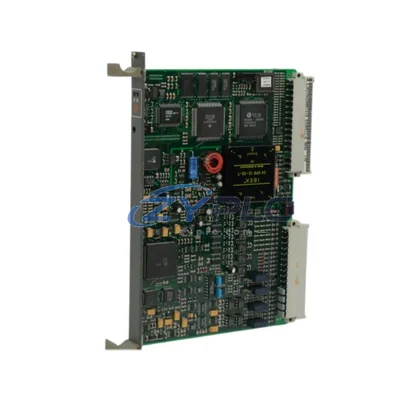
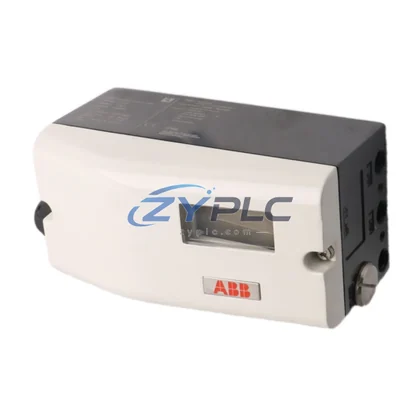
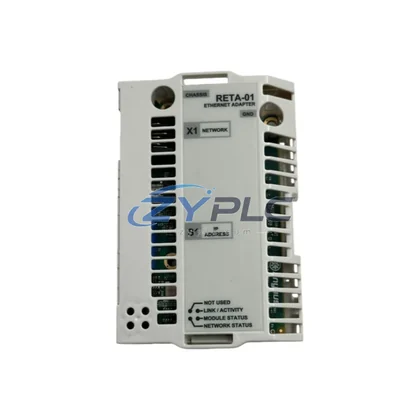
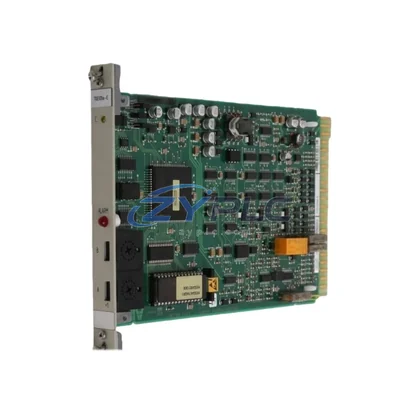
ABB UAD142A01 AC Drive for ACS SAMI Automation
The ABB UAD142A01 is a high-performance AC drive module engineered for the ACS SAMI series, designed to deliver measurable operational stability and precise motor control in demanding industrial environments. As factories face increasing pressure to reduce operational energy costs and improve equipment utilization rates, the UAD142A01 provides a direct, hardware-level solution — regulating motor speed and torque output in real time to match actual load demand rather than running at fixed full-speed operation.
In modern production lines, uncontrolled motor operation is one of the largest sources of avoidable unplanned downtime. The UAD142A01 addresses this by implementing variable frequency drive (VFD) technology within the ACS SAMI control architecture, enabling smooth acceleration and deceleration profiles that reduce mechanical stress, lower peak current draw, and extend motor service life. The result is a measurable reduction in kWh consumption per production cycle — directly improving the energy cost per unit of output.
Beyond raw operational stability, the UAD142A01 contributes to production line rhythm optimization. By enabling precise speed control, it allows downstream conveyor systems, pump stations, and compressor units to operate in synchronized coordination with upstream PLC command signals — reducing idle time, eliminating speed mismatch between stations, and improving overall equipment effectiveness (OEE). When integrated with an ABB ACS800 or ACS880 drive controller, the UAD142A01 can participate in multi-axis coordinated motion sequences, further tightening cycle time control.
Product Specification Table
| Parameter |
Specification |
| Product SKU |
UAD142A01 |
| Brand / Series |
ABB / ACS SAMI |
| Module Type |
AC Drive Module (VFD) |
| Drive Technology |
Variable Frequency Drive (VFD) |
| Compatible Systems |
ACS SAMI, ACS800, ACS880 Series |
| Application Environment |
Industrial Motor Control, Pump, Fan, Conveyor, Compressor |
| Energy Saving Value |
Up to 30–50% reduction in motor load vs. fixed-speed operation |
| Origin |
Finland |
| Warranty |
warranty terms confirmed during quotation |
| Stock Status |
RFQ Available — export shipping options available |
| Testing |
Full outgoing inspection and functional test before shipment |
System Compatibility and Application
The UAD142A01 is most effective when deployed as part of a layered industrial automation system. At the field level, ABB I/O modules such as the NDIO-01 or NINT-41 interface board collect real-time feedback from motor encoders, current sensors, and temperature probes, feeding this data upward to the drive control layer. The UAD142A01 processes these signals to continuously adjust output frequency and voltage, maintaining optimal motor efficiency across varying load conditions.
At the supervisory level, an ABB AC500 PLC or AC500-S safety PLC can issue speed reference commands to the UAD142A01 via PROFIBUS-DP or Modbus RTU fieldbus protocols, enabling centralized maintenance planning across multiple drive axes. This communication layer also supports integration with ABB Ability™ Energy Manager or third-party SCADA platforms for plant-wide power consumption monitoring and reporting.
For applications requiring servo-level precision, the UAD142A01 can operate alongside ABB MicroFlex e150 servo drives and ACSM1 motion control modules, creating a hybrid drive topology where high-inertia loads are handled by the VFD and precision positioning axes are managed by servo controllers — each contributing to a reduction in total installed motor power demand.
Power quality at the input side is maintained through ABB ACH580 series line filters and du/dt filters, which suppress harmonic distortion generated by the drive’s PWM switching. This protects upstream transformers and distribution panels from reactive power losses, further improving the facility’s overall power factor and reducing utility demand charges.
On the HMI side, an ABB CP600 operator panel or compatible Siemens TP700 Comfort HMI can display real-time drive status, operating load trends, and fault diagnostics — giving maintenance teams immediate visibility into drive health without requiring manual inspection of the control cabinet.
Maintenance and Replacement Notes
In a typical manufacturing scenario — such as a bottling line, injection molding cell, or HVAC system — motors controlled by the UAD142A01 operate at variable speeds matched to actual process demand. During low-load periods (shift changeovers, partial production runs, or standby states), the drive automatically reduces motor speed, cutting operating load proportionally to the cube of the speed reduction. A motor running at 80% speed consumes only ~51% of the energy it would at full speed — a saving that compounds across dozens of motors in a large facility.
Predictive maintenance is another key benefit. The UAD142A01 continuously monitors output current waveforms, thermal load, and run-hour counters. Abnormal current signatures — indicative of bearing wear, rotor imbalance, or coupling misalignment — trigger early warning alerts before catastrophic failure occurs. This shifts maintenance from reactive (unplanned downtime) to predictive (scheduled intervention), reducing mean time to repair (MTTR) and improving overall line availability.
Every UAD142A01 unit supplied by ZYPLC undergoes a full functional test prior to shipment, including load simulation, insulation resistance verification, and communication protocol handshake testing. Units are shipped with a warranty terms confirmed during quotation covering manufacturing defects and operational failures under normal industrial use conditions. export shipping options available ensures minimal lead time for urgent replacement or new installation projects.
Product Sourcing FAQ
Q1: How much energy can the UAD142A01 save compared to a direct-on-line (DOL) motor starter?
In variable-torque applications such as pumps and fans, VFD control via the UAD142A01 typically reduces operating load by 30–50% compared to DOL starters. The exact saving depends on the load profile, duty cycle, and motor rating. For constant-torque applications (conveyors, compressors), savings are lower but still significant due to soft-start current reduction and elimination of mechanical throttling losses.
Q2: Is the UAD142A01 compatible with my existing ACS SAMI or ACS800 system?
Yes. The UAD142A01 is a native ACS SAMI series module and is also compatible with ACS800 drive systems that share the same hardware platform. For ACS880 integration, verify the firmware version and option module slot configuration. ZYPLC’s technical team can assist with compatibility verification before purchase.
Q3: What is the replacement and testing process when ordering from ZYPLC?
All UAD142A01 units are sourced from verified supply channels and undergo outgoing functional testing including power-on verification, communication interface check, and thermal cycling. Units are shipped with full test documentation. If a unit is found to be defective on arrival, ZYPLC’s warranty terms confirmed during quotation covers replacement or refund under standard RMA procedures.
Q4: Can the UAD142A01 be integrated into a predictive maintenance or condition monitoring system?
Yes. When connected to an ABB AC500 PLC or SCADA system via PROFIBUS-DP or Modbus RTU, the UAD142A01 exposes real-time parameters including output frequency, motor current, DC bus voltage, and fault codes. These data points can be logged and analyzed by maintenance planning platforms to identify efficiency degradation trends and schedule proactive maintenance interventions.