Allen-Bradley 1336-BDB-SP17C Industrial Network Interface for 1336 Series: Bridging the Industrial Data Link
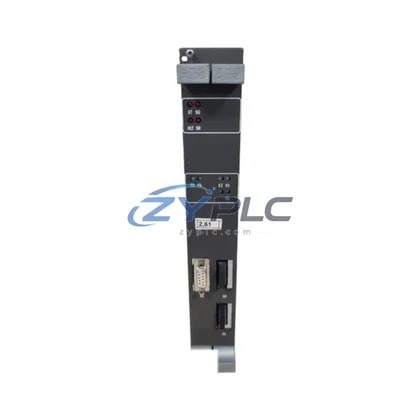
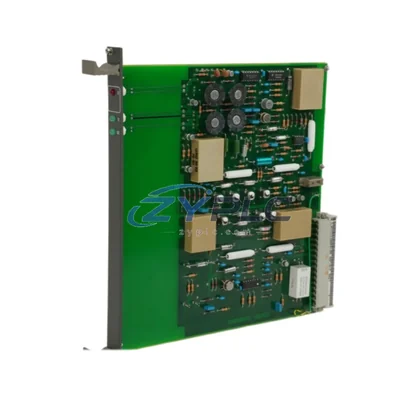
The Allen-Bradley 1336-BDB-SP17C (Part No. 74101-482-51) is a purpose-built DeviceNet and Remote I/O (RIO) communication gateway designed for the 1336 Series family of AC variable frequency drives. In modern smart factory environments, where seamless data flow between field devices, PLC controllers, SCADA systems, and upper-level management platforms is mission-critical, this gateway serves as the essential protocol bridge that eliminates data isolation and enables real-time drive monitoring, remote diagnostics, and centralized automation control.
Sourced, tested, and supplied by ZYPLC with a warranty terms confirmed during quotation and pre-shipment functional verification, the 1336-BDB-SP17C is available for immediate RFQ and rapid global delivery.
Compatibility & Integration Notes
| Parameter |
Specification |
| SKU / Part Number |
1336-BDB-SP17C / 74101-482-51 |
| Brand / Series |
Allen-Bradley / 1336 Series VFD |
| Communication Protocol |
DeviceNet, Remote I/O (RIO) |
| Interface Type |
Communication Gateway / Adapter Board |
| Network Compatibility |
DeviceNet (CAN-based), Allen-Bradley RIO Bus |
| Transmission Capability |
Real-time drive parameter read/write, status feedback, fault reporting |
| System Application |
PLC integration, SCADA/HMI connectivity, VFD remote control |
| Compatible Drives |
Allen-Bradley 1336 PLUS, 1336 PLUS II, 1336 IMPACT, 1336 FORCE |
| Product Category |
Industrial Communication Gateway |
| Warranty |
warranty terms confirmed during quotation, Pre-Shipment Tested |
| Origin |
USA |
| Availability |
RFQ Available — shipment arranged after confirmation |
Connected Automation Data Flow
In a typical smart factory deployment, the 1336-BDB-SP17C sits at the heart of the drive communication architecture. The data journey begins at the field level: sensors and encoders feed real-time speed, torque, and load signals into the Allen-Bradley 1336 PLUS II or 1336 FORCE variable frequency drive. The 1336-BDB-SP17C gateway then translates these drive-level signals into DeviceNet or RIO protocol frames, making them immediately readable by upstream control systems.
A ControlLogix L7x or CompactLogix L3x PLC controller, connected via a 1756-DNB DeviceNet Scanner module, polls the gateway cyclically — receiving drive status words, output frequency, motor current, and fault codes in real time. This data is simultaneously forwarded to a PanelView Plus 7 HMI terminal, where operators can monitor drive performance, adjust speed references, and acknowledge alarms without leaving the control room.
At the network layer, a Stratix 5700 managed industrial Ethernet switch aggregates data from multiple DeviceNet segments and routes it upstream to the SCADA server. The SCADA platform — whether Rockwell’s FactoryTalk View SE or a third-party system — receives structured drive data via OPC-DA or OPC-UA, enabling trend logging, KPI dashboards, and production reporting. For remote sites, an Allen-Bradley 1783-NATR NAT router or an edge gateway device tunnels encrypted drive data over WAN to the enterprise MES layer, supporting remote diagnostics and predictive maintenance workflows.
In multi-drive conveyor or pump station applications, the 1336-BDB-SP17C enables coordinated control across several 1336 IMPACT drives simultaneously. Each drive’s operating state — running, faulted, at-speed, or in current limit — is reported back through the RIO bus to the master PLC scan list, ensuring the control system always has a complete, synchronized picture of the production line. When a fault occurs, the gateway’s real-time fault word transmission triggers an immediate alarm in the SCADA system and logs the event with a timestamp, dramatically reducing mean time to repair (MTTR).
For facilities integrating legacy RIO-based architectures with newer DeviceNet infrastructure, the 1336-BDB-SP17C provides a cost-effective bridge, avoiding the need for full drive replacement and protecting existing capital investment in 1336 Series hardware.
Solving Data Isolation in Industrial Sites
One of the most persistent challenges in industrial automation is the coexistence of multiple, incompatible communication protocols across different generations of equipment. A plant floor may simultaneously run Allen-Bradley RIO, DeviceNet, Modbus RTU, and Ethernet/IP — each segment operating as a data island, invisible to the others. The 1336-BDB-SP17C directly addresses this fragmentation for 1336 Series drives by providing a standardized DeviceNet and RIO interface that integrates seamlessly into the existing control network without requiring drive firmware changes or hardware replacement.
Remote monitoring is another critical pain point. Without a communication gateway, operators must physically walk to each drive cabinet to read fault codes or adjust parameters — a time-consuming and error-prone process in large facilities. With the 1336-BDB-SP17C installed, all drive parameters are accessible remotely through the PLC and SCADA system, enabling engineers to diagnose faults, adjust speed references, and reset drives from a central workstation or even a mobile device connected to the plant network.
Production line transparency is equally enhanced. By exposing drive-level data — energy consumption, run hours, thermal status, and output frequency — to the SCADA historian, plant managers gain the visibility needed to optimize energy usage, schedule preventive maintenance, and reduce unplanned downtime. System expansion is also simplified: adding a new 1336 Series drive to an existing DeviceNet network requires only node address configuration on the 1336-BDB-SP17C, with no changes to the PLC program structure.
Every unit supplied by ZYPLC undergoes pre-shipment functional testing to verify communication initialization, parameter read/write integrity, and fault reporting accuracy — ensuring that the gateway performs correctly from the moment it is installed on the production line.
Industrial Connectivity FAQ
Q1: What communication protocols does the 1336-BDB-SP17C support, and is it compatible with my existing PLC network?
The 1336-BDB-SP17C supports both DeviceNet (CAN-based, IEC 62026-3) and Allen-Bradley Remote I/O (RIO) protocols. It is fully compatible with ControlLogix, CompactLogix, and SLC 500 PLC platforms using the appropriate DeviceNet scanner or RIO adapter modules. If your network uses a 1756-DNB or 1747-SDN scanner, the gateway will integrate without additional hardware.
Q2: What is the typical communication latency, and is it suitable for real-time drive control?
DeviceNet cyclic I/O messaging on the 1336-BDB-SP17C operates at scan rates configurable from 10 ms to 500 ms, depending on network load and node count. For most VFD speed reference and status feedback applications, a 20–50 ms cycle time is standard and fully adequate for real-time closed-loop control. For time-critical applications, reducing the DeviceNet network node count and using explicit messaging only for configuration will minimize latency.
Q3: How does the warranty terms confirmed during quotation work, and what does pre-shipment testing cover?
All 1336-BDB-SP17C units supplied by ZYPLC carry a warranty terms confirmed during quotation from the date of shipment. Pre-shipment testing includes communication initialization verification, DeviceNet node address assignment, parameter read/write functional checks, and fault word transmission validation. Units that do not pass all test criteria are not shipped. Warranty claims are handled directly by ZYPLC with replacement or repair turnaround within agreed lead times.
Q4: Can the 1336-BDB-SP17C be used to expand an existing DeviceNet network with additional 1336 Series drives?
Yes. The 1336-BDB-SP17C is designed for network scalability. Each gateway occupies one DeviceNet node address (0–63), and multiple units can coexist on the same DeviceNet trunk line provided total network cable length and termination resistance specifications are observed. Adding a new drive to the network requires only node address configuration — no PLC program restructuring is needed if the scanner’s scanlist is updated to include the new node.