Allen-Bradley 1336-QOUT-SP19A Industrial Network Interface: Bridging the 1336 VFD Series into Smart Factory Data Links
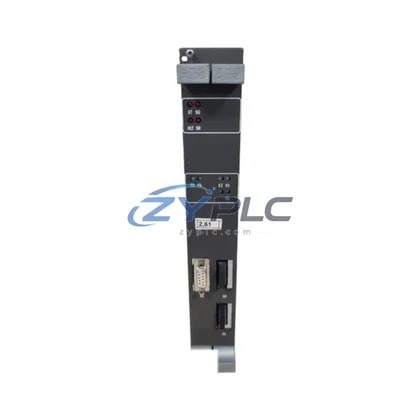
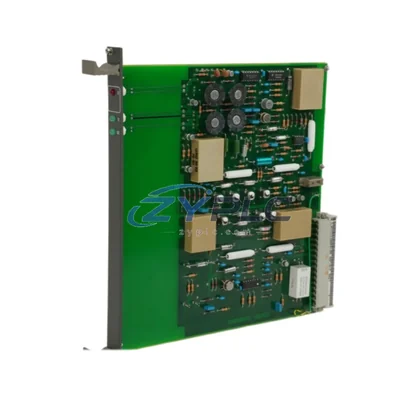
The Allen-Bradley 1336-QOUT-SP19A Transistor Output Assembly is a precision-engineered interface module designed to extend the communication and control capabilities of the Allen-Bradley 1336 PLUS / 1336 IMPACT VFD Series into modern industrial network architectures. In smart manufacturing environments where real-time data visibility, protocol interoperability, and system uptime are non-negotiable, the 1336-QOUT-SP19A serves as a critical link between field-level drive hardware and upper-layer automation systems including SCADA, DCS, and MES platforms.
As industrial sites evolve toward IIoT-enabled production, the demand for seamless data flow from variable frequency drives to supervisory control layers has never been greater. The 1336-QOUT-SP19A addresses this need by providing a reliable transistor output interface that integrates directly with the 1336 VFD’s internal communication backplane, enabling structured data exchange across DeviceNet, Remote I/O (RIO), and ControlNet network segments — the primary communication protocols supported by the 1336 PLUS and 1336 IMPACT drive families.
Compatibility & Integration Notes
| Parameter |
Specification |
| SKU / Part Number |
1336-QOUT-SP19A |
| Brand |
Allen-Bradley (Rockwell Automation) |
| Series |
1336 PLUS / 1336 IMPACT VFD Series |
| Module Type |
Transistor Output Assembly |
| Protocol Support |
DeviceNet, Remote I/O (RIO), ControlNet (via compatible comm adapter) |
| Interface Type |
Transistor (NPN/PNP compatible output) |
| Communication Role |
Drive-to-Network Output Signal Interface |
| Network Compatibility |
Allen-Bradley 1336 PLUS, 1336 IMPACT, 1336 FORCE drive platforms |
| System Application |
SCADA Integration, PLC Control, Remote I/O, HMI Feedback, Drive Monitoring |
| Transmission Capability |
Digital output signal routing for drive status, fault, and run feedback |
| Operating Environment |
Industrial panel-mount, DIN-rail compatible enclosure systems |
| Warranty |
warranty terms confirmed during quotation — Tested before shipment |
| Availability |
RFQ Available — Fast global DHL / FedEx shipping |
Connected Automation Data Flow
In a typical smart factory deployment, the 1336-QOUT-SP19A sits at the intersection of drive-level signal generation and network-level data consumption. The data flow begins at the motor and drive layer: the Allen-Bradley 1336 PLUS II or 1336 IMPACT VFD monitors motor speed, torque, current, and fault status in real time. The 1336-QOUT-SP19A captures these drive output states — run, fault, at-speed, and direction signals — and routes them as discrete transistor outputs to the plant’s control network.
These output signals are consumed upstream by a Allen-Bradley 1747-SDN DeviceNet Scanner installed in a SLC 500 or MicroLogix 1100 PLC rack, which aggregates drive status data from multiple 1336 VFDs across the production line. The PLC logic then forwards processed data via ControlNet to a 1756-CNB ControlNet Bridge Module in a ControlLogix L61 chassis, where the plant’s primary automation program executes speed references, interlocks, and sequencing logic.
At the HMI layer, a PanelView Plus 700 terminal connected via Ethernet/IP to the ControlLogix system displays real-time drive status, alarm conditions, and production throughput metrics. Operators can acknowledge faults, adjust speed setpoints, and monitor energy consumption — all driven by the discrete output data originating from the 1336-QOUT-SP19A module. For remote monitoring, a 1783-NATR NAT Router or Stratix 5700 managed switch bridges the plant network to the enterprise SCADA layer, where historians such as FactoryTalk Historian SE log drive performance data for trend analysis and predictive maintenance.
In multi-drive applications — such as conveyor systems, pump stations, or HVAC control panels — the 1336-QOUT-SP19A enables each 1336 VFD node to report its operational state independently to the Remote I/O network, allowing a single 1747-ASB Remote I/O Adapter to consolidate status signals from up to eight drives into one scanner rack. This architecture eliminates point-to-point hardwiring between drives and the control panel, reduces installation labor, and dramatically improves fault isolation and diagnostic speed.
For edge-level data aggregation, a Moxa MGate MB3180 or compatible industrial protocol gateway can bridge legacy RIO data from the 1336 network segment into Modbus TCP or MQTT streams, feeding cloud-based MES or ERP platforms with live production data — completing the full IIoT data chain from motor shaft to enterprise dashboard.
Solving Data Isolation in Industrial Sites
One of the most persistent challenges in legacy industrial environments is protocol fragmentation: drives, PLCs, sensors, and SCADA systems that speak different communication languages, creating data silos that prevent operators from achieving true production transparency. The 1336-QOUT-SP19A directly addresses this by providing a standardized transistor output interface that translates drive-internal status signals into discrete network-readable data points compatible with Allen-Bradley’s Remote I/O and DeviceNet ecosystems.
Sites running mixed-generation equipment — where newer PowerFlex 525 or PowerFlex 755 drives coexist with legacy 1336 PLUS units — often struggle with unified monitoring. By ensuring the 1336 VFDs remain fully networked via the 1336-QOUT-SP19A, maintenance teams can maintain a single SCADA view across all drive generations without replacing functional legacy hardware. This extends asset life, protects capital investment, and defers costly system-wide upgrades.
Remote diagnostics is another critical value delivered by this module. When a 1336 VFD trips on an overcurrent or ground fault, the 1336-QOUT-SP19A immediately propagates the fault output signal to the PLC, which triggers an alarm in the SCADA system and timestamps the event in the historian. Maintenance engineers can remotely identify the faulted drive, review the fault code history, and dispatch the correct spare parts — all before physically arriving at the panel. This capability reduces mean time to repair (MTTR) and minimizes unplanned downtime.
For production line transparency, the module enables real-time OEE (Overall Equipment Effectiveness) tracking by feeding drive run/stop status into MES systems. Downtime events are automatically logged, shift reports are generated without manual data entry, and bottleneck drives are identified through historical trend analysis — transforming reactive maintenance into a proactive, data-driven strategy.
System expansion is equally straightforward: additional 1336 VFDs can be added to the Remote I/O network by installing additional 1336-QOUT-SP19A modules, without rewiring the control panel or modifying the PLC program beyond adding new I/O map entries. This plug-and-extend architecture supports phased production capacity growth aligned with business demand.
Industrial Connectivity FAQ
Q1: What communication protocols does the 1336-QOUT-SP19A support, and is it compatible with modern Ethernet/IP networks?
The 1336-QOUT-SP19A is a transistor output assembly designed for the Allen-Bradley 1336 VFD platform, natively supporting Remote I/O (RIO) and DeviceNet communication via compatible 1336 communication adapter options (such as the 1336-GM1 or 1336-BDC-SP1). Direct Ethernet/IP connectivity requires an upstream gateway or scanner module such as the 1756-ENBT or a protocol converter. For sites requiring native EtherNet/IP integration, pairing the 1336 drive with a 1203-EN1 communication module alongside the 1336-QOUT-SP19A provides a complete networked drive solution.
Q2: How does the 1336-QOUT-SP19A affect network latency and real-time control performance?
The transistor output signals generated by the 1336-QOUT-SP19A are hardware-level discrete outputs with response times in the millisecond range, making them suitable for time-critical interlock and status feedback applications. Network latency is primarily determined by the scanner cycle time of the upstream PLC (typically 5–20 ms for RIO networks), not by the output assembly itself. For applications requiring sub-millisecond response, hardwired interlock circuits should supplement the networked output signals.
Q3: Can the 1336-QOUT-SP19A be used in a multi-drive system with centralized SCADA monitoring?
Yes. The 1336-QOUT-SP19A is specifically designed for multi-node drive architectures. Each module provides independent output signals that are mapped to unique I/O addresses in the Remote I/O or DeviceNet scanner, allowing a single PLC and SCADA system to monitor and respond to the status of multiple 1336 VFDs simultaneously. This architecture is widely used in conveyor systems, pump stations, compressor banks, and HVAC applications where centralized visibility across all drives is essential.
Q4: What quality assurance and warranty coverage is provided with the 1336-QOUT-SP19A?
Every 1336-QOUT-SP19A unit supplied by ZYPLC undergoes pre-shipment functional testing to verify output signal integrity, connector condition, and board-level component health. All units are covered by a warranty terms confirmed during quotation from the date of shipment. Availability is confirmed via RFQ for same-day or next-day dispatch via DHL Express or FedEx International Priority, with full tracking provided. For urgent production line requirements, expedited sourcing and air freight options are available upon request.