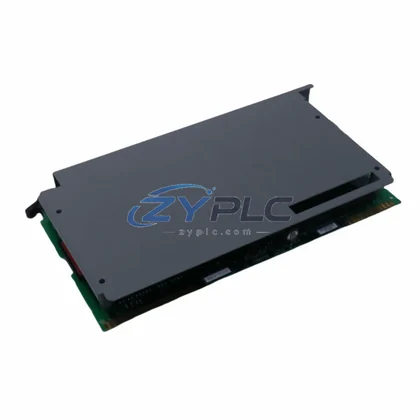
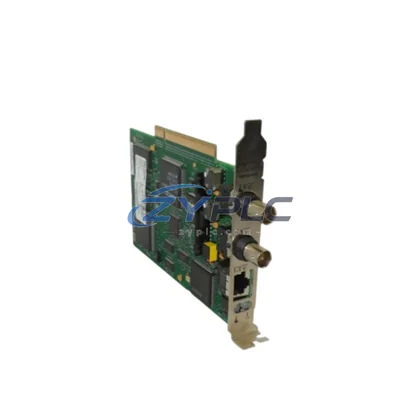
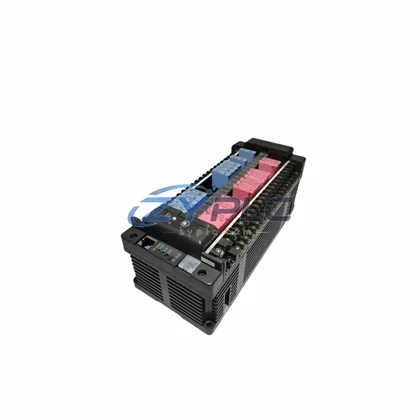
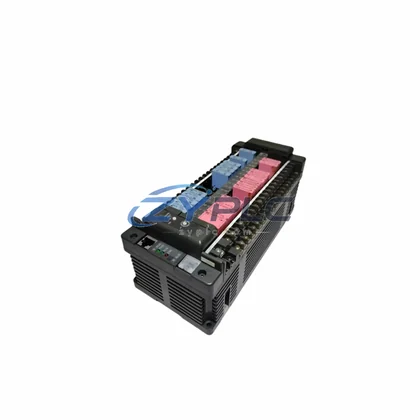
Allen-Bradley 1745-E102 I/O Expansion for SLC 150
In a well-engineered industrial control system, every module must earn its place within the architecture. The Allen-Bradley 1745-E102 is a dedicated expansion unit designed for the SLC 100/150 controller platform — a compact, fixed-architecture PLC family that has served light manufacturing, material handling, and process control applications for decades. Rather than functioning as a standalone component, the 1745-E102 is purpose-built to extend the I/O capacity of the SLC 150 base unit, enabling engineers to scale discrete control without migrating to a larger rack-based system. Understanding where this module fits within the broader control hierarchy is essential to deploying it effectively.
Product Specification Table
| Parameter |
Specification |
| System Role |
I/O Expansion Unit for SLC 100/150 Fixed Controller |
| Compatible Platform |
Allen-Bradley SLC 100 / SLC 150 (1745 Series) |
| I/O Expansion Capacity |
Extends discrete I/O count beyond base unit capacity |
| Communication Interface |
Direct expansion bus connection to SLC 150 base unit |
| Input Voltage Range |
Per I/O module configuration (AC/DC discrete) |
| Installation Environment |
Industrial panel mount; DIN rail compatible |
| Operating Temperature |
0°C to 60°C (32°F to 140°F) |
| system integration |
Fully compatible with SLC 150 control architecture |
| Warranty |
warranty terms confirmed during quotation — tested before shipment |
System Compatibility Notes
The 1745-E102 does not operate in isolation — it is a structural extension of the Allen-Bradley SLC 150 (1745-LP151) base controller, which serves as the CPU and primary I/O hub in compact automation cells. When the base unit’s onboard I/O points are exhausted by field devices such as proximity sensors, pushbuttons, solenoid valves, and motor starters, the 1745-E102 provides the additional discrete channels needed to complete the control loop without redesigning the panel.
From a power distribution standpoint, the SLC 150 system draws its logic power from the base unit’s internal supply, and the 1745-E102 expansion connects directly via the dedicated expansion port — eliminating the need for a separate backplane or rack power supply module. This is a significant architectural advantage in space-constrained control cabinets where a modular rack system such as the SLC 500 (1747 series) would be oversized for the application.
For applications requiring operator interaction, the SLC 150 platform is commonly paired with compact HMI terminals such as the Allen-Bradley PanelView 550 (2711-B5A1) or smaller PanelView Component units, which communicate with the controller via DH-485 or DF1 serial protocols. The 1745-E102 expansion does not affect this communication layer — the HMI continues to interface directly with the SLC 150 CPU while the expansion unit transparently adds field I/O capacity.
In systems where the SLC 150 must communicate upstream to a supervisory layer, a 1747-KE or 1747-PIC interface converter is typically used to bridge the controller’s serial port to a DH-485 network segment. This allows the SLC 150 — with its expanded I/O via the 1745-E102 — to participate in a multi-node network alongside other Allen-Bradley controllers, data collection nodes, or SCADA gateways. Terminal blocks and marshalling panels connected to the expansion unit’s I/O wiring terminals are typically sourced from the same control cabinet build, ensuring consistent signal routing and labeling across the installation.
For applications that have outgrown the SLC 150 platform entirely, the natural migration path leads to the Allen-Bradley SLC 500 (1747-L532 or 1747-L543) modular controller family, which supports a full rack-based architecture with dedicated 1746-series I/O modules, redundant communication adapters, and integration with RSLogix 500 programming software. Engineers familiar with the SLC 150 ladder logic environment will find the transition to SLC 500 straightforward, as both platforms share the same instruction set and programming conventions.
Industrial Application Notes
The Allen-Bradley 1745-E102 is most commonly deployed in light-to-medium industrial environments where the SLC 150 controller manages a defined set of discrete control tasks. In packaging line automation, the base SLC 150 unit may handle conveyor sequencing, reject gate control, and product counting, while the 1745-E102 expansion accommodates additional sensor inputs from label verification systems, fill-level detectors, or end-of-line inspection stations — all without adding a second controller or expanding the control cabinet footprint.
In water and wastewater treatment facilities, compact PLC systems like the SLC 150 with expansion are used to control pump station sequencing, valve actuation, and level monitoring in remote lift stations where panel space is limited and system complexity is low. The 1745-E102 allows engineers to add float switch inputs, alarm outputs, and auxiliary pump control points to an existing installation without replacing the controller.
In manufacturing assembly cells, the SLC 150 with 1745-E102 expansion is used to coordinate fixture clamping, part presence detection, and end-of-cycle signaling across a small workcell. The deterministic scan cycle of the SLC 150 ensures consistent timing across all I/O points — both onboard and expanded — which is critical for maintaining production line rhythm and minimizing false fault conditions.
For mining and material handling applications, the rugged operating temperature range and industrial-grade construction of the 1745-E102 make it suitable for conveyor control panels, crusher sequencing systems, and transfer station automation where environmental conditions are demanding and long-term reliability is non-negotiable. Preventive maintenance schedules for these systems benefit from the module’s straightforward replacement procedure — a trained technician can swap the expansion unit and restore full I/O capacity with minimal downtime, supported by ZYPLC’s RFQ-confirmed sourcing and same-day shipping capability.
Across all these applications, the 1745-E102 contributes to long-term maintenance efficiency by keeping the control architecture simple and well-documented. A single-platform SLC 150 system with expansion is easier to troubleshoot, easier to train operators on, and easier to source replacement parts for than a hybrid system combining multiple controller families. ZYPLC supports RFQ sourcing for the 1745-E102 and related SLC 150 components, with each unit tested prior to shipment and covered by a warranty terms confirmed during quotation.
Product Compatibility FAQ
Q1: Is the 1745-E102 compatible with both the SLC 100 and SLC 150 controllers?
The 1745-E102 is designed for use within the Allen-Bradley 1745 series platform, which encompasses both the SLC 100 and SLC 150 fixed controllers. However, the SLC 150 (1745-LP151 and related variants) is the most common deployment platform for this expansion unit. Engineers should verify the specific base unit model and firmware revision against Rockwell Automation’s compatibility documentation before installation. ZYPLC’s technical team can assist with compatibility confirmation prior to purchase.
Q2: Can the 1745-E102 be used in a redundant control architecture?
The SLC 150 platform is a fixed, non-redundant controller architecture — it does not support hot-standby or redundant CPU configurations natively. For applications requiring redundancy, the appropriate migration path is to the Allen-Bradley ControlLogix or GuardLogix platforms, which support full controller redundancy via dedicated redundancy modules. The 1745-E102 is best suited for applications where simplicity, compactness, and cost-effectiveness are prioritized over redundancy. For critical process applications, ZYPLC recommends consulting with a system integrator to evaluate the appropriate control platform.
Q3: What does the warranty terms confirmed during quotation cover, and what is the testing process before shipment?
Every Allen-Bradley 1745-E102 unit shipped by ZYPLC undergoes functional testing to verify I/O channel integrity, expansion bus communication, and physical connector condition before dispatch. The warranty terms confirmed during quotation covers manufacturing defects and functional failures under normal operating conditions. Units that fail during the warranty period are replaced or repaired at no additional cost. ZYPLC maintains RFQ-confirmed sourcing of the 1745-E102 to support both immediate replacement needs and planned maintenance schedules, with fast international shipping available to minimize system downtime.