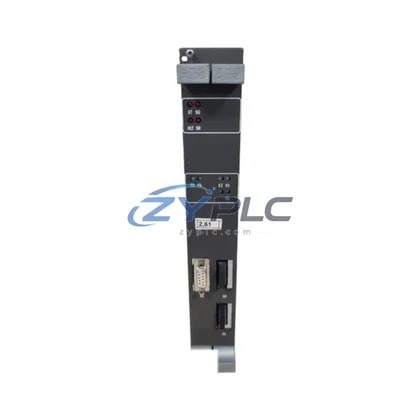
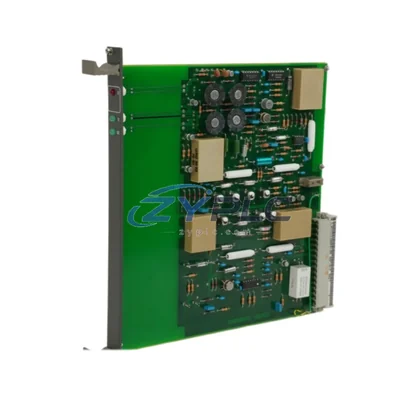
Allen-Bradley 1757-FIM Fieldbus Interface for 1757: Compatibility and Replacement Notes
The Allen-Bradley 1757-FIM Fieldbus Interface Module occupies a critical position within the 1757 Series process automation architecture, serving as the dedicated communication bridge between the controller layer and field-level FOUNDATION Fieldbus H1 segments. Rather than functioning as a standalone component, the 1757-FIM is engineered to operate as an integral node within a layered control hierarchy — coordinating signal flow from field instruments upward through the I/O layer, across the backplane, and into the 1757-SRM System Redundancy Module or the primary 1757-VNIM VMEbus Network Interface Module. Understanding the 1757-FIM requires understanding the full architecture it serves.
In a complete 1757-based control system, the 1757-FIM interfaces directly with the 1757-VNIM, which manages VMEbus communications and provides the backbone for data exchange between the fieldbus segment and the host controller. The 1757-SRM adds redundancy at the system level, ensuring that a single point of failure in the controller or communication path does not interrupt process continuity. The 1757-FIM supports this redundancy architecture by maintaining deterministic fieldbus communication even during controller switchover events, making it indispensable in high-availability applications such as refinery unit operations, offshore platform control, and continuous chemical processing.
At the field device layer, the 1757-FIM connects to FOUNDATION Fieldbus H1 segments carrying instruments such as smart transmitters, positioners, and analyzers. These devices communicate using the standard H1 protocol at 31.25 kbps, and the 1757-FIM manages the link scheduling, function block execution, and alarm reporting for each segment. This tight integration with field instrumentation means that the 1757-FIM directly influences loop performance, scan cycle consistency, and diagnostic transparency across the entire process control layer.
Product Specification Table
| Parameter |
Specification |
| System Role |
FOUNDATION Fieldbus H1 Interface Module for 1757 VMEbus Architecture |
| Compatible Platform |
Allen-Bradley 1757 Series (PlantPAx / PROVOX migration systems) |
| Fieldbus Protocol |
FOUNDATION Fieldbus H1 (31.25 kbps) |
| H1 Segments Supported |
Up to 4 H1 segments per module (application-dependent) |
| Backplane Interface |
VMEbus (compatible with 1757-VNIM) |
| Redundancy Support |
Compatible with 1757-SRM System Redundancy Module |
| Operating Voltage |
24 VDC (supplied via VMEbus backplane) |
| Operating Temperature |
0°C to 60°C (32°F to 140°F) |
| Relative Humidity |
5% to 95% non-condensing |
| Mounting |
VMEbus rack, standard 6U form factor |
| Certifications |
CE, UL (industrial control equipment) |
| Country of Origin |
United States |
| Warranty |
warranty terms confirmed during quotation — covers hardware defects and functional failure under normal operating conditions |
System Compatibility Notes
The 1757-FIM achieves its full value when deployed within a coordinated system architecture. At the controller level, the 1757-VNIM VMEbus Network Interface Module acts as the primary host interface, translating VMEbus transactions into fieldbus-compatible data structures that the 1757-FIM can schedule and execute. When system redundancy is required, the 1757-SRM System Redundancy Module provides bumpless switchover capability, ensuring that the 1757-FIM continues segment management without interrupting H1 link scheduling during a primary controller fault.
Power integrity is maintained through dedicated fieldbus power conditioners and segment terminators installed at each H1 segment. These components, while external to the 1757-FIM itself, are essential to stable fieldbus communication — voltage ripple, improper termination, or inadequate segment power will degrade the 1757-FIM’s ability to maintain deterministic communication with field devices. Engineers specifying the 1757-FIM should account for segment loading, cable length, and device count in accordance with FOUNDATION Fieldbus physical layer standards.
At the human-machine interface layer, operator workstations running Rockwell Automation’s RSView32 or FactoryTalk View SE receive process data aggregated through the 1757-VNIM and presented via the 1757-FIM’s segment data. Alarm states, device diagnostics, and function block outputs are surfaced to the HMI in real time, enabling operators to monitor fieldbus device health without leaving the control room environment. This integration between the 1757-FIM, the VNIM, and the HMI platform creates a unified operational picture across the control hierarchy.
For I/O expansion in hybrid architectures, the 1757-FIM coexists with conventional I/O modules mounted in the same VMEbus rack. Discrete and analog I/O modules handling non-fieldbus signals share the backplane with the 1757-FIM, and the 1757-VNIM arbitrates data flow between all modules. This mixed architecture is common in brownfield modernization projects where legacy hardwired I/O must be retained alongside new FOUNDATION Fieldbus instrumentation, and the 1757-FIM is specifically designed to operate reliably in these hybrid environments.
Industrial Application Notes
In petroleum refining and petrochemical processing, the 1757-FIM is deployed in unit operations requiring continuous, high-integrity process control. Distillation column control, reactor temperature management, and compressor surge control all benefit from the deterministic communication and device-level diagnostics that FOUNDATION Fieldbus provides through the 1757-FIM. The module’s ability to execute function blocks at the field device level — independent of the host controller scan cycle — reduces latency in critical control loops and improves response to process upsets.
In power generation and utilities, the 1757-FIM supports boiler combustion control, turbine auxiliary systems, and water treatment processes where regulatory compliance and audit trail requirements demand reliable, documented communication between field instruments and the control system. The 1757-FIM’s diagnostic capabilities allow maintenance teams to identify instrument drift, valve stiction, and communication errors before they escalate into process disturbances or unplanned shutdowns.
In mining and minerals processing, the 1757-FIM is applied in grinding circuit control, flotation cell management, and tailings handling systems. These environments impose demanding conditions on control hardware — high vibration, wide temperature swings, and dusty atmospheres — and the 1757-FIM’s industrial-grade construction ensures reliable operation within properly specified control enclosures. The module’s compatibility with the 1757-SRM redundancy architecture is particularly valued in continuous mining operations where unplanned downtime carries significant production cost.
In water and wastewater treatment, the 1757-FIM enables precise dosing control, pump station management, and effluent monitoring through integrated fieldbus instrumentation. Municipal utilities and industrial water treatment facilities rely on the 1757-FIM’s long-term stability and the availability of replacement modules to maintain system uptime across multi-decade plant lifecycles. Stocking a verified 1757-FIM with a warranty terms confirmed during quotation provides maintenance teams with confidence that the replacement module will perform to specification from the moment it is installed.
Product Compatibility FAQ
Q1: Is the 1757-FIM compatible with both primary and redundant 1757 controller configurations?
Yes. The 1757-FIM is designed to operate within 1757 VMEbus racks equipped with the 1757-SRM System Redundancy Module. In a redundant configuration, the 1757-FIM continues H1 segment management and function block execution during controller switchover, maintaining process continuity without operator intervention. Engineers should verify rack slot assignments and VNIM firmware revision compatibility when integrating the 1757-FIM into an existing redundant system.
Q2: What commissioning steps are required when replacing a 1757-FIM in an operating system?
Replacement of the 1757-FIM in an operating 1757 system requires coordination with the host controller configuration. The replacement module must be configured with the correct H1 segment parameters, device addresses, and function block schedules using the appropriate fieldbus configuration tool (such as Rockwell Automation’s RSFieldbus or a compatible FOUNDATION Fieldbus configurator). Prior to installation, engineers should export the existing segment configuration, verify the replacement module’s firmware version, and confirm that the VMEbus rack power budget accommodates the module’s current draw. A warranty terms confirmed during quotation on the replacement 1757-FIM provides assurance that the module is free from manufacturing defects and will perform to specification throughout the commissioning and initial operating period.
Q3: How does the 1757-FIM support long-term maintenance and spare parts planning?
The 1757-FIM is a mature product within the Allen-Bradley 1757 Series ecosystem, and maintaining a verified spare in inventory is a recognized best practice for facilities operating 1757-based control systems. Because the 1757 platform is no longer in active production, sourcing quality-tested replacement modules from reputable suppliers is essential to sustaining system availability. Each 1757-FIM supplied by ZYPLC is tested for functional integrity and covered by a warranty terms confirmed during quotation, providing maintenance planners with a documented quality baseline. system integration with the existing 1757 architecture — including VNIM compatibility, SRM redundancy support, and H1 segment configuration — is verified prior to shipment, reducing the risk of compatibility issues during emergency replacement scenarios.