Product identification and sourcing context
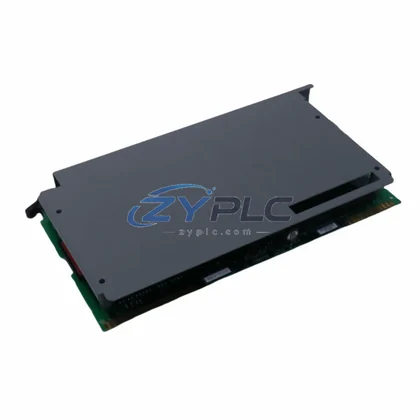
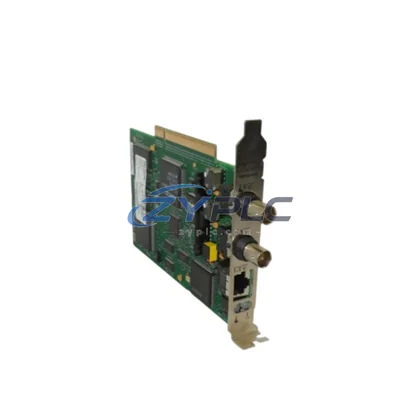
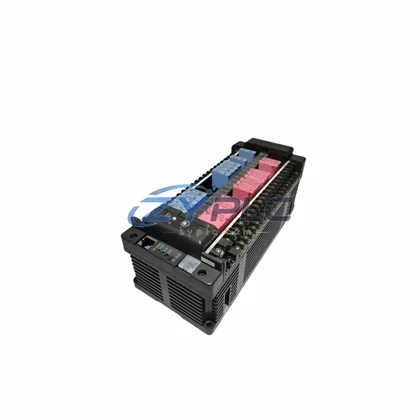
Allen-Bradley 1771-DS Discrete Input Module is handled as a quote-based PLC-5 / 1771 legacy automation spare for industrial maintenance, replacement, and installed-base support. ZYPLC checks the complete catalog number, suffix, series context, required condition, quantity, and destination country before quotation.
| Brand |
Allen-Bradley |
| Model / SKU |
1771-DS |
| Series context |
PLC-5 |
| Part type |
Sensors & I/O |
| RFQ basis |
Availability, condition, lead time, and export shipment options are confirmed before quote. |
Where this part is typically used
This item is requested for legacy PLC rack support, I/O replacement, and ControlNet/Ethernet bridge planning. Allen-Bradley and Rockwell installed-base systems often require exact catalog-number matching; similar modules may differ by series letter, firmware, voltage, network protocol, or chassis compatibility.
RFQ information for maintenance teams
- Exact catalog number, series letter, and firmware or revision if available.
- Quantity, urgency, required condition, and destination country.
- Photos of front label, side label, terminal area, or existing spare packaging.
- Installed platform context such as ControlLogix, CompactLogix, PLC-5, SLC 500, FLEX I/O, PanelView, PowerFlex, or Kinetix where applicable.
Browse related Allen-Bradley spare parts, review the PLC-5 series, or compare similar Sensors & I/O records. If the exact revision is not shown, send the model and photos so the RFQ can be checked manually.
Request quote for this model
The Allen-Bradley 1771-DS is a discrete input module engineered for the PLC-5 platform, delivering reliable signal acquisition that forms the foundation of industrial automation. In modern manufacturing environments where every watt of consumed power and every second of machine downtime carries a direct cost, the 1771-DS plays a critical role in ensuring that control systems receive accurate, low-latency digital input data — enabling smarter decisions at the controller level that translate into measurable reductions in downtime and improved production line throughput.
Product Specification Table
| Parameter |
Specification / Value |
| SKU / Part Number |
1771-DS |
| Module Type |
Discrete Input Module |
| Compatible Platform |
Allen-Bradley PLC-5 Series (1771 I/O Chassis) |
| Input Voltage Range |
DC Discrete Input (24 VDC nominal) |
| Power Consumption |
Low-draw design; minimizes backplane power budget impact |
| Operating Environment |
Industrial panel environments; 0–60°C operating range |
| Application Sectors |
Discrete manufacturing, process control, maintenance planning, material handling |
| Maintenance Value |
Accurate signal capture reduces false triggers, unnecessary actuator cycles, and idle energy draw |
| Warranty |
Warranty and support terms confirmed before quote |
| Availability |
Availability confirmed by RFQ; pre-shipment testing available |
System Compatibility and Application
The 1771-DS does not operate in isolation — it is one node in a tightly integrated control architecture where every component contributes to system-wide energy efficiency. Within a typical PLC-5 installation, the 1771-DS works alongside the Allen-Bradley 1771-OBD discrete output module to form a complete I/O layer that feeds real-time field data to the Allen-Bradley PLC-5/20 or PLC-5/40 processor. The processor uses this input data to execute ladder logic that governs motor start/stop sequences, conveyor timing, and actuator engagement — all of which directly affect operating load on the production floor.
For drive-level energy control, the 1771-DS integrates seamlessly with systems that include Allen-Bradley PowerFlex 700 variable frequency drives (VFDs), where discrete input signals from the 1771-DS can trigger speed ramp-up or ramp-down commands, preventing the energy spikes associated with across-the-line motor starts. When paired with a PowerFlex 40 compact drive in smaller motor applications, the same input logic can enforce soft-start sequences that extend motor life while cutting peak demand charges.
On the communications side, the 1771-DS chassis integrates with Allen-Bradley 1771-KGM or 1771-SDN scanner modules that bridge the PLC-5 backplane to DeviceNet or DH+ networks, enabling centralized condition monitoring across multiple machine cells. This network visibility allows plant engineers to correlate discrete input activity — such as sensor trigger frequency — with operating load data captured by Allen-Bradley PowerMonitor 500 or PowerMonitor 1000 energy meters, creating a closed-loop picture of where power is being used and where it can be reduced.
For HMI-level visibility, the 1771-DS system pairs naturally with Allen-Bradley PanelView 600 or PanelView Plus 7 terminals, where operators can monitor input states, acknowledge alarms, and adjust production parameters in real time — reducing the manual intervention cycles that often lead to energy-inefficient machine operation. The combination of accurate discrete input data, VFD-controlled motor drives, and HMI feedback creates an automation architecture that is inherently more maintenance-focused than systems relying on fixed-speed drives and manual operator control.
Maintenance and Replacement Notes
In real-world production environments, the value of the 1771-DS is most visible in applications where machine cycle timing is tightly linked to energy cost. Consider a packaging line where conveyor motors, pneumatic actuators, and reject mechanisms must all respond to discrete sensor inputs. Without accurate, low-latency input data, the PLC-5 controller may hold motors in a running state longer than necessary, waiting for confirmation signals that arrive late due to module degradation or signal noise. The 1771-DS eliminates this latency, allowing the controller to execute precise stop commands the moment a sensor confirms product position — reducing motor run time and the associated energy draw by measurable margins across a full production shift.
In press and stamping applications, the 1771-DS captures position feedback from proximity sensors and limit switches that define the machine’s stroke cycle. When this data is clean and reliable, the PLC-5 can optimize dwell times and reduce unnecessary idle strokes — a direct contributor to both operational stability and tooling longevity. Facilities that have replaced degraded or counterfeit I/O modules with genuine Allen-Bradley 1771-DS units have reported improvements in cycle consistency and reductions in unplanned downtime, both of which carry significant energy and cost implications.
Predictive maintenance is another area where the 1771-DS contributes to maintenance planning. By monitoring the frequency and pattern of discrete input signals over time, maintenance teams can identify sensors that are beginning to fail — triggering false inputs that cause unnecessary actuator cycles and unplanned downtime. Catching these failures early, before they cause line stoppages, keeps production running at its designed energy efficiency point rather than the degraded efficiency that accompanies reactive maintenance cycles.
All units supplied are drawn from verified inventory, subjected to pre-shipment functional testing, and covered by a warranty and support terms confirmed before quote — ensuring that the energy efficiency gains delivered by the 1771-DS are backed by supply chain reliability and post-sale support.
Product Sourcing FAQ
Q: How does the 1771-DS contribute to reducing operating load on a production line?
A: By providing accurate, low-latency discrete input signals to the PLC-5 processor, the 1771-DS enables the controller to execute precise motor stop, actuator release, and conveyor pause commands exactly when field conditions are met — eliminating the unnecessary run time that occurs when input data is delayed or unreliable. This directly reduces motor load and pneumatic system demand across each production cycle.
Q: Is the 1771-DS compatible with current Allen-Bradley drive and monitoring systems?
A: Yes. The 1771-DS operates within the 1771 I/O chassis and interfaces with PLC-5 processors that communicate with modern Allen-Bradley components including PowerFlex VFDs, PowerMonitor energy meters, and PanelView HMI terminals via DH+, DeviceNet, or ControlNet gateway modules. It is fully compatible with existing PLC-5 installations without requiring hardware redesign.
Q: What is the recommended replacement or upgrade path if the 1771-DS is no longer available?
A: For facilities planning a platform migration, the functional equivalent in the ControlLogix architecture is the Allen-Bradley 1756-IB16 or 1756-IB32 discrete input module, which offers higher channel density and native EtherNet/IP connectivity. However, for sites committed to the PLC-5 platform, the 1771-DS remains the correct and supported module choice, and availability confirmed by RFQ is subject to RFQ confirmation before shipment.
Q: What does the warranty and support terms confirmed before quote cover, and what is the testing process before shipment?
A: Every 1771-DS unit undergoes pre-shipment functional verification to confirm input channel integrity, backplane communication, and signal response performance. The warranty and support terms confirmed before quote covers defects in materials and workmanship under normal operating conditions. Units that fail to perform as specified within the warranty period are replaced, ensuring continuity of your production line’s maintenance planning strategy without additional procurement cost.