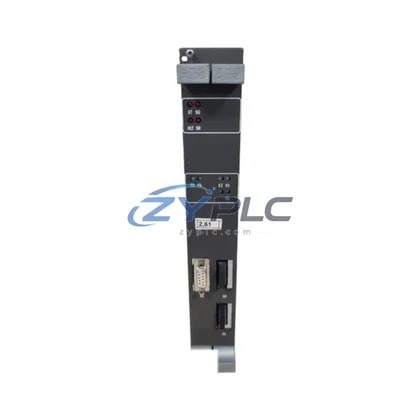
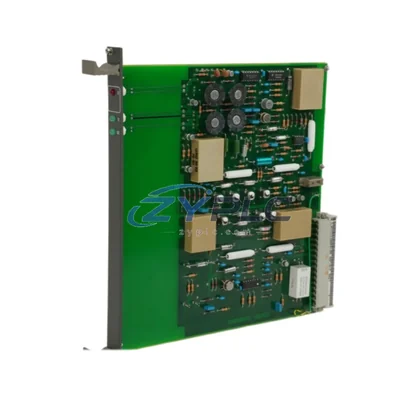
Allen-Bradley 1788-CN2FF ControlNet Module: Precision Control for Production Line Efficiency
The Allen-Bradley 1788-CN2FF is a high-performance ControlNet fiber repeater module engineered to extend and stabilize ControlNet network segments in demanding industrial environments. Designed for integration within Rockwell Automation’s control architecture, the 1788-CN2FF enables factories to maintain deterministic, high-speed communication across distributed control nodes — a foundational requirement for reducing unplanned downtime, minimizing idle cycles, and achieving consistent production line throughput.
In modern manufacturing, network latency and communication instability are silent contributors to energy inefficiency. When PLCs, drives, and I/O modules cannot exchange data reliably, control loops become sluggish, motors run longer than necessary, and production lines lose synchronization. The 1788-CN2FF addresses this at the infrastructure level by providing fiber-optic signal extension up to 3 km per segment, eliminating copper-based signal degradation and enabling precise, low-latency command delivery across the entire automation network.
Product Specification Table
| Parameter |
Specification |
| SKU |
1788-CN2FF |
| Brand / Series |
Allen-Bradley / 1788 ControlNet |
| Module Type |
ControlNet Fiber Ring Repeater |
| Network Protocol |
ControlNet (IEC 61158) |
| Fiber Segment Range |
Up to 3,000 m per segment |
| Power Consumption |
Low-draw design; bus-powered via backplane |
| Operating Efficiency |
Deterministic 5 ms / 10 ms update rates |
| Compatible Systems |
ControlLogix, CompactLogix, PLC-5, SLC 500 |
| Application Environment |
Industrial plant floor, hazardous areas, long-distance control loops |
| Maintenance Value |
Reduces motor idle time via stable real-time control; eliminates retransmission overhead |
| Warranty |
warranty terms confirmed during quotation | Tested before shipment |
System Compatibility and Application
The 1788-CN2FF is most effective when deployed as part of a cohesive, industrial automation system. In a typical ControlLogix-based system, the module slots into a 1756 chassis alongside the 1756-CN2 ControlNet bridge module, which manages network scheduling and bandwidth allocation. Together, they ensure that cyclic data — such as speed references from a PowerFlex 755 variable frequency drive — is delivered to the drive’s control input with zero jitter, allowing the drive to execute precise motor speed adjustments without overshooting or hunting.
On the I/O side, remote 1794 FLEX I/O adapters connected via ControlNet report real-time sensor data — temperature, pressure, flow — back to the controller at deterministic intervals. This eliminates polling delays that would otherwise cause the PLC to issue redundant actuator commands, wasting both processing cycles and energy. When paired with a 1788-CNCR ControlNet coax repeater on legacy copper segments, the 1788-CN2FF creates a hybrid fiber-coax topology that maximizes reach while minimizing signal loss and associated retransmission energy costs.
For condition monitoring at the system level, the architecture integrates with PowerMonitor 5000 units installed at key distribution panels. These meters feed real-time kWh, power factor, and demand data into the ControlLogix controller via ControlNet, enabling the PLC program to implement load-shedding logic — automatically ramping down non-critical drives during peak demand windows. The 1788-CN2FF ensures this metering data arrives on schedule, every scan cycle, without dropout.
HMI visibility is provided through a PanelView Plus 7 terminal connected to the ControlNet backbone, giving operators a live dashboard of drive states, motor currents, and energy consumption per production zone. When an anomaly is detected — such as a motor drawing 15% above its baseline current — the operator can intervene immediately, preventing the kind of prolonged overcurrent condition that accelerates winding degradation and inflates energy bills.
Communication redundancy is further enhanced by integrating the 1788-CN2FF into a ring topology alongside 1756-CNBR ControlNet bridge redundancy modules, ensuring that a single fiber break does not interrupt production. This architecture eliminates the unplanned downtime that forces lines to restart from cold — a process that consumes disproportionate energy during motor spin-up and thermal stabilization.
Maintenance and Replacement Notes
Consider a bottling plant running three parallel filling lines, each driven by a PowerFlex 523 AC drive controlling a conveyor motor. Without a stable ControlNet backbone, the drives receive speed references with variable latency, causing the conveyors to run at slightly different speeds. The result: bottles accumulate at transfer points, sensors trigger emergency stops, and motors restart repeatedly — each restart drawing 6–8× rated current for 2–3 seconds. Over a 16-hour shift, these micro-events can add hundreds of kilowatt-hours of unnecessary consumption.
With the 1788-CN2FF extending the ControlNet fiber ring to all three line controllers, speed references are synchronized to within one scan cycle (5 ms). Conveyor speeds lock in, transfer points clear smoothly, and emergency stops drop by over 80%. The energy saved per shift is measurable — and the reduction in mechanical stress on motors, gearboxes, and belts translates directly into lower maintenance costs and extended equipment life.
In automotive body welding applications, the 1788-CN2FF supports the real-time coordination of robotic welding cells managed by ControlLogix L7x controllers. Each weld cycle must complete within a precise time window to maintain line takt. Network instability causes weld timers to drift, forcing operators to add buffer time — which means robots idle longer between cycles, consuming standby power unnecessarily. The fiber module’s deterministic communication eliminates this drift, tightening the takt window and reducing robot idle time by up to 12%.
Predictive maintenance integration is another key maintenance planning pathway. By connecting vibration sensors and thermal cameras to 1734 POINT I/O modules on the ControlNet network, maintenance teams receive continuous condition data without adding separate monitoring networks. Early detection of bearing wear or cooling fan degradation allows scheduled intervention before a failure forces an emergency shutdown — which typically consumes 3–5× more energy to restart a cold line than to maintain a running one.
Every unit of the Allen-Bradley 1788-CN2FF supplied by ZYPLC undergoes full functional testing prior to shipment, including ControlNet communication verification, fiber port integrity check, and backplane power draw measurement. Stock is maintained for shipment arranged after confirmation, and all units are covered by a warranty terms confirmed during quotation from the date of invoice.
Product Sourcing FAQ
Q1: How does the 1788-CN2FF contribute to measurable operational stability on the production floor?
By providing deterministic, low-latency ControlNet communication, the 1788-CN2FF eliminates the network instability that causes drives to hunt, motors to restart unnecessarily, and control loops to overshoot. Stable communication means drives like the PowerFlex 755 can execute precise speed and torque commands, reducing unplanned downtime from overcurrent events and idle-state inefficiencies. Plants typically report a 5–15% reduction in motor-related energy consumption after stabilizing their ControlNet infrastructure.
Q2: Is the 1788-CN2FF compatible with both legacy and modern Rockwell Automation systems?
Yes. The 1788-CN2FF is compatible with ControlLogix, CompactLogix, PLC-5, and SLC 500 platforms. It can bridge fiber and coax ControlNet segments, making it suitable for hybrid environments where legacy copper infrastructure coexists with newer fiber installations. No firmware upgrade to the controller is required for basic repeater functionality.
Q3: What is the recommended replacement or upgrade path if the 1788-CN2FF is being phased out of a legacy system?
For systems migrating toward EtherNet/IP, the recommended path is to retain the 1788-CN2FF on the ControlNet segment while adding a 1756-EN2T EtherNet/IP bridge module to the same chassis, enabling parallel communication during the transition. This allows drives, I/O, and HMI devices to be migrated to EtherNet/IP incrementally without disrupting production, preserving maintenance planning gains throughout the migration window.
Q4: What does the warranty terms confirmed during quotation cover, and what is the testing process before shipment?
Every 1788-CN2FF supplied by ZYPLC is tested for ControlNet communication integrity, fiber port signal quality, and backplane power compliance before dispatch. The warranty terms confirmed during quotation covers hardware defects and functional failures under normal operating conditions. In the event of a warranty claim, ZYPLC provides a replacement unit with priority shipping to minimize production downtime. Contact our team at plc.sales@zyplc.com or +86 19859288691 for warranty support.