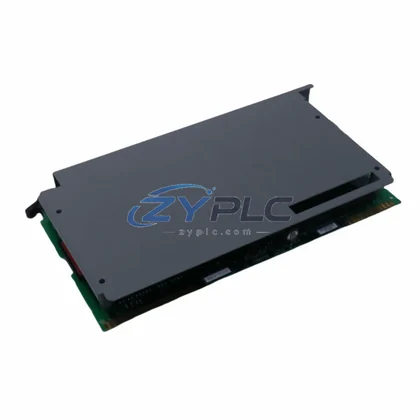
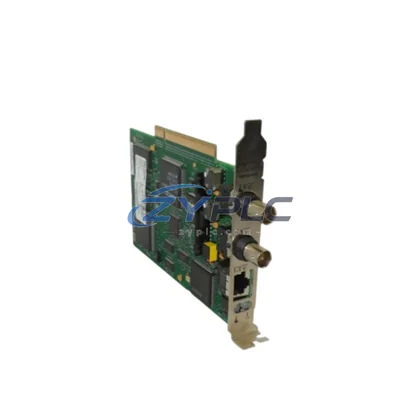
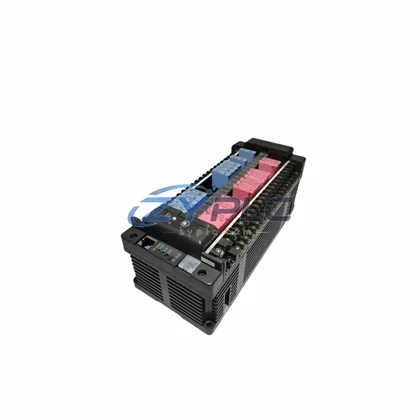
The Allen-Bradley 1791-DSIB12 is a 12-input DC Block I/O module engineered for seamless integration within the 1791 Series distributed I/O architecture. Rather than functioning as a standalone component, the 1791-DSIB12 is designed to operate as a coordinated node within a layered automation system — connecting field-level signals to the control layer with precision, reliability, and long-term maintainability. Whether deployed in discrete manufacturing, power distribution, water treatment, or process control environments, this module delivers the signal integrity and system consistency that modern industrial automation demands.
In a complete control system architecture, the 1791-DSIB12 occupies the I/O layer — the critical interface between physical field devices and the programmable logic controller. Its role is to capture digital input signals from sensors, limit switches, proximity detectors, and push-button stations, then transmit that data upstream to the CPU module via the 1791 Series communication backplane. This upstream-downstream signal flow is fundamental to maintaining real-time process visibility across the entire control hierarchy.
Product Specification Table
| Parameter |
Specification |
| System Role |
Distributed Block I/O Input Node — 1791 Series Architecture |
| SKU / Part Number |
1791-DSIB12 |
| Brand |
Allen-Bradley (Rockwell Automation) |
| Series |
1791 Block I/O |
| Module Type |
Digital DC Input Module |
| Number of Inputs |
12 DC Input Points |
| Input Voltage Range |
10–30V DC (24V DC nominal) |
| Input Current |
Approx. 7 mA per input at 24V DC |
| Communication Interface |
1791 Series Parallel I/O Backplane |
| Isolation |
Optical isolation between field and logic circuits |
| Mounting |
DIN rail or panel mount, integrated terminal block |
| Operating Temperature |
0°C to 60°C (32°F to 140°F) |
| Storage Temperature |
-40°C to 85°C |
| Relative Humidity |
5% to 95% non-condensing |
| Enclosure Rating |
IP20 (panel-mount installation) |
| Certifications |
UL Listed, CE Marked, CSA Certified |
| Origin |
United States |
| Warranty |
warranty terms confirmed during quotation — Covered by ZYPLC |
System Compatibility Notes
The 1791-DSIB12 achieves its full potential when integrated within a coordinated system architecture. In a typical 1791-based control cabinet, the module operates alongside the 1791-DSOB16 digital output module, which handles the downstream actuation layer — driving solenoids, contactors, and motor starters based on logic processed by the CPU. Together, these I/O modules form a balanced input-output pair that supports complete discrete control loops without requiring additional interface hardware.
At the control layer, the 1791-DSIB12 is typically paired with Allen-Bradley SLC 500 series processors such as the 1747-L532 or 1747-L543, which serve as the central decision-making units. These CPUs receive the digitized input data from the 1791-DSIB12 via the I/O scanner and execute the ladder logic program that governs machine behavior. For larger systems requiring expanded I/O capacity, the 1746-A13 SLC 500 chassis provides the backplane infrastructure to host additional I/O modules alongside the processor, enabling modular system growth without architectural redesign.
Network connectivity is managed through communication gateway modules such as the 1761-NET-ENI Ethernet interface or the 1747-SDN DeviceNet scanner, which bridge the 1791 I/O layer to higher-level SCADA systems, MES platforms, or remote monitoring infrastructure. This network layer integration ensures that the real-time data captured by the 1791-DSIB12 is available across the enterprise, supporting predictive maintenance, production reporting, and remote diagnostics.
Power distribution within the control cabinet is handled by dedicated power supply modules. The 1746-P4 SLC 500 power supply provides stable 24V DC bus power to the I/O backplane, ensuring that the 1791-DSIB12 and its companion modules receive clean, regulated power even under variable load conditions. For mission-critical applications, redundant power supply configurations using dual 1746-P2 units can be implemented to eliminate single points of failure at the power layer.
Human-machine interface integration is achieved through Allen-Bradley PanelView 800 or PanelView Plus 7 terminals, which display real-time input status, alarm conditions, and process variables derived from the 1791-DSIB12 input data. Operators can monitor field device states, acknowledge faults, and initiate manual overrides directly from the HMI, reducing response time during process upsets. Terminal block modules such as the 1492-CABLE series pre-wired interface cables further simplify field wiring between the 1791-DSIB12 and the control cabinet terminal strips, reducing installation time and wiring errors during commissioning.
Industrial Application Notes
The 1791-DSIB12 is deployed across a wide range of industrial sectors where reliable digital input acquisition is essential to process integrity and operational safety.
In discrete manufacturing and assembly lines, the module monitors part-present sensors, end-of-travel limit switches, and safety interlock circuits. Its 12-point input capacity allows a single module to cover an entire machine station, reducing cabinet footprint and simplifying system documentation. The optical isolation between field and logic circuits protects the CPU from voltage transients generated by inductive field devices, extending system service life.
In power distribution and electrical substation automation, the 1791-DSIB12 captures breaker status, relay contact positions, and protection relay trip signals. The module’s 24V DC input compatibility aligns with standard substation control voltage levels, and its CE and UL certifications satisfy the compliance requirements of utility-grade installations.
In water and wastewater treatment facilities, the module monitors pump run/fault status, valve open/closed feedback, and level switch states across distributed pump stations. Its wide operating temperature range and humidity tolerance make it suitable for outdoor control enclosures and wet process environments where environmental conditions are demanding.
In oil, gas, and petrochemical process control, the 1791-DSIB12 integrates into safety instrumented systems (SIS) and basic process control systems (BPCS) to monitor emergency shutdown (ESD) switch states, pressure switch contacts, and flame detector relay outputs. The module’s deterministic scan time ensures that critical input changes are captured and processed within the CPU’s scan cycle without latency.
In mining, metallurgy, and heavy industry, the module is used to monitor conveyor belt status, crusher interlock circuits, and hoisting system limit switches. Its robust construction and industrial-grade certifications ensure reliable operation in high-vibration, high-dust environments typical of mineral processing facilities.
Product Compatibility FAQ
Q1: Is the 1791-DSIB12 compatible with all SLC 500 processors, and what scanner configuration is required for system integration?
The 1791-DSIB12 is designed for use with the 1791 Series Block I/O system, which connects to SLC 500 processors via a 1791-DSIB or compatible I/O scanner module. The scanner maps the 12 input points into the SLC 500 input image table, making them directly addressable in ladder logic without additional configuration software. Compatibility extends to all SLC 500 fixed and modular processors, including the 1747-L20, 1747-L30, 1747-L40, and 1747-L541 series, provided the I/O scanner is correctly configured for the module’s node address and data table mapping.
Q2: Can the 1791-DSIB12 be used in a redundant architecture, and how does it support long-term system maintainability?
While the 1791-DSIB12 itself is a single-node module, system-level redundancy can be achieved by deploying parallel I/O networks with redundant scanner modules and dual communication paths. For long-term maintainability, the module’s integrated terminal block design eliminates the need for separate wiring duct and simplifies field replacement — a technician can swap the module without rewiring individual field conductors. ZYPLC supports RFQ sourcing for 1791-DSIB12 units to support rapid replacement under the warranty terms confirmed during quotation, minimizing unplanned downtime in production-critical environments.
Q3: What installation and commissioning considerations apply to the 1791-DSIB12 in a new control system build?
During commissioning, engineers should verify that the 1791-DSIB12’s node address switches are set correctly before powering the system, as address conflicts will prevent the scanner from establishing communication with the module. Input wiring should follow the module’s terminal block diagram, with field common (0V DC) connected to the module’s common terminal and individual input signals connected to the numbered input terminals. After wiring, the SLC 500 processor’s I/O configuration should be updated to include the 1791-DSIB12 at its assigned node address, and a forced I/O test should be performed to verify signal continuity from each field device to the input image table. The warranty terms confirmed during quotation covers manufacturing defects identified during this commissioning phase, and ZYPLC’s technical support team is available to assist with configuration and troubleshooting.