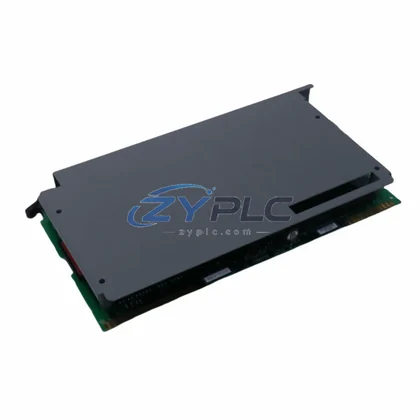
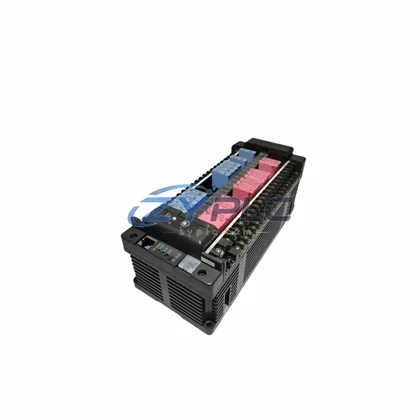
Allen-Bradley 1794-OB8EP Digital Output Module: Precision Control for FLEX I/O Automation
The Allen-Bradley 1794-OB8EP is an 8-point, 24VDC sourcing digital output module engineered for the FLEX I/O platform — one of Rockwell Automation’s most widely deployed distributed I/O architectures in discrete and process manufacturing. Designed to deliver reliable, low-latency switching control at the field device level, the 1794-OB8EP plays a critical role in reducing unnecessary actuator energization cycles, minimizing idle-state power draw, and enabling tighter synchronization between control logic and physical output execution. In energy-conscious production environments, the difference between a well-tuned output module and an oversized or poorly matched one can translate directly into measurable reductions in per-shift operating load.
At its core, the 1794-OB8EP interfaces with the FLEX I/O adapter — such as the 1794-AENT or 1794-ADNX — to communicate over EtherNet/IP or DeviceNet, feeding real-time output state data back to the controlling PLC. When paired with a CompactLogix L33ER or ControlLogix L85E processor running Studio 5000 Logix Designer, the module participates in a closed-loop control architecture where output timing, dwell periods, and duty cycles can be precisely programmed to match actual process demand rather than worst-case assumptions. This demand-matched output strategy is one of the most effective ways to reduce unplanned downtime at the actuator level without sacrificing throughput or cycle time.
Product Specification Table
| Parameter |
Specification |
| Output Points |
8 x 24VDC Sourcing |
| Output Current per Point |
0.5A (max) |
| Total Module Current Draw |
≤ 4A at full load |
| Operating Voltage Range |
19.2–28.8VDC |
| Power Dissipation |
Low-loss solid-state switching |
| Compatible Adapters |
1794-AENT, 1794-ADNX, 1794-ACN15 |
| Compatible Controllers |
CompactLogix, ControlLogix, SoftLogix |
| Communication Protocol |
EtherNet/IP, DeviceNet, ControlNet |
| Operating Temperature |
0°C to 55°C |
| Enclosure Rating |
Open-style, panel-mount |
| Application Environment |
Discrete manufacturing, material handling, packaging, automotive assembly |
| Maintenance Value |
Demand-matched output switching reduces actuator idle-state energy draw |
| Warranty |
warranty terms confirmed during quotation |
System Compatibility and Application
The 1794-OB8EP does not operate in isolation — its energy efficiency contribution is amplified when it functions as part of a well-integrated automation architecture. In a typical FLEX I/O node, the module slots into a 1794-TB3 terminal base and connects to a 1794-AENT EtherNet/IP adapter, which handles all upstream communication to the PLC backplane. The adapter’s ability to report module health, output state, and fault conditions in real time allows the control system to make intelligent decisions about when to de-energize outputs during low-demand periods, reducing unnecessary solenoid or relay activation.
On the drive side, when the 1794-OB8EP is used to trigger start/stop commands or speed-reference switching for a PowerFlex 525 or PowerFlex 755 variable frequency drive, the precision of its output timing directly affects how efficiently the drive ramps motors up and down. Eliminating premature or redundant start pulses reduces inrush current events, which are a significant but often overlooked source of unplanned downtime in motor-heavy production lines. The PowerFlex 755 in particular supports operational-efficiency modes that respond to the quality of the digital command signal — a well-timed output from the 1794-OB8EP ensures those modes engage and disengage at the right moments.
For servo-driven axes, the 1794-OB8EP is commonly used alongside Kinetix 5500 or Kinetix 6500 servo drives to manage auxiliary outputs such as brake release signals, axis-enable commands, or safety gate interlocks. Precise control of these signals prevents unnecessary holding torque on servo motors during idle phases, which is a direct energy saving in multi-axis gantry or pick-and-place systems. The module’s electronic short-circuit protection also reduces the risk of fault-induced restarts, which consume disproportionate energy during motor re-acceleration.
Power monitoring integration is another key dimension of maintenance-focused architecture. When a 1420 PowerMonitor or 1426 PowerMonitor 5000 is deployed at the panel level, it captures real-time kW, kVAR, and power factor data that can be correlated with the output activity logged by the 1794-OB8EP. This correlation allows engineers to identify which output channels — and by extension, which field devices — are contributing most to reactive power demand or peak load events. The result is a data-driven basis for load-shedding strategies, staggered start sequences, and power factor correction that goes far beyond generic energy audits.
At the network level, the 1794-OB8EP’s compatibility with EtherNet/IP enables integration with FactoryTalk View SE or FactoryTalk Energy Manager, where output state trends can be visualized alongside operating load KPIs. This visibility supports predictive maintenance workflows: abnormal output switching patterns — such as a channel toggling at twice its normal frequency — can indicate a failing actuator or a process drift that, if left uncorrected, will increase both energy use and mechanical wear. Early detection through integrated monitoring is one of the highest-ROI strategies available to plant engineers focused on total cost of ownership reduction.
Maintenance and Replacement Notes
In automotive body-in-white welding lines, the 1794-OB8EP is frequently deployed to control weld gun solenoids, clamp actuators, and part-present sensors across distributed FLEX I/O nodes. In these environments, cycle time optimization is inseparable from maintenance planning: a module that can execute output commands with sub-millisecond repeatability allows the line controller to tighten inter-station timing, reducing the total time that pneumatic actuators remain pressurized between cycles. Compressed air is one of the most energy-intensive utilities in a manufacturing plant, and reducing actuator dwell time by even 50–100ms per cycle can yield significant air consumption savings across a high-volume line running three shifts.
In food and beverage packaging lines, the module’s 24VDC sourcing outputs are used to drive conveyor divert gates, reject mechanisms, and filling valve solenoids. Here, the ability to precisely time output pulses — rather than relying on fixed-duration timers — means that valves open only as long as needed to deliver the correct fill volume, reducing product waste and the energy consumed by pump motors running against closed or partially open valves. When integrated with a CompactLogix controller running demand-based fill logic, the 1794-OB8EP becomes a key enabler of both quality consistency and energy efficiency.
Downtime reduction is another measurable energy benefit. Each unplanned stop on a production line triggers a restart sequence that consumes significantly more energy than steady-state operation — motors re-accelerate, pneumatic systems re-pressurize, and heating zones recover from thermal drift. The 1794-OB8EP’s built-in electronic overload protection and fault diagnostics reduce the frequency of output-related faults that cause these stops. When a fault does occur, the module’s per-channel fault reporting allows maintenance teams to isolate the affected output in seconds rather than minutes, minimizing the energy cost of extended downtime.
Inventory availability and supply chain reliability are also part of the total efficiency equation. ZYPLC maintains ready stock of the 1794-OB8EP to support both planned maintenance schedules and emergency replacement scenarios. All units undergo outgoing shipment testing to verify output switching performance, channel isolation, and communication integrity before dispatch. Combined with a warranty terms confirmed during quotation covering manufacturing defects and performance deviations, this ensures that the energy efficiency gains achieved through proper module selection are not eroded by premature field failures or extended lead times on replacements.
Product Sourcing FAQ
Q1: How does the 1794-OB8EP contribute to measurable operational stability on a production line?
The module enables demand-matched output control, meaning actuators, solenoids, and drives are energized only when process logic requires it. When integrated with a CompactLogix or ControlLogix controller and a PowerFlex variable frequency drive, precise output timing reduces inrush current events, minimizes actuator idle-state draw, and supports load-shedding strategies that lower peak demand charges. Operational stability are most significant in high-cycle applications such as packaging, assembly, and material handling.
Q2: Is the 1794-OB8EP compatible with my existing FLEX I/O system and communication network?
Yes. The 1794-OB8EP is fully compatible with the FLEX I/O platform and works with 1794-AENT (EtherNet/IP), 1794-ADNX (DeviceNet), and 1794-ACN15 (ControlNet) adapters. It is supported by all current Rockwell Automation controllers programmable in Studio 5000 Logix Designer, including CompactLogix and ControlLogix families. If you are upgrading from an older FLEX I/O node, the module’s terminal base and wiring are backward-compatible with standard 1794-series terminal bases.
Q3: What is the recommended replacement or upgrade path if I am currently using an older 1794-OB8 module?
The 1794-OB8EP is the direct successor to the 1794-OB8, offering enhanced electronic short-circuit protection per output point — a feature that reduces fault-induced downtime and the associated energy cost of restart sequences. The upgrade is a drop-in replacement at the terminal base level, requiring no wiring changes. Firmware and tag mapping in Studio 5000 remain consistent, making the transition straightforward for maintenance teams.
Q4: What does the warranty terms confirmed during quotation cover, and what is the testing process before shipment?
All 1794-OB8EP units supplied by ZYPLC carry a warranty terms confirmed during quotation covering manufacturing defects and verified performance deviations from published specifications. Prior to dispatch, each unit undergoes outgoing shipment testing that includes output switching verification across all 8 channels, channel isolation checks, and communication handshake validation with a FLEX I/O adapter. Units that do not pass testing are not shipped. Warranty claims are processed directly through ZYPLC’s technical support team, with replacement units dispatched from available stock to minimize production impact.