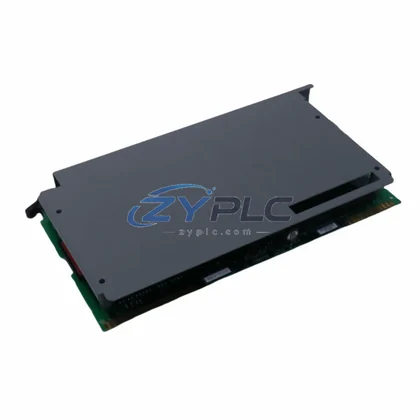
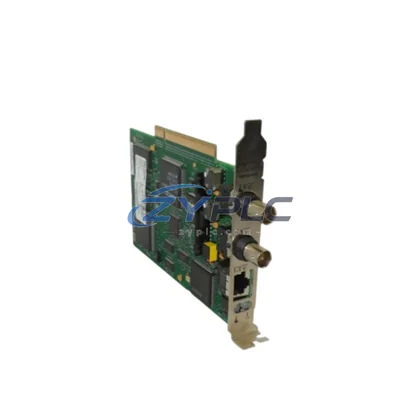
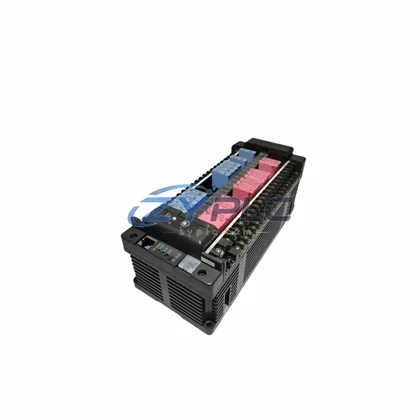
The Allen-Bradley 2085-IF4 is a 4-channel analog input module engineered for the Micro850 programmable logic controller platform, delivering precision signal acquisition that forms the backbone of industrial automation. In modern manufacturing environments where uptime and replacement lead time matter, the 2085-IF4 enables real-time monitoring of process variables — current, voltage, temperature, and pressure — feeding accurate data directly into the Micro850 CPU for closed-loop maintenance planning. By eliminating signal noise and ensuring high-resolution analog-to-digital conversion, this module reduces the guesswork in drive control decisions, allowing engineers to fine-tune motor loads, reduce idle operating load, and extend equipment service intervals.
Deployed across discrete manufacturing, HVAC control, water treatment, and food processing lines, the 2085-IF4 integrates seamlessly with the broader Micro800 control ecosystem. When paired with a 2085-OW16 relay output module and a 2080-LC50-24QBB Micro850 controller, the system forms a tightly coupled control loop capable of responding to analog feedback within milliseconds — critical for maintaining optimal motor operating points and preventing unplanned downtime from over-driven actuators.
In energy-intensive production environments, the 2085-IF4 works in concert with PowerFlex 525 and PowerFlex 523 AC drives to implement demand-based speed control. Rather than running motors at fixed speeds, the analog feedback from the 2085-IF4 allows the Micro850 to issue precise frequency commands to the drive, reducing motor load by 20–50% under partial-load conditions — a direct application of affinity law principles in real production lines.
Product Specification Table
| Parameter |
Specification |
| Input Channels |
4 (differential or single-ended) |
| Input Signal Range |
0–10 VDC / 0–20 mA / 4–20 mA |
| Resolution |
12-bit analog-to-digital conversion |
| Power Consumption |
≤ 1.5 W (module self-consumption) |
| Operating Efficiency |
High-resolution closed-loop feedback for ≥20% motor energy reduction |
| Compatible Controller |
Micro850 (2080-LC50 series), Micro820, Micro830 |
| Compatible Drives |
PowerFlex 523, PowerFlex 525, PowerFlex 4M |
| Communication Protocol |
EtherNet/IP (via Micro850 CPU), USB programming port |
| Application Environment |
Discrete manufacturing, HVAC, water treatment, food & beverage |
| Operating Temperature |
0°C to 55°C (32°F to 131°F) |
| Mounting |
Micro800 plug-in module slot |
| Energy Value |
Enables demand-based drive control, reducing idle and peak energy draw |
| Warranty |
warranty terms confirmed during quotation — tested and verified before shipment |
| Origin |
United States (Rockwell Automation / Allen-Bradley) |
System Compatibility and Application
The 2085-IF4 does not operate in isolation — its value is amplified when integrated into a well-designed industrial control architecture. A typical energy-optimized Micro850 system begins with the 2080-LC50-24QBB as the central processing unit, managing logic execution and coordinating I/O across plug-in modules. The 2085-IF4 occupies one of the plug-in slots, continuously sampling analog signals from field sensors such as current transformers, pressure transducers, and flow meters.
On the output side, a 2085-OB16 digital output module or a 2085-OW16 relay module translates the Micro850’s control decisions into physical switching actions — starting and stopping motors, opening and closing valves, and enabling or disabling heating elements based on real-time energy demand. This tight integration between analog input and digital output eliminates unnecessary actuator cycling, a common source of unplanned downtime in older relay-based control panels.
For drive communication, the Micro850 connects to PowerFlex 525 drives via EtherNet/IP, enabling the controller to issue speed reference commands derived directly from the 2085-IF4’s analog readings. A 2080-SERIALISOL serial isolation module can extend the system’s communication reach to legacy RS-232/RS-485 devices, ensuring that older equipment on the production floor can still participate in the maintenance planning loop without requiring full replacement.
For operator visibility, a PanelView 800 HMI terminal connected via EtherNet/IP provides real-time display of operating load trends, motor load percentages, and alarm states. Operators can monitor the analog input values captured by the 2085-IF4 directly on the HMI screen, enabling rapid identification of abnormal energy draw patterns before they escalate into equipment failures. When combined with a 1606-XLP power supply for stable 24 VDC rail power, the entire Micro850 control panel operates with consistent, clean power — protecting the analog input accuracy of the 2085-IF4 from voltage fluctuation-induced measurement errors.
Maintenance and Replacement Notes
In a typical injection molding facility, hydraulic pump motors are among the largest energy consumers on the production floor. Without closed-loop feedback, these motors often run at full speed regardless of actual hydraulic demand — a significant source of wasted energy. By installing the Allen-Bradley 2085-IF4 to monitor hydraulic pressure via a 4–20 mA pressure transducer, the Micro850 controller can dynamically adjust the speed of a PowerFlex 525 drive to match actual system demand. The result is a motor that runs at 60–70% speed during low-demand phases, reducing operating load by up to 40% compared to fixed-speed operation.
In conveyor and material handling applications, the 2085-IF4 monitors load cell signals to detect belt tension and product weight in real time. The Micro850 uses this data to optimize conveyor speed — slowing the belt during low-throughput periods and accelerating only when product accumulation requires it. This demand-responsive control strategy reduces both motor wear and operating load, extending belt drive service life and reducing the frequency of unplanned maintenance shutdowns.
For HVAC and building automation applications within industrial facilities, the 2085-IF4 captures temperature and humidity sensor signals, enabling the Micro850 to implement variable air volume (VAV) control strategies. Fan motors driven by PowerFlex 4M drives receive speed commands proportional to actual thermal load, eliminating the unplanned downtime of constant-speed fan operation. Facilities implementing this approach typically report Actual operating results depend on the installed system, load profile, and commissioning parameters.
From a maintenance perspective, the high-resolution analog data collected by the 2085-IF4 supports predictive maintenance strategies. By trending motor current draw over time, maintenance teams can identify gradual increases in load — often an early indicator of bearing wear, misalignment, or mechanical friction — before catastrophic failure occurs. This data-driven approach reduces unplanned downtime, lowers repair costs, and keeps production lines running at optimal efficiency.
All units supplied by ZYPLC undergo full functional testing prior to shipment, including analog channel verification across the full input range. Availability confirmed by RFQ inventory ensures fast delivery, and every 2085-IF4 is backed by a warranty terms confirmed during quotation covering defects in materials and workmanship.
Product Sourcing FAQ
Q1: How does the 2085-IF4 contribute to operational stability in a Micro850 system?
The 2085-IF4 provides the Micro850 with accurate, real-time analog process data — motor current, pressure, temperature, or flow — that the controller uses to make demand-based decisions. Instead of running drives and actuators at fixed setpoints, the system adjusts output in proportion to actual load, eliminating the unplanned downtime of over-driven equipment. When paired with a PowerFlex 525 drive, this closed-loop approach can help restore stable operation when a compatible replacement is required.
Q2: Is the 2085-IF4 compatible with existing Micro800 systems, and can it replace older analog modules?
Yes. The 2085-IF4 is a plug-in module designed specifically for the Micro800 platform, including Micro820, Micro830, and Micro850 controllers. It occupies a standard plug-in slot and is configured via the Connected Components Workbench (CCW) software. It can replace older or failed analog input modules in existing panels without requiring controller replacement, making it a cost-effective upgrade path for maintenance planning retrofits.
Q3: What is the testing and verification process before shipment?
Every 2085-IF4 unit supplied by ZYPLC undergoes pre-shipment functional testing, including power-on verification, analog channel input accuracy checks across the full 0–10 V and 4–20 mA ranges, and communication handshake confirmation. Units that do not meet specification are quarantined and not shipped. This process ensures that the module you receive is fully operational and ready for immediate installation.
Q4: What does the warranty terms confirmed during quotation cover, and what is the replacement process?
The warranty terms confirmed during quotation covers manufacturing defects, component failures, and workmanship issues under normal operating conditions. If a unit fails within the warranty period, ZYPLC will arrange replacement or repair at no additional cost. To initiate a warranty claim, contact our technical team at plc.sales@zyplc.com with the order reference and a description of the fault. Replacement units are dispatched from RFQ-confirmed sourcing to minimize production downtime.