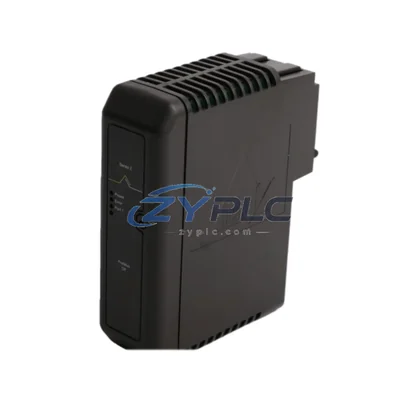
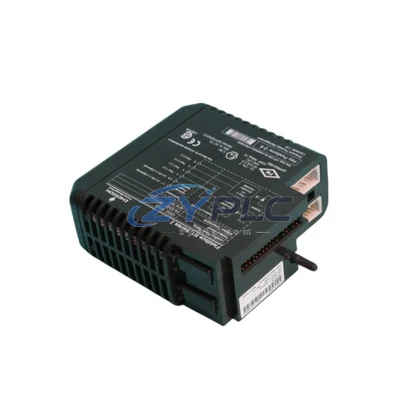
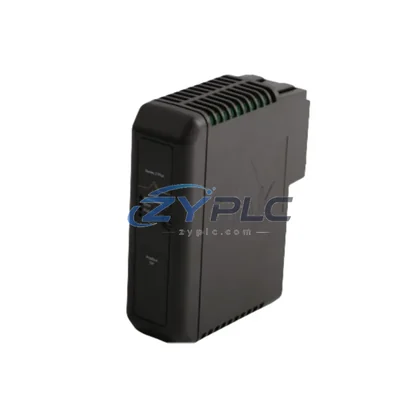
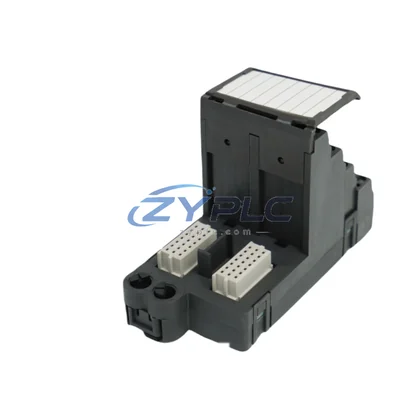
Allen-Bradley SP-110997 PC Board Module for 1771: Compatibility and Replacement Notes
The Allen-Bradley SP-110997 PC Board Module is a precision-engineered replacement and maintenance component designed to sustain the operational integrity of the 1771 modular I/O platform — one of the most widely deployed control architectures in industrial automation history. Rather than functioning as a standalone component, the SP-110997 occupies a critical position within a layered control system, bridging the logic execution layer and the physical I/O layer to ensure uninterrupted signal processing, deterministic scan cycle performance, and long-term system reliability. Understanding its role requires examining the full architecture in which it operates: from the processor backplane to the field device termination, and from the power distribution rail to the HMI supervisory interface.
In a typical 1771-based control system, the architecture is organized across multiple functional layers. At the control layer, processors such as the Allen-Bradley 1785-L40B PLC-5/40 or the 1785-L80B PLC-5/80 execute ladder logic and manage the scan cycle. These processors communicate with I/O chassis via the 1771 I/O backplane, where modules like the SP-110997 board assembly provide the internal signal conditioning, bus interface, and logic support that allow each I/O module to correctly interpret and transmit field signals. The SP-110997 is specifically engineered to maintain the electrical and logical compatibility required by the 1771 chassis environment, ensuring that module insertion, removal, and replacement do not disrupt the broader system scan.
Product Specification Table
| Parameter |
Specification |
| System Role |
Internal PC Board Module for 1771 I/O Chassis |
| Compatible Platform |
Allen-Bradley 1771 Modular I/O System |
| Primary SKU |
SP-110997 |
| Cross-Reference SKUs |
SP-105044, 105043-01 |
| Module Type |
PC Board / Internal Replacement Assembly |
| Bus Interface |
1771 I/O Backplane Compatible |
| Electrical Compatibility |
Designed for 1771 chassis voltage and signal standards |
| Communication Capability |
Supports DH+ and Remote I/O architectures via host processor |
| Installation Environment |
Industrial control panel, 1771 I/O chassis slot |
| Operating Temperature |
0°C to 60°C (standard industrial range) |
| Origin |
United States |
| Warranty |
warranty terms confirmed during quotation — full functional coverage from date of shipment |
System Compatibility Notes
The SP-110997 does not operate in isolation. Its value is realized only when it is correctly integrated within a coordinated system architecture. In a fully configured 1771 control system, the board module works in concert with a range of upstream and downstream components to deliver consistent, reliable automation performance.
At the processor level, the Allen-Bradley 1785-L40B PLC-5/40 or 1785-L80B PLC-5/80 processor module serves as the logic engine, executing the control program and managing I/O updates across the backplane. The SP-110997 board assembly supports the I/O module’s ability to correctly interface with this processor, maintaining signal integrity across the chassis bus. Power distribution within the chassis is managed by the 1771-P4S or 1771-P7 power supply modules, which provide regulated DC voltage to all installed I/O modules — including those whose internal board assemblies have been serviced or replaced using components like the SP-110997.
At the I/O layer, the SP-110997 is commonly associated with discrete and analog I/O modules installed in the 1771-A1B, 1771-A2B, or 1771-A4B I/O chassis. These chassis provide the physical backplane and slot structure into which I/O modules are inserted. The board module ensures that the replaced or refurbished I/O module maintains full electrical compatibility with the chassis backplane, preserving the module’s ability to correctly source or sink field signals from sensors, actuators, and transmitters connected at the terminal block level.
For systems requiring network connectivity, the 1771-KE or 1771-KF2 communication interface modules provide DH+ or Remote I/O network access, allowing the 1771 chassis to participate in distributed control architectures managed by supervisory systems or SCADA platforms. The SP-110997 board module’s role in maintaining I/O module functionality directly supports the data integrity of these network communications — a malfunctioning I/O module board can introduce erroneous data into the control network, affecting system-wide decision-making.
At the human-machine interface layer, operator workstations running RSLogix 5 or RSView32 supervisory software rely on accurate, real-time I/O data to display process status and enable operator intervention. Maintaining the SP-110997 board assembly in serviceable condition is therefore a prerequisite for reliable HMI performance. Similarly, at the execution layer, variable frequency drives, solenoid valve banks, and motor control centers connected to 1771 output modules depend on the correct operation of the internal board assembly to receive accurate control signals.
Industrial Application Notes
The Allen-Bradley SP-110997 PC Board Module finds application across a broad range of industrial sectors where the 1771 platform remains in active service as part of long-lifecycle control system strategies.
In manufacturing and assembly automation, 1771-based systems continue to manage conveyor sequencing, robotic cell coordination, and quality inspection logic. The SP-110997 supports maintenance teams in restoring failed I/O modules to full operational status without requiring full module replacement, reducing spare parts costs and minimizing production downtime.
In power generation and electrical distribution facilities, where control system reliability is directly linked to grid stability, the 1771 platform’s proven determinism makes it a preferred choice for legacy system retention. The SP-110997 enables facilities to maintain their existing control architecture while meeting modern reliability standards, supporting redundant I/O configurations and hot-standby processor arrangements.
In petrochemical and refinery process control, where continuous operation is essential and unplanned shutdowns carry significant financial and safety consequences, the availability of precision replacement board modules like the SP-110997 is a critical element of the maintenance strategy. Engineers can pre-position SP-110997 assemblies as critical spares, enabling rapid module restoration during scheduled turnarounds or emergency maintenance windows.
In water and wastewater treatment facilities, municipal operators rely on 1771-based systems for pump sequencing, chemical dosing control, and SCADA integration. The SP-110997 supports the long-term serviceability of these systems, ensuring that aging I/O modules can be refurbished rather than replaced with incompatible modern alternatives.
In mining, metals processing, and heavy industry, where environmental conditions are demanding and control system uptime is paramount, the SP-110997 provides a cost-effective path to I/O module restoration. Its compatibility with the full range of 1771 chassis configurations makes it a versatile component for multi-site maintenance programs.
Product Compatibility FAQ
Q1: Is the SP-110997 compatible with all 1771 I/O chassis configurations, and does it support both DH+ and Remote I/O network architectures?
The SP-110997 is designed as an internal board assembly for 1771-series I/O modules and is compatible with the standard 1771 backplane electrical and mechanical specifications. It supports the full range of 1771 chassis configurations, including the 1771-A1B, 1771-A2B, and 1771-A4B. Network architecture compatibility — whether DH+ via 1771-KE or Remote I/O via 1771-KF2 — is determined by the host processor and communication interface modules, not by the I/O board assembly itself. The SP-110997 restores the I/O module’s internal functionality, enabling it to correctly participate in whichever network architecture the system employs.
Q2: What installation and commissioning steps are required when replacing an internal board assembly in a 1771 I/O module, and how does this affect system calibration?
Replacement of the SP-110997 board assembly should be performed with the I/O chassis de-energized and the module removed from the backplane slot. Following board replacement, the module should be re-inserted and the system powered up in a controlled sequence. For analog I/O modules, recalibration of input or output ranges may be required using RSLogix 5 or a dedicated calibration utility, as the new board assembly may introduce minor offset variations. Discrete I/O modules typically require no recalibration. All replacement activities should be documented in the facility’s maintenance management system to support future audit and warranty verification.
Q3: What does the warranty terms confirmed during quotation cover for the SP-110997, and how does it support long-term maintenance planning for 1771-based control systems?
The warranty terms confirmed during quotation covers the SP-110997 PC Board Module against defects in materials and workmanship from the date of shipment. If the board assembly fails to perform its intended function within the warranty period under normal operating conditions, a replacement or equivalent component will be provided. This warranty supports long-term maintenance planning by allowing engineering teams to confidently pre-position SP-110997 assemblies as critical spares, knowing that warranty coverage extends through the initial deployment and commissioning phase. For multi-site or high-availability installations, the warranty terms confirmed during quotation provides a structured assurance framework that aligns with most industrial maintenance contract requirements.