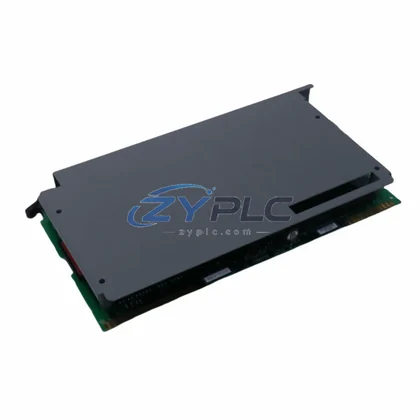
AMAT 0100-20100 Analog I/O PCB Board for Semiconductor Automation
The AMAT 0100-20100 is a high-precision Analog I/O PCB Board engineered by Applied Materials (AMAT) for deployment in advanced semiconductor fabrication systems. As process nodes shrink and fab throughput demands intensify, maintenance-focused signal acquisition and control execution become critical to sustaining equipment utilization rates and minimizing idle power consumption. The 0100-20100 board addresses these challenges directly by delivering stable, low-drift analog signal conditioning that reduces unnecessary re-calibration cycles, shortens process interruptions, and supports tighter closed-loop control across etch, CVD, and diffusion chambers.
In modern semiconductor fabs, every watt of wasted energy in the control layer compounds across hundreds of process tools running 24/7. The AMAT 0100-20100 is designed to minimize that overhead. Its analog I/O architecture interfaces seamlessly with AMAT’s process controller platforms, enabling real-time feedback from pressure transducers, temperature sensors, and mass flow controllers (MFCs) without introducing signal latency that could destabilize process recipes. By maintaining accurate analog signal integrity, the board reduces the frequency of process aborts and rework — both of which carry significant energy and throughput costs.
Product Specification Table
| Parameter |
Specification / Value |
| Part Number |
AMAT 0100-20100 |
| Board Type |
Analog I/O PCB Control Board |
| Application Environment |
Semiconductor Fab — Etch, CVD, Diffusion Systems |
| Signal Accuracy |
High-precision, low-drift analog I/O |
| Power Consumption |
Optimized low-power analog signal processing |
| Operating Efficiency |
Supports continuous 24/7 fab operation |
| Compatible Systems |
AMAT Centura, Endura, Producer platform controllers |
| Energy Saving Value |
Reduces process aborts, rework cycles, and idle unplanned downtime |
| Origin |
United States |
| Warranty |
|
| Availability |
RFQ Available — Ships Globally |
| Testing |
Full outgoing inspection and functional test before shipment |
System Compatibility and Application
The AMAT 0100-20100 does not operate in isolation — it is a precision node within a broader industrial automation system. In a typical AMAT Centura or Endura platform, the 0100-20100 Analog I/O Board works in concert with the AMAT 0100-09016 Digital I/O Board to provide a complete process signal layer. Analog signals from chamber pressure sensors and MFCs are conditioned by the 0100-20100 and passed upstream to the AMAT 0190-10114 Process Controller Board, which executes recipe-driven control decisions in real time.
On the power and drive side, the fab’s RF generators and chamber bias systems rely on stable DC power rails managed by boards such as the AMAT 0100-76028 Power Distribution Board. Any instability in the analog feedback loop — caused by a degraded I/O board — forces the RF system to compensate, increasing power draw and reducing etch uniformity. Replacing a worn 0100-20100 with a tested unit restores signal fidelity and brings RF power consumption back within recipe specification.
For process gas flow control, the 0100-20100 interfaces with AMAT MFC driver boards (such as the 0100-20066 series) that regulate gas delivery to the chamber. Accurate analog output from the I/O board ensures MFCs operate at their calibrated setpoints, preventing over-delivery of process gases — a direct source of both material waste and energy inefficiency. Similarly, the board’s analog inputs receive feedback from AMAT 0100-35041 temperature monitoring modules, enabling the system to detect thermal drift early and adjust heater power before a process excursion occurs.
In multi-chamber cluster tools, the 0100-20100 also supports communication with the AMAT 0100-20101 Analog Output Expansion Board, extending the control signal capacity of the platform without requiring additional controller hardware. This modular approach reduces the total power footprint of the control layer while increasing the number of independently regulated process zones — a key enabler of energy-proportional fab operation.
At the system integration level, the 0100-20100 is compatible with AMAT’s VME-based backplane architecture, where it shares the bus with AMAT 0100-09050 Communication Interface Boards that relay process data to the fab’s MES and maintenance planning systems. This data pathway is essential for real-time condition monitoring: when the analog I/O board delivers clean, accurate signals, the maintenance planning system can make reliable decisions about load scheduling, standby mode activation, and predictive maintenance triggers.
Maintenance and Replacement Notes
In a high-volume semiconductor fab, the AMAT 0100-20100 contributes to power optimization across several dimensions. First, by maintaining accurate analog signal acquisition from chamber sensors, it enables the process controller to execute tighter PID control loops on heaters, RF generators, and vacuum pumps. Tighter control means less overshoot, fewer correction cycles, and lower average power draw per wafer pass.
Second, the board’s role in MFC signal conditioning directly affects gas utilization efficiency. Over-delivery of process gases — caused by MFC setpoint drift from a degraded analog I/O board — not only wastes expensive specialty gases but also increases the load on the fab’s exhaust abatement systems, which are among the highest energy consumers in a fab facility. A properly functioning 0100-20100 keeps MFC outputs within ±0.5% of setpoint, reducing abatement system duty cycles and lowering facility-level energy consumption.
Third, the 0100-20100 supports predictive maintenance workflows by providing stable, repeatable analog baselines. When the board is functioning correctly, deviations in sensor readings are genuine process signals rather than board-induced noise. This allows maintenance engineers to detect early signs of chamber degradation — such as increasing leakage currents or shifting pressure baselines — before they cause unplanned downtime. downtime in a semiconductor fab carries an energy penalty: restarting a cold chamber requires significant thermal energy to return to process temperature, and the wafers in process at the time of the abort are typically scrapped, representing a total loss of all energy invested in their processing.
Finally, by extending the service life of the AMAT process tool through reliable analog I/O performance, the 0100-20100 defers the energy cost of capital equipment replacement. Every additional year of productive tool life amortizes the embodied energy of the original manufacturing investment over a larger wafer output, improving the energy intensity per die produced. All units supplied by ZYPLC are fully tested prior to shipment and covered by a , ensuring that the energy and productivity benefits described above are realized from day one of installation.
Product Sourcing FAQ
Q1: How does the AMAT 0100-20100 contribute to operational stability in a semiconductor fab?
The 0100-20100 Analog I/O Board maintains precise signal conditioning for chamber sensors and MFCs, enabling tighter closed-loop control of heaters, RF generators, and vacuum pumps. This reduces power overshoot, minimizes process aborts, and lowers the energy cost per wafer pass. Accurate analog feedback also reduces the duty cycle of high-power subsystems such as exhaust abatement equipment.
Q2: Is the AMAT 0100-20100 compatible with my existing AMAT platform?
The 0100-20100 is designed for AMAT’s VME-based process controller architecture and is compatible with Centura, Endura, and Producer platform systems. It interfaces with standard AMAT backplane configurations and is a direct replacement for the original board. If you are unsure about compatibility with your specific tool configuration, contact ZYPLC with your tool model and software version for confirmation.
Q3: What is the replacement and testing process for the 0100-20100?
All AMAT 0100-20100 boards supplied by ZYPLC undergo full functional testing and outgoing inspection before shipment. Testing covers analog input accuracy, output linearity, signal noise floor, and power rail stability. Boards are shipped with test documentation. Installation is a direct board swap within the VME chassis; no firmware changes are required in most configurations. ZYPLC’s technical team can provide installation guidance upon request.
Q4: What warranty and after-sales support does ZYPLC provide?
Every AMAT 0100-20100 board sold by ZYPLC is covered by a from the date of shipment. If the board fails under normal operating conditions within the warranty period, ZYPLC will provide a replacement or full refund. ZYPLC maintains Availability confirmed by RFQ inventory of the 0100-20100 and related AMAT control boards to support fast turnaround for urgent fab maintenance requirements.