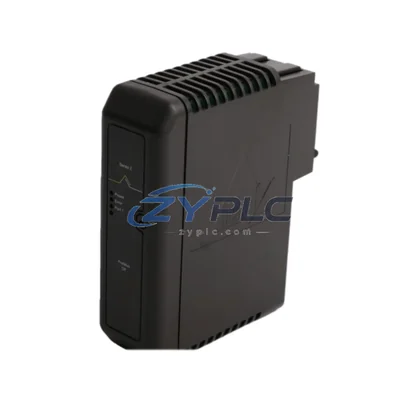
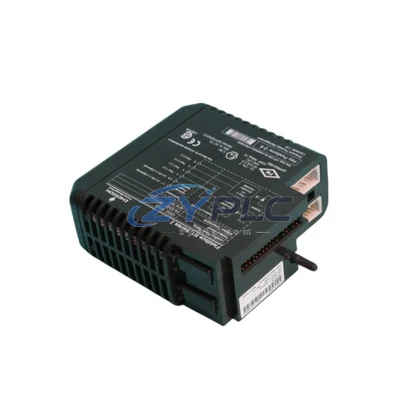
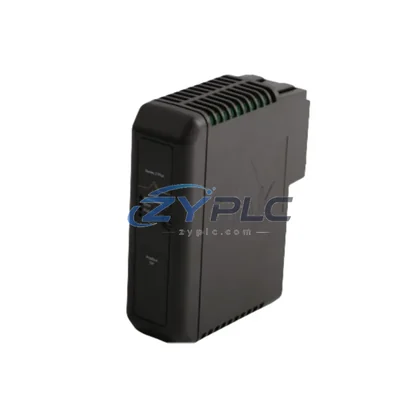
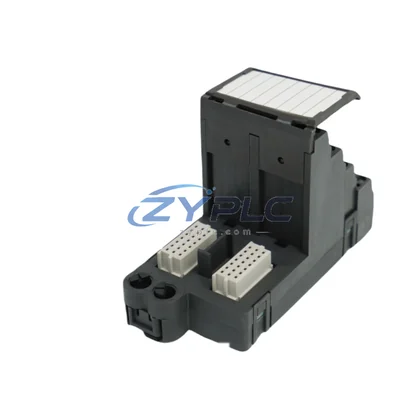
Bently Nevada 16710-17 Industrial Network Interface for 16710 Systems
In modern industrial facilities where rotating machinery health directly determines production uptime, the integrity of the signal path between field sensors and monitoring systems is non-negotiable. The Bently Nevada 16710-17 Proximitor Interconnect Cable is engineered to serve as the critical data link between eddy-current proximity probes and the 3500 Series Machinery Protection System — ensuring that every vibration signal, every shaft displacement reading, and every phase reference pulse reaches the monitoring rack with zero signal degradation. This is not merely a cable; it is the nervous system of your condition monitoring architecture.
Compatibility & Integration Notes
| Parameter |
Specification |
| SKU / Part Number |
16710-17 |
| Brand / Manufacturer |
Bently Nevada |
| Series |
16710 Series |
| Product Type |
Proximitor Interconnect Cable |
| Signal Protocol |
Analog (eddy-current proximity signal, -24 VDC bias) |
| Interface / Connector |
MIL-spec coaxial connector, compatible with 3300 XL / 3500 Proximitor sensors |
| Transmission Capability |
Low-noise shielded coaxial, full-bandwidth vibration and position signal |
| Network Compatibility |
Bently Nevada 3500 Series, 3300 Series, System 1 condition monitoring platform |
| Application Environment |
Rotating machinery, turbines, compressors, pumps, motors — heavy industrial |
| Origin |
United States |
| Warranty |
warranty terms confirmed during quotation |
| Stock Status |
RFQ Available — Ships within 1–3 business days |
Connected Automation Data Flow
The Bently Nevada 16710-17 cable operates at the foundation of a layered condition monitoring and industrial communication architecture. At the field level, eddy-current proximity probes — such as the Bently Nevada 3300 XL 8mm Proximity Transducer System — are mounted adjacent to rotating shafts to measure radial vibration, axial position, and differential expansion. The 16710-17 interconnect cable carries the raw analog signal from the probe tip through the extension cable to the Bently Nevada 3300 XL Proximitor Sensor, which conditions the signal into a voltage output proportional to the gap distance.
From the Proximitor output, the conditioned signal travels via the 16710-17 cable into the Bently Nevada 3500/42M Proximitor, Seismic, and Velocity Monitor rack module, where it is digitized, compared against alarm setpoints, and made available for both local relay output and network transmission. The 3500 rack communicates upstream via the Bently Nevada 3500/92 Communication Gateway Module, which bridges the proprietary Bently Nevada protocol to Modbus TCP/IP or OPC-DA/UA — enabling seamless integration with plant-level SCADA systems such as GE iFIX, Wonderware System Platform, or Emerson DeltaV.
At the control layer, the vibration data feeds into the Bently Nevada System 1 Evolution software platform, where engineers can configure trend plots, alarm logic, and predictive maintenance workflows. Simultaneously, the same data stream can be routed to a Rockwell Automation ControlLogix PLC via EtherNet/IP for integration into the plant’s main automation backbone, allowing the DCS or PLC to initiate protective shutdown sequences when vibration thresholds are exceeded.
For facilities running distributed I/O architectures, the 3500 rack’s digital outputs connect to Phoenix Contact Axioline F remote I/O modules, extending alarm and status signals to remote marshalling panels without additional signal conditioning. HMI visualization is handled by Siemens SIMATIC TP1200 Comfort Panel or equivalent, displaying real-time shaft vibration trends, Bode plots, and orbit diagrams sourced directly from the System 1 platform via OPC-UA. Edge analytics are increasingly handled by Moxa UC-8112 industrial edge computers, which aggregate Bently Nevada data alongside process variables from other field instruments for AI-driven anomaly detection before forwarding summarized insights to cloud-based asset management platforms.
Solving Data Isolation in Industrial Sites
One of the most persistent challenges in heavy industrial environments is the fragmentation of machinery health data from the broader plant information network. Legacy condition monitoring systems — including older Bently Nevada 3300 Series installations — often operate as isolated islands, with vibration data visible only on dedicated monitoring workstations and inaccessible to the plant’s DCS, ERP, or CMMS platforms. The Bently Nevada 16710-17 interconnect cable, as part of a fully integrated 3500 Series architecture, directly addresses this isolation problem.
By maintaining signal integrity from probe to monitor, the 16710-17 ensures that the 3500 rack receives clean, accurate analog inputs — a prerequisite for reliable protocol conversion and network transmission. Any signal degradation at the cable level introduces noise into the digitized data stream, which propagates through the Modbus or OPC gateway and corrupts trend data in the SCADA historian. A verified, OEM-specification 16710-17 cable eliminates this root cause of data quality issues.
Remote diagnostics become viable only when the underlying signal chain is trustworthy. With the 16710-17 in place, maintenance teams can access real-time vibration spectra, gap voltages, and alarm states from any networked workstation — enabling remote condition assessment without dispatching technicians to hazardous machinery areas. This capability is particularly valuable in offshore platforms, chemical plants, and power generation facilities where physical access to rotating equipment is restricted during operation.
Production line transparency improves measurably when machinery health data is integrated into the plant’s MES or ERP layer. Unplanned shutdowns triggered by bearing failures or rotor instability can be anticipated days in advance through trend analysis in System 1, allowing maintenance to be scheduled during planned downtime windows. The result is a direct reduction in mean time to repair (MTTR) and a corresponding increase in overall equipment effectiveness (OEE).
Industrial Connectivity FAQ
Q1: What communication protocols does the Bently Nevada 16710-17 support within the 3500 system architecture?
The 16710-17 itself is an analog signal cable, but within the 3500 Series rack it connects to, the system supports Modbus RTU, Modbus TCP/IP, and OPC-DA/UA via the 3500/92 Communication Gateway Module. This allows vibration data to be transmitted to any SCADA, DCS, or historian platform that supports these standard industrial protocols.
Q2: Is the 16710-17 compatible with both 3300 Series and 3500 Series Bently Nevada systems?
Yes. The 16710-17 interconnect cable is designed for use with Bently Nevada 3300 XL and 3500 Series Proximitor sensors and monitors. It maintains the correct impedance and shielding characteristics required by both series, ensuring accurate signal transmission across all compatible rack configurations.
Q3: How does ZYPLC verify the 16710-17 before shipment?
Every 16710-17 unit in our inventory undergoes pre-shipment functional testing, including connector integrity checks, shield continuity verification, and visual inspection against OEM specifications. Units are shipped with test documentation and are backed by a warranty terms confirmed during quotation covering manufacturing defects and functional failures under normal operating conditions.
Q4: Can the 16710-17 be used in hazardous area installations, and what is the lead time for urgent orders?
The 16710-17 is suitable for use in industrial environments consistent with Bently Nevada’s installation guidelines. For hazardous area (Ex-rated) installations, consult the applicable area classification documentation. ZYPLC maintains ready stock of the 16710-17 and can fulfill urgent orders with same-day or next-day dispatch for most regions. Contact our team for expedited shipping options.