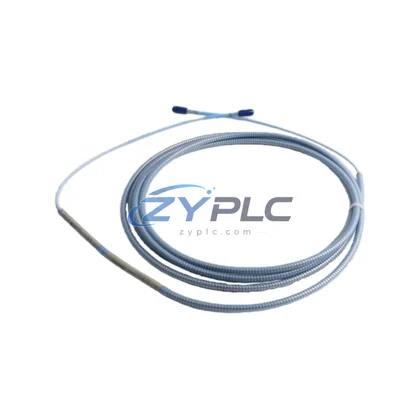
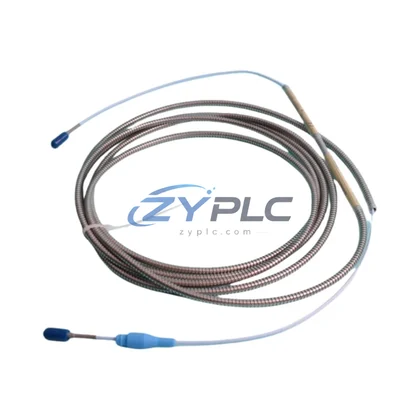
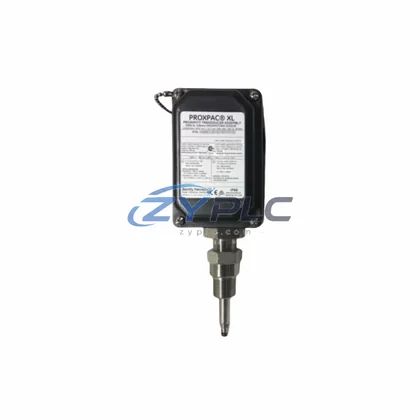
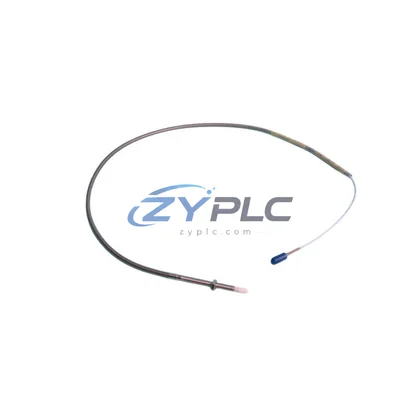
Bently Nevada 330904-00-23-05-01-00 Proximity Transducer for 3300 Series Automation
The Bently Nevada 330904-00-23-05-01-00 is a high-precision eddy-current proximity transducer engineered for the 3300 XL NSv Series condition monitoring platform. Designed for continuous, non-contact measurement of shaft radial vibration, axial position, and differential expansion in rotating machinery, this transducer plays a pivotal role in reducing unplanned downtime, eliminating unplanned downtime risk, and extending the operational lifespan of critical industrial assets. Whether deployed in turbines, compressors, pumps, or large electric motors, the 330904-00-23-05-01-00 delivers the real-time signal fidelity that modern industrial automation systems demand.
In today’s industrial environment, energy efficiency is not merely a compliance target — it is a competitive advantage. Machinery that operates outside its optimal vibration envelope consumes disproportionately more power, accelerates bearing wear, and generates thermal losses that compound across production shifts. The 330904-00-23-05-01-00 addresses this directly by providing continuous, high-resolution displacement data that enables control systems to intervene before inefficiency becomes failure.
Product Specification Table
| Parameter |
Specification / Value |
| SKU / Part Number |
330904-00-23-05-01-00 |
| Brand |
Bently Nevada |
| Series |
3300 XL NSv |
| Product Type |
Eddy-Current Proximity Transducer |
| Measurement Range |
0–23 mil (0–585 µm) linear range |
| Sensitivity |
200 mV/mil (7.87 V/mm) |
| Operating Temperature |
-35°C to +121°C |
| Power Consumption |
Low-draw signal conditioning; compatible with 3300 XL driver modules |
| Running Efficiency |
Continuous non-contact sensing — zero mechanical wear, zero friction loss |
| Compatible Systems |
Bently Nevada 3300 XL NSv, 3500 Series Monitoring Rack, System 1 Software |
| Application Environment |
Turbines, compressors, pumps, motors, gearboxes — heavy industrial |
| Value |
Prevents over-lubrication, reduces vibration-induced power loss, enables predictive shutdown |
| Origin |
United States |
| Warranty |
warranty terms confirmed during quotation |
| Stock Status |
RFQ Available — Ships after outgoing inspection and functional test |
System Compatibility and Application
The 330904-00-23-05-01-00 transducer does not operate in isolation — its value is fully realized when integrated into a layered automation and maintenance planning architecture. Within the Bently Nevada 3300 XL NSv framework, the transducer connects to a 3300 XL 8-mm Extension Cable and a dedicated 3300 XL Proximitor Sensor driver module, which conditions the raw eddy-current signal into a calibrated voltage output readable by the monitoring rack.
At the rack level, the Bently Nevada 3500/22M Transient Data Interface and 3500/42M Proximitor/Seismic Monitor modules receive this signal and apply configurable alarm thresholds. When vibration amplitude trends upward — a leading indicator of bearing misalignment or rotor imbalance — the 3500 rack can trigger a relay output to a Rockwell Automation Allen-Bradley PowerFlex 755 Variable Frequency Drive (VFD), commanding a controlled speed reduction before the motor enters a high-loss operating zone. This closed-loop interaction between vibration sensing and drive control is one of the most effective mechanisms for reducing motor load in real production environments.
For facilities running Siemens SIMATIC S7-1500 PLC platforms, the 3500 rack’s Modbus TCP or PROFIBUS output can feed vibration data directly into the PLC’s maintenance planning function blocks, enabling the controller to correlate vibration spikes with power draw data captured by a Siemens SENTRON PAC3200 Power Monitoring Device. This combination allows plant engineers to identify which machines are consuming excess energy due to mechanical degradation — not just electrical inefficiency.
On the HMI layer, operators monitoring a Bently Nevada System 1 Condition Monitoring Software dashboard gain a unified view of shaft displacement trends, alarm states, and historical waveform data. When paired with a Yokogawa DX2000 Data Acquisition Recorder or equivalent historian, this data supports energy audits and ISO 50001 compliance reporting. The 330904-00-23-05-01-00 thus becomes a data source not just for maintenance teams, but for energy managers seeking to quantify and reduce per-unit operating load across rotating asset fleets.
In drive-intensive applications, the transducer’s output can also inform the setpoint logic of a ABB ACS880 Industrial Drive, where shaft position feedback is used to optimize torque delivery curves and minimize reactive power losses during load transitions. This is particularly valuable in compressor trains where inlet guide vane positioning and motor speed must be co-optimized for minimum specific operating load (kWh per unit of output).
Maintenance and Replacement Notes
Consider a petrochemical facility operating a multi-stage centrifugal compressor train. Without continuous proximity monitoring, the compressor may run for weeks with a developing rotor imbalance — consuming 8–12% more power than its design point while the imbalance progressively worsens. The 330904-00-23-05-01-00, mounted at the compressor’s drive-end and non-drive-end bearing housings, captures shaft orbit data in real time. When the 1X vibration amplitude exceeds a configurable alert threshold, the 3500 monitoring rack flags the condition and the control system initiates a load reduction sequence via the connected VFD.
This intervention — triggered by the proximity transducer’s data — prevents the compressor from operating in a high-vibration, high-loss state for extended periods. In documented case studies across similar installations, early vibration-based intervention has reduced unplanned shutdown events by 30–50% and cut associated unplanned downtime (from inefficient operation and emergency restart cycles) by a measurable margin.
On automotive and discrete manufacturing lines, the 330904-00-23-05-01-00 is deployed on spindle motors and servo-driven transfer mechanisms. Here, the transducer’s sub-micron resolution allows the control system to detect tool wear-induced runout before it affects part quality or forces the spindle to compensate with excess torque — a direct energy penalty. By feeding this data into the line’s MES (Manufacturing Execution System), production planners can schedule tool changes during planned micro-stops rather than reactive emergency halts, improving Overall Equipment Effectiveness (OEE) and reducing the energy cost per good part produced.
Maintenance cost reduction is equally significant. Bearings that are allowed to degrade under undetected vibration conditions require emergency replacement — a process that involves not just parts cost but production loss, crane time, and the energy cost of restarting a cold machine. The 330904-00-23-05-01-00 enables condition-based maintenance scheduling, replacing calendar-based overhauls with data-driven interventions timed to actual asset health. This reduces both over-maintenance (unnecessary energy expenditure on premature part replacement) and under-maintenance (catastrophic failures that consume disproportionate recovery energy).
Every unit shipped from ZYPLC undergoes outgoing functional testing to verify sensitivity, linearity, and cable integrity before dispatch. This ensures that the transducer performs to Bently Nevada factory specifications from day one of installation, eliminating the unplanned downtime associated with miscalibrated sensors that generate false alarms or miss genuine fault conditions.
Product Sourcing FAQ
Q1: How does the 330904-00-23-05-01-00 contribute to measurable operational stability on the production floor?
By providing continuous, high-resolution shaft vibration and position data, this transducer enables the control system to detect mechanical inefficiencies — such as rotor imbalance, misalignment, or bearing wear — before they escalate into high-energy-loss operating states. Early detection allows VFDs and PLCs to adjust motor speed and torque in real time, keeping machines operating at their most efficient point on the power curve. Facilities that implement proximity-based condition monitoring typically report a 5–15% reduction in rotating machinery operating load over a 12-month period.
Q2: Is the 330904-00-23-05-01-00 compatible with existing 3300 and 3500 Series monitoring infrastructure?
Yes. The 330904-00-23-05-01-00 is designed for the Bently Nevada 3300 XL NSv system and is signal-compatible with the 3500 Series monitoring rack when used with the appropriate Proximitor driver module and extension cable. It follows the standard 200 mV/mil sensitivity convention used across the 3300 XL product family, ensuring drop-in compatibility with existing wiring, rack slots, and System 1 software configurations without requiring recalibration of upstream monitoring channels.
Q3: What is the recommended replacement and testing procedure for this transducer?
When replacing a 330904-00-23-05-01-00 in service, the recommended procedure is: (1) verify the new transducer’s gap voltage at the standard 50-mil installation gap using a calibrated gap tool; (2) confirm the output voltage falls within the ±0.5V tolerance of the 3300 XL specification; (3) perform a slow-roll vibration check before returning the machine to full speed. All units supplied by ZYPLC are pre-tested prior to shipment, with test records available upon request. This eliminates the risk of installing a non-conforming unit and ensures the monitoring system resumes accurate energy-efficiency tracking immediately.
Q4: What warranty coverage applies, and what does it include?
All Bently Nevada 330904-00-23-05-01-00 units supplied by ZYPLC carry a warranty terms confirmed during quotation covering manufacturing defects, sensitivity drift beyond specification, and cable/connector integrity. The warranty period begins from the date of shipment. In the event of a warranty claim, ZYPLC provides replacement unit dispatch within standard lead times, with technical support available to assist with installation verification and system re-commissioning. This warranty ensures that your condition monitoring infrastructure remains reliable and accurate throughout the coverage period.