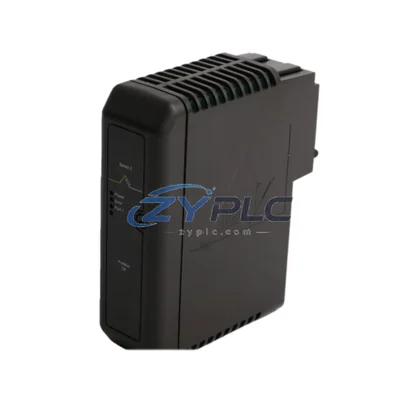
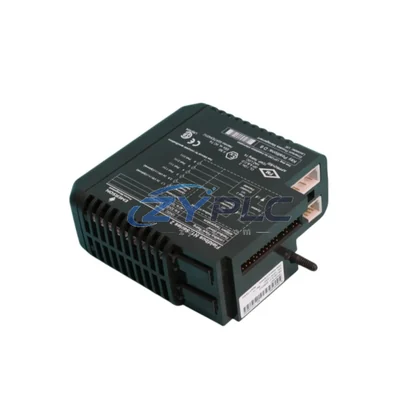
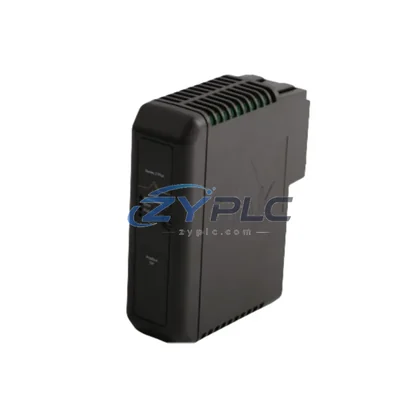
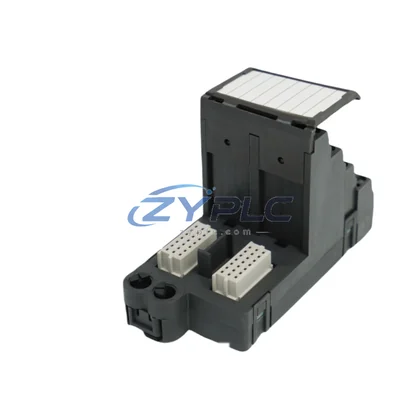
Emerson 38B5786X132 Pneumatic Relay for Fisher DCS: Compatibility and Replacement Notes
In modern process automation, the pneumatic relay is not a standalone component — it is a precision interface between the digital control layer and the physical actuation layer. The Emerson 38B5786X132 pneumatic relay occupies a critical position within the Fisher valve control architecture, serving as the signal amplifier and pressure converter that translates low-energy positioner output signals into the high-volume pneumatic force required to drive control valve actuators with speed, accuracy, and repeatability. Understanding this component requires understanding the full control system hierarchy in which it operates.
Within a layered DCS-based automation system, the signal chain originates at the controller level — typically a DeltaV MD Plus Controller or a DeltaV S-series Controller — where the process variable is compared against the setpoint and a 4–20 mA output signal is generated. This signal travels through marshalling cabinets and I/O subsystems before reaching the field instrument junction. At the valve assembly, a Fisher FIELDVUE DVC6200 digital valve controller receives the signal and computes the required valve position. The DVC6200 then outputs a low-flow pneumatic pilot signal to the 38B5786X132 relay, which amplifies that signal into a high-capacity pneumatic output capable of rapidly stroking large actuators — including Fisher 667 diaphragm actuators and Fisher 1052 spring-and-diaphragm actuators — with minimal dead time and high dynamic response.
This architecture ensures that the control loop closure time remains within acceptable limits even for large-bore valves in high-flow applications such as steam header pressure control, crude oil feed regulation, and reactor feed management. The 38B5786X132 is engineered to maintain signal fidelity across the pneumatic amplification stage, preserving the linearity and resolution of the upstream positioner output and delivering it faithfully to the actuator diaphragm chamber.
Product Specification Table
| Parameter |
Specification |
| System Role |
Pneumatic Signal Relay / Actuator Pilot Amplifier |
| SKU / Part Number |
38B5786X132 |
| Brand |
Emerson (Fisher Controls) |
| Series |
Fisher Valve Accessories Series |
| Product Type |
Pneumatic Relay |
| Compatible Positioners |
Fisher FIELDVUE DVC6200, DVC6100, DVC2000 |
| Compatible Actuators |
Fisher 667, Fisher 1052, Fisher 1061 |
| Supply Pressure Range |
Typically 1.4 – 7.0 bar (20 – 100 psi), application-dependent |
| Output Capacity |
High-flow pneumatic amplification for large actuator stroking |
| Signal Input |
Low-flow pilot signal from digital valve controller |
| Communication Compatibility |
Downstream of HART-enabled DVC positioners; compatible with DeltaV and FOUNDATION Fieldbus architectures |
| Installation Environment |
Field-mounted, suitable for industrial process environments; compatible with standard Fisher actuator yoke mounting |
| Origin |
United States |
| Warranty |
warranty terms confirmed during quotation — covers manufacturing defects and functional performance |
System Compatibility Notes
The 38B5786X132 does not function in isolation. Its value is realized only when it is correctly integrated into a coherent control system architecture. In a typical Fisher-based valve assembly deployed within a DeltaV DCS environment, the following components work in coordinated sequence:
At the control layer, the DeltaV MD Plus Controller executes the PID control module and issues the 4–20 mA output to the field. The signal passes through a DeltaV CHARM I/O card — part of the Electronic Marshalling subsystem — which provides channel-level isolation and eliminates the need for traditional marshalling cabinets. In the field, the Fisher FIELDVUE DVC6200 digital valve controller receives the analog signal, performs internal position feedback via its travel sensor, and generates the pilot pneumatic output that feeds the 38B5786X132 relay.
The relay amplifies this pilot signal and delivers high-volume air to the Fisher 667 diaphragm actuator, which strokes the control valve plug to the commanded position. For applications requiring fail-safe operation, a Fisher 377 Trip Valve or solenoid valve assembly is installed in the supply line upstream of the relay, enabling rapid valve closure or opening upon loss of instrument air or control signal. Instrument air quality is maintained by a Fisher 67CFR filter regulator, which conditions the supply pressure and removes particulates that could compromise relay seat integrity over time.
For redundant control architectures — common in safety-instrumented systems and critical process loops — the valve assembly may incorporate a Fisher 4320 wireless position monitor for independent position verification, providing a secondary feedback path that does not depend on the primary DVC communication channel. In SIS applications, the valve assembly is coordinated with a DeltaV SIS Logic Solver, which monitors the safety function and can command the valve to its safe state independently of the basic process control system.
At the human-machine interface layer, operators interact with the valve loop through a DeltaV Operate workstation, where real-time valve position, supply pressure, and diagnostic alerts from the DVC6200 are displayed. HART pass-through capability allows maintenance technicians to access full valve diagnostics — including partial stroke test results and relay performance data — directly from the control room without requiring field access.
Industrial Application Notes
The Emerson 38B5786X132 pneumatic relay is deployed across a wide range of industrial sectors where precise, high-speed valve actuation is essential to process stability and safety.
In petroleum refining and petrochemical processing, the relay is used in feed control valves, reflux control loops, and pressure letdown stations where large actuator volumes must be stroked rapidly in response to process upsets. The relay’s high-flow capacity ensures that the valve responds within the required dynamic specification even under high differential pressure conditions.
In power generation — including coal-fired, gas turbine, and combined-cycle plants — the 38B5786X132 supports steam flow control, feedwater regulation, and turbine bypass valve assemblies. These applications demand extremely low dead time and high repeatability, as valve response directly affects turbine load control and boiler drum level stability.
In water and wastewater treatment facilities, the relay is integrated into flow control and pressure management loops where reliable pneumatic amplification ensures consistent dosing, filtration backwash timing, and effluent discharge control. The relay’s robust construction supports continuous operation in humid, corrosive field environments.
In mining and mineral processing, including flotation circuits, slurry transport, and tailings management, the relay supports large-bore control valves that handle abrasive media. The ability to deliver high pneumatic output volume ensures that actuators can overcome the high stem friction and packing loads common in these applications.
In pharmaceutical and fine chemical manufacturing, where batch process integrity is critical, the relay supports precise flow and pressure control in reactor feed, solvent recovery, and clean-in-place systems. The relay’s compatibility with FIELDVUE DVC positioners enables full valve diagnostic capability, supporting FDA process validation and audit trail requirements.
Product Compatibility FAQ
Q1: Is the Emerson 38B5786X132 compatible with both single-acting and double-acting Fisher actuators?
The 38B5786X132 is designed for use within the Fisher valve accessory ecosystem and is primarily applied in single-acting diaphragm actuator configurations such as the Fisher 667 series. For double-acting piston actuators such as the Fisher 1061, the relay configuration and port arrangement must be verified against the actuator’s volume and stroking speed requirements. Always confirm the relay model suffix and port configuration against the actuator data sheet and the DVC positioner output specification before installation. Our technical team can assist with compatibility verification as part of the pre-shipment support included with the warranty terms confirmed during quotation.
Q2: How does the 38B5786X132 integrate into a FOUNDATION Fieldbus or HART-based DCS architecture?
The 38B5786X132 operates in the pneumatic domain downstream of the digital valve controller and is therefore protocol-agnostic at the relay level. Whether the upstream DVC6200 is configured for HART communication over a 4–20 mA loop or for FOUNDATION Fieldbus H1 segment communication, the relay receives the same low-flow pilot pneumatic signal and performs the same amplification function. Integration into DeltaV FOUNDATION Fieldbus architectures requires correct segment design — including proper use of H1 interface cards, segment couplers, and power conditioners — but does not affect relay selection or installation. The relay’s performance is determined by supply pressure, pilot signal characteristics, and actuator volume, not by the upstream digital communication protocol.
Q3: What maintenance schedule is recommended for the 38B5786X132 in continuous process service, and what does the warranty terms confirmed during quotation cover?
For continuous process service, Emerson recommends periodic inspection of the relay’s inlet filter screen, seat and disc assembly, and diaphragm integrity as part of the valve assembly’s scheduled maintenance cycle — typically aligned with plant turnaround intervals of 12 to 36 months depending on service severity. Partial stroke testing of the valve assembly, executable through the DVC6200’s AMS Device Manager interface, provides ongoing functional verification without process interruption. The warranty terms confirmed during quotation provided by ZYPLC covers manufacturing defects, functional performance to published specifications, and material integrity from the date of shipment. Warranty claims are supported by our technical team at plc.sales@zyplc.com, and replacement or repair is coordinated to minimize control system downtime.