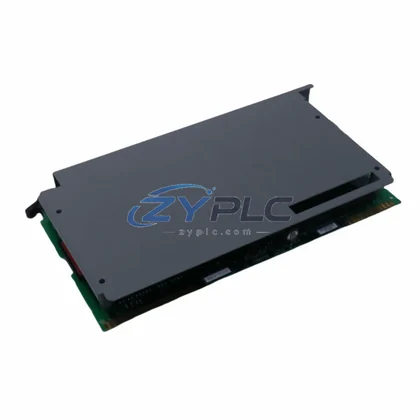
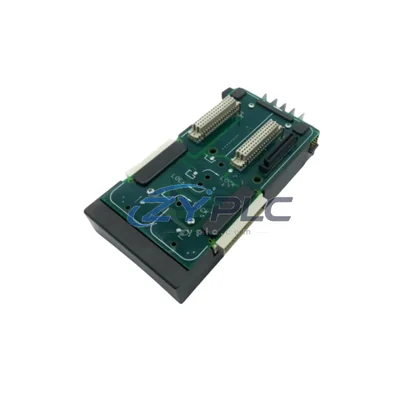
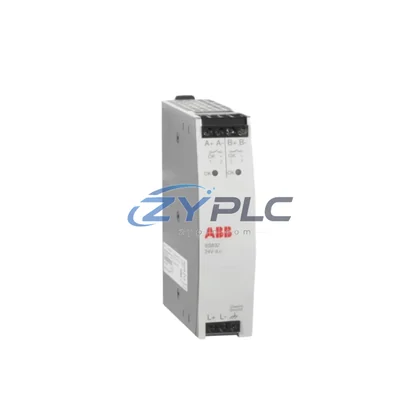
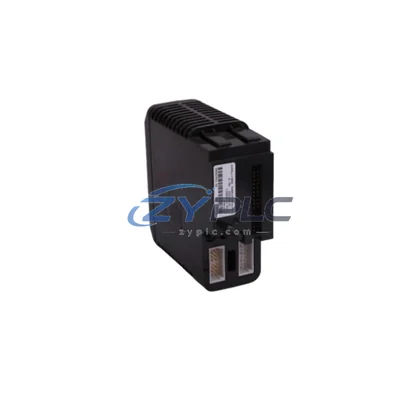
The Emerson 5X00226G04 Analog Input Module is a precision-engineered I/O component designed for seamless integration within the Emerson Ovation Distributed Control System (DCS) architecture. Rather than functioning as a standalone device, the 5X00226G04 occupies a critical position within the layered automation hierarchy — bridging field-level instrumentation with the supervisory control layer to ensure accurate, real-time signal acquisition across complex industrial processes.
In a fully realized Ovation DCS architecture, the 5X00226G04 works in concert with the Ovation Controller (OCR1100 or OCR400), the Ovation I/O Subsystem backplane, and the Ovation Power Supply modules to form a coherent, high-availability control node. The module receives analog signals — typically 4–20 mA or 1–5 V DC — from field transmitters, flow meters, pressure sensors, and temperature elements, converting them into digital values that the Ovation controller processes in real time. This signal chain is fundamental to maintaining process stability, regulatory compliance, and operational safety in demanding industrial environments.
System architects integrating the 5X00226G04 into a new or expanded Ovation DCS panel will find that it slots directly into the Ovation I/O chassis, sharing the backplane bus with complementary modules such as the 5X00119G01 Digital Input Module, the 5X00106G01 Analog Output Module, and the 5X00300G01 Digital Output Module. This modular co-location within a shared chassis reduces wiring complexity, simplifies cabinet layout, and enables centralized diagnostics through the Ovation Workstation software environment. The result is a tightly integrated I/O layer that supports both deterministic scan cycles and event-driven data logging.
From a network and communications perspective, the 5X00226G04 participates in the Ovation Control Network (OCN), an Ethernet-based, deterministic communication backbone that links I/O nodes to the Ovation Controller and ultimately to the Ovation Operator Workstation. This architecture supports redundant network paths, ensuring that a single cable or switch failure does not interrupt process visibility or control authority. When paired with the Ovation Redundant Controller configuration, the 5X00226G04 contributes to a fully fault-tolerant control loop — a requirement in power generation, refining, and chemical processing applications where unplanned downtime carries significant operational and safety consequences.
At the human-machine interface layer, data acquired by the 5X00226G04 is rendered in real time on Ovation Operator Workstations, enabling operators to monitor analog trends, configure alarm thresholds, and initiate control actions with full process context. The module’s high-resolution analog-to-digital conversion ensures that subtle process variations are captured and displayed accurately, supporting both manual operator intervention and automated closed-loop control strategies.
For maintenance engineers, the 5X00226G04 offers significant advantages in long-term serviceability. Its hot-swap compatibility within the Ovation I/O chassis means that a faulty module can be replaced without shutting down adjacent I/O points or interrupting the controller scan cycle. Combined with the Ovation system’s built-in self-diagnostics, field engineers can isolate faults to the module level within minutes, reducing mean time to repair (MTTR) and minimizing process disruption. Spare module inventory management is simplified by the module’s broad compatibility across multiple Ovation system generations.
All 5X00226G04 units supplied by ZYPLC are sourced from verified supply chains, functionally tested prior to shipment, and covered by a warranty terms confirmed during quotation. This warranty covers manufacturing defects and functional failures under normal operating conditions, providing procurement teams and plant engineers with the confidence needed for both planned maintenance replacements and emergency sourcing scenarios. ZYPLC maintains ready stock of the 5X00226G04 to support urgent delivery requirements across global industrial sites.
Product Specification Table
| Parameter |
Specification |
| System Role |
Analog Input I/O Module — Ovation DCS I/O Layer |
| Compatible Platform |
Emerson Ovation DCS (OCR1100, OCR400 Controllers) |
| Signal Type |
Analog Input (4–20 mA / 1–5 V DC) |
| Resolution |
High-resolution ADC, suitable for precision process measurement |
| Channel Configuration |
Multi-channel analog input (per Ovation I/O standard) |
| Backplane Interface |
Ovation I/O Chassis Backplane Bus |
| Communication |
Ovation Control Network (OCN) — Deterministic Ethernet |
| Redundancy Support |
Compatible with Ovation Redundant Controller Architecture |
| Installation Environment |
Control cabinet / DCS I/O chassis; industrial-grade EMC compliance |
| Operating Temperature |
0°C to 60°C (standard industrial DCS environment) |
| Power Supply |
Supplied via Ovation I/O chassis backplane (Ovation Power Supply module) |
| Hot-Swap Capability |
Yes — field-replaceable without system shutdown |
| Warranty |
warranty terms confirmed during quotation (ZYPLC availability subject to RFQ confirmation, functionally tested) |
| Origin |
United States |
System Compatibility Notes
The 5X00226G04 does not operate in isolation — its value is realized through its role within a coordinated Ovation DCS control node. A typical Ovation system architecture integrating this module includes the following components working in concert:
At the control layer, the Emerson Ovation OCR1100 Controller or OCR400 Controller serves as the primary processing unit, executing control logic and managing I/O scan cycles. The 5X00226G04 feeds real-time analog data directly into the controller’s process image, enabling closed-loop PID control, cascade strategies, and feedforward compensation without latency.
At the I/O layer, the 5X00226G04 shares the Ovation I/O chassis with the 5X00119G01 Digital Input Module for discrete signal acquisition, the 5X00106G01 Analog Output Module for control signal generation, and the 5X00300G01 Digital Output Module for actuator and relay command outputs. This co-location within a single chassis minimizes inter-module wiring and supports a unified diagnostic view from the Ovation engineering workstation.
At the power layer, dedicated Ovation Power Supply modules provide regulated DC power to the I/O chassis backplane, ensuring that the 5X00226G04 and its co-resident modules receive stable, noise-free power — a prerequisite for accurate analog signal conversion in electrically noisy industrial environments.
At the network layer, the Ovation Control Network (OCN) connects the I/O node to the Ovation Controller and Operator Workstation via a redundant Ethernet backbone. Ovation Network Interface modules and managed industrial switches maintain deterministic communication latency, ensuring that analog values acquired by the 5X00226G04 are reflected in the operator display and historian within the required scan interval.
At the HMI layer, the Ovation Operator Workstation renders analog trends, alarm states, and control faceplates derived from data acquired by the 5X00226G04. Operators interact with the process through a unified graphical environment that abstracts the underlying I/O hardware, while engineers use the Ovation Developer Studio to configure module parameters, calibration offsets, and alarm limits.
At the execution layer, field devices — including control valves, variable frequency drives, and final control elements — receive setpoint commands generated by the Ovation controller based on analog feedback from the 5X00226G04. This closed-loop signal flow, from field sensor through the 5X00226G04 to the controller and back to the actuator, forms the fundamental control loop of the Ovation DCS architecture.
Industrial Application Notes
The Emerson 5X00226G04 Analog Input Module is deployed across a wide range of industrial sectors where the Ovation DCS platform is the control system of choice:
Power Generation: In coal-fired, gas turbine, and combined-cycle power plants, the 5X00226G04 acquires analog signals from boiler pressure transmitters, turbine speed sensors, and generator output transducers. Its integration within the Ovation DCS enables coordinated boiler-turbine control, automatic generation control (AGC), and compliance with grid frequency regulation requirements.
Nuclear Energy: Emerson Ovation is widely deployed in nuclear power plant balance-of-plant (BOP) control systems. The 5X00226G04 supports analog signal acquisition for feedwater flow, steam pressure, and cooling system parameters, operating within the stringent reliability and documentation requirements of nuclear regulatory frameworks.
Petrochemical and Refining: In refinery distillation columns, reactor temperature control loops, and pipeline pressure management systems, the 5X00226G04 provides the analog input foundation for advanced process control (APC) strategies, including model predictive control (MPC) implementations running on the Ovation platform.
Water and Wastewater Treatment: Municipal and industrial water treatment facilities use the Ovation DCS with the 5X00226G04 to monitor flow rates, chemical dosing levels, pH, and turbidity — enabling automated process adjustments that maintain effluent quality within regulatory limits.
Mining and Minerals Processing: In ore processing plants and mineral concentration facilities, the 5X00226G04 supports analog acquisition from slurry density meters, mill load cells, and flotation cell level sensors, contributing to optimized throughput and energy efficiency in continuous process operations.
Product Compatibility FAQ
Q1: Is the 5X00226G04 compatible with both OCR1100 and OCR400 Ovation controllers?
Yes. The 5X00226G04 is designed for the Ovation I/O subsystem and is compatible with the full range of Ovation controllers, including the OCR1100 and OCR400 platforms. It integrates via the standard Ovation I/O chassis backplane, and no additional interface hardware is required. System architects should verify the I/O chassis revision and firmware version of the target controller to confirm compatibility with their specific Ovation system build.
Q2: Can the 5X00226G04 be replaced in the field without shutting down the Ovation controller or adjacent I/O modules?
Yes. The 5X00226G04 supports hot-swap replacement within the Ovation I/O chassis. The module can be physically removed and replaced while the chassis remains powered and the controller continues to scan adjacent I/O points. During replacement, the affected analog input channels will report a fault condition to the Ovation Operator Workstation, which should be acknowledged by the operator. After reinsertion, the module performs a self-initialization sequence and resumes normal operation within the controller scan cycle. This capability significantly reduces maintenance downtime and supports planned replacement during live production.
Q3: What does the warranty terms confirmed during quotation from ZYPLC cover, and how does it support long-term maintenance planning?
All 5X00226G04 modules supplied by ZYPLC are covered by a warranty terms confirmed during quotation from the date of shipment. The warranty covers functional failures and manufacturing defects under normal operating conditions consistent with Emerson’s published environmental and electrical specifications. ZYPLC maintains verified spare stock of the 5X00226G04, enabling rapid replacement dispatch for both planned maintenance cycles and unplanned failure events. For plant engineers managing multi-year maintenance contracts, ZYPLC’s stock availability and warranty coverage provide a reliable supply chain alternative to OEM lead times, supporting continuous operation and minimizing the risk of extended process downtime due to spare parts unavailability.
—