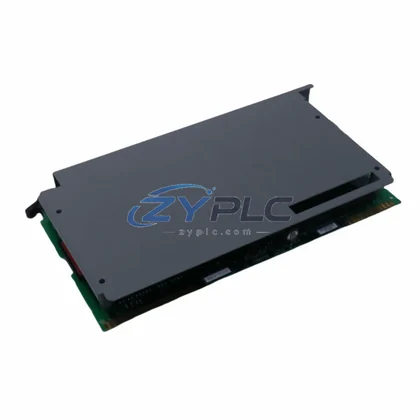
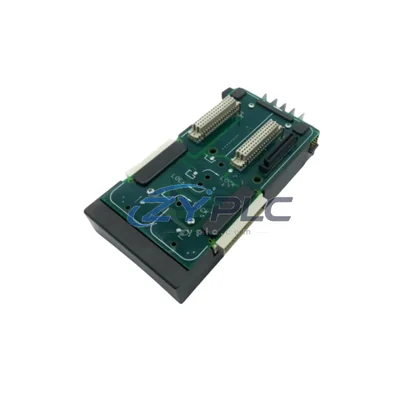
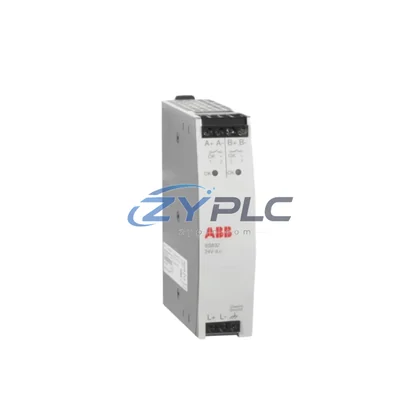
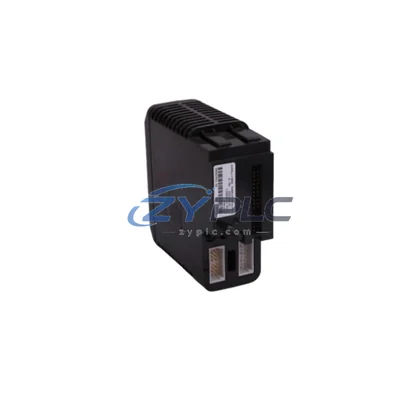
The Emerson KJ3002X1-BF1 12P1732X072 RTD Input Module is a precision-engineered field I/O component designed to operate within the Emerson DeltaV distributed control system architecture. Rather than functioning as a standalone device, this module is conceived as an integral node within a layered automation hierarchy — connecting the physical process layer to the control layer through reliable, high-accuracy temperature signal acquisition. Its role spans the I/O layer, signal conditioning layer, and ultimately feeds real-time data upward to the DeltaV controller for closed-loop process management.
In modern industrial automation, the integrity of a control system depends not on any single component but on the coherent interaction of every layer — from field instruments and I/O modules through to controllers, communication networks, power infrastructure, and human-machine interfaces. The KJ3002X1-BF1 12P1732X072 is engineered to fulfill its role in this chain with precision, minimizing signal latency, supporting system-wide diagnostics, and enabling seamless integration within the DeltaV S-Series controller platform.
Product Specification Table
| Parameter |
Specification |
| System Role |
RTD Temperature Input Module — I/O Layer, DeltaV Architecture |
| Part Number |
KJ3002X1-BF1 12P1732X072 |
| Brand / Manufacturer |
Emerson Electric / Fisher-Rosemount |
| Compatible Platform |
Emerson DeltaV Distributed Control System (DCS) |
| Compatible Series |
DeltaV S-Series, MD-Series Controllers |
| Input Type |
RTD (Resistance Temperature Detector) — 2, 3, or 4-wire configurations |
| RTD Types Supported |
PT100, PT200, PT500, PT1000, Ni120, Cu10 |
| Channel Count |
8 Channels (typical for KJ3002 series) |
| Measurement Range |
-200°C to +850°C (PT100 standard range) |
| Resolution |
0.1°C typical |
| Communication |
DeltaV Internal I/O Bus (proprietary backplane communication) |
| Installation |
DeltaV I/O Subsystem Carrier / Backplane-mounted |
| Operating Temperature |
0°C to +60°C |
| Power Supply |
Supplied via DeltaV I/O carrier backplane |
| Certifications |
CE, UL, FM (subject to revision — verify with datasheet) |
| Warranty |
— Tested and verified prior to shipment |
System Compatibility Notes
The KJ3002X1-BF1 12P1732X072 does not operate in isolation. Its value is realized only when it is correctly positioned within a complete DeltaV control system architecture. Understanding the upstream and downstream components that interact with this module is essential for system engineers, procurement specialists, and maintenance teams alike.
At the controller level, the KJ3002X1-BF1 interfaces directly with the Emerson DeltaV MD Plus Controller (KJ2003X1-BA1) or the DeltaV S-Series Controller (MD Controller), which manages scan cycles, executes control algorithms, and communicates process values to the DeltaV workstation environment. The controller reads RTD data from this module via the internal I/O bus at high-speed scan rates, enabling tight closed-loop temperature control in processes where thermal stability is critical.
The module is mounted on a DeltaV I/O Subsystem Carrier — typically the KJ3001X1-BA1 8-slot I/O carrier or a compatible 12-slot variant — which provides both mechanical support and backplane power distribution. The carrier connects to the controller via the DeltaV I/O bus, and multiple carriers can be daisy-chained to expand the I/O count without additional controller hardware, making the architecture highly scalable for large process plants.
Power integrity is maintained through the Emerson DeltaV Power Supply (KJ4001X1-BA1) or equivalent redundant power supply modules, which deliver regulated DC power to the I/O subsystem. In high-availability installations, redundant power supplies are deployed in parallel to eliminate single points of failure — a design philosophy that extends to the I/O modules themselves, where hot-swap capability allows the KJ3002X1-BF1 to be replaced without process interruption.
On the network and communication layer, the DeltaV system employs DeltaV Ethernet I/O network infrastructure and may integrate with FOUNDATION Fieldbus H1 interface modules (KJ3221X1-BA1) or HART Multiplexer modules to consolidate field device diagnostics. While the KJ3002X1-BF1 itself communicates via the internal backplane bus, its data is ultimately transmitted across the DeltaV control network to operator workstations running DeltaV Operate or DeltaV Inspect HMI software.
For applications requiring intrinsic safety or hazardous area compliance, the RTD signals from field sensors are typically routed through Pepperl+Fuchs or MTL Zener barriers / galvanic isolators before reaching the KJ3002X1-BF1 input terminals, ensuring the module operates within its rated electrical environment. Terminal blocks and marshalling panels — such as those from Phoenix Contact or Weidmüller — are commonly used in the field junction boxes to organize and label RTD wiring before it enters the control room.
In redundant architecture designs, the KJ3002X1-BF1 may be paired with a redundant I/O module on a mirrored carrier, with the DeltaV Redundant I/O Controller managing automatic failover. This configuration is particularly common in safety-critical applications such as boiler temperature monitoring, reactor thermal management, and turbine inlet temperature control, where loss of measurement signal could trigger unplanned shutdowns.
Industrial Application Notes
The Emerson KJ3002X1-BF1 12P1732X072 RTD Input Module finds application across a broad spectrum of process industries where accurate, reliable temperature measurement is a prerequisite for safe and efficient operation.
In petrochemical and refinery applications, this module monitors reactor bed temperatures, heat exchanger outlet temperatures, and distillation column profiles. The multi-channel RTD input capability allows a single module to cover multiple measurement points within a single process unit, reducing cabinet footprint and simplifying wiring infrastructure. The DeltaV platform’s advanced diagnostics can detect open-circuit RTD failures and alert operators before process deviations occur.
In power generation facilities — including coal-fired, gas turbine, and combined-cycle plants — the KJ3002X1-BF1 is deployed for turbine bearing temperature monitoring, generator winding temperature surveillance, and boiler feedwater temperature control. The module’s compatibility with PT100 sensors, which are the industry standard for power plant temperature measurement, makes it a natural fit for both new installations and retrofit projects replacing legacy DCS hardware.
In pharmaceutical and biotech manufacturing, where temperature uniformity and data integrity are subject to regulatory scrutiny (FDA 21 CFR Part 11, GAMP 5), the DeltaV platform’s built-in audit trail and electronic batch record capabilities complement the KJ3002X1-BF1’s measurement accuracy. Bioreactor temperature control, autoclave cycle monitoring, and clean-in-place (CIP) temperature verification are typical use cases.
In water and wastewater treatment plants, the module supports temperature monitoring in anaerobic digestion processes, UV disinfection systems, and heat recovery units. The DeltaV system’s open connectivity allows integration with SCADA systems via OPC-DA or OPC-UA, enabling centralized monitoring across geographically distributed treatment facilities.
In metals and mining operations, including smelting, casting, and ore processing, the KJ3002X1-BF1 handles high-temperature measurement in furnace control applications, where precise thermal management directly impacts product quality and energy efficiency. The module’s robust design and DeltaV’s proven reliability in harsh industrial environments make it a preferred choice for greenfield and brownfield projects alike.
Product Compatibility FAQ
Q1: Is the KJ3002X1-BF1 12P1732X072 compatible with both DeltaV S-Series and MD-Series controllers, and can it be used in a redundant I/O configuration?
Yes. The KJ3002X1-BF1 is designed for use within the DeltaV I/O subsystem and is compatible with both the DeltaV MD-Series and S-Series controller platforms. For redundant I/O configurations, the module must be installed on a redundant I/O carrier that supports mirrored module pairs. The DeltaV system automatically manages failover between the primary and secondary I/O modules, ensuring continuous signal availability. Engineers should verify the specific carrier part number and firmware revision compatibility with their installed DeltaV system version before deployment.
Q2: What are the installation and commissioning requirements for integrating the KJ3002X1-BF1 into an existing DeltaV architecture?
Installation requires mounting the module onto a compatible DeltaV I/O carrier within the I/O subsystem enclosure. The module is hot-swappable, meaning it can be inserted and removed without powering down the carrier or interrupting other I/O channels. Commissioning involves configuring the module’s channel parameters within DeltaV Explorer — specifying RTD type, wire configuration (2, 3, or 4-wire), engineering units, and alarm limits. No additional hardware configuration is required beyond the DeltaV software environment. Field wiring should be verified for correct polarity and shielding practices to minimize noise interference on low-level RTD signals.
Q3: What does the cover, and how does ZYPLC support long-term maintenance and spare parts availability for the KJ3002X1-BF1?
The covers functional defects identified under normal operating conditions, including signal accuracy failures, communication faults, and hardware malfunctions not attributable to physical damage or improper installation. ZYPLC supports RFQ sourcing for the KJ3002X1-BF1 12P1732X072 and related DeltaV I/O modules to support both replacement sourcing after RFQ confirmation needs and planned maintenance programs. Our technical team can assist with cross-referencing obsolete part numbers, verifying firmware compatibility, and sourcing complementary components within the DeltaV architecture. For long-term maintenance planning, we recommend maintaining at least one spare module per critical process unit to minimize downtime risk.