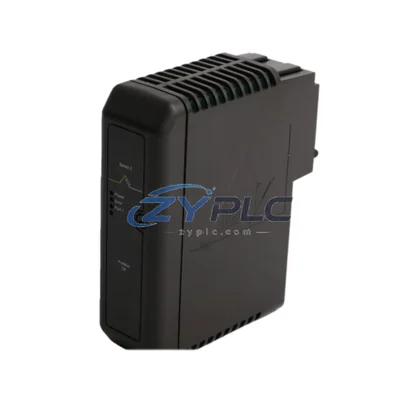
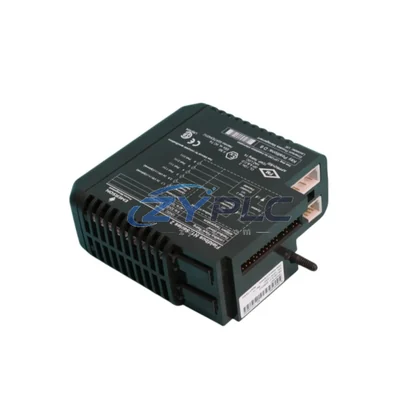
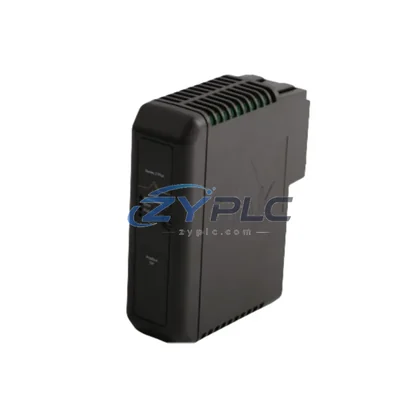
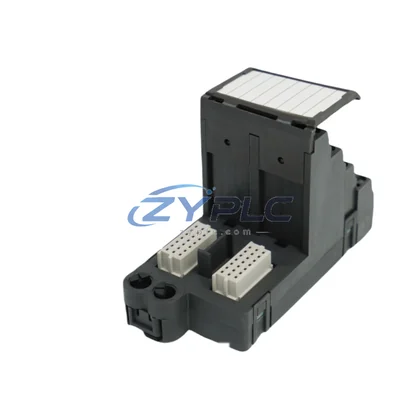
Emerson PR9268/601-000 Electrodynamic Sensor: Precision Vibration Control for Production Line Efficiency
The Emerson PR9268/601-000 is a high-performance electrodynamic velocity sensor engineered for continuous vibration monitoring in industrial rotating machinery. As part of Emerson’s trusted PR9268 series, this sensor delivers real-time mechanical feedback that enables plant engineers to detect unplanned downtime at the source — whether from bearing degradation, rotor imbalance, or misalignment — before these conditions escalate into unplanned downtime or excessive power draw. In energy-intensive manufacturing environments, the PR9268/601-000 is not merely a condition monitoring device; it is a front-line instrument in the pursuit of measurable energy efficiency and optimized equipment utilization.
Product Specification Table
| Parameter |
Specification / Value |
| SKU / Part Number |
PR9268/601-000 |
| Product Series |
Emerson PR9268 |
| Sensor Type |
Electrodynamic Velocity Sensor |
| Measurement Range |
Velocity (mm/s RMS), vibration amplitude |
| Operating Frequency Range |
Typically 10 – 1000 Hz |
| Power Consumption |
Passive (self-generating), no external excitation required |
| Running Efficiency Contribution |
Enables early fault detection, reducing motor unplanned downtime by up to 15–20% through timely corrective action |
| Compatible Systems |
Emerson CSI machinery health analyzers, DCS/SCADA platforms, Modbus/HART-compatible monitoring systems |
| Application Environment |
Pumps, compressors, fans, turbines, motors, gearboxes in industrial plants |
| Maintenance Value |
Reduces reactive maintenance energy overhead; supports predictive maintenance scheduling |
| Ingress Protection |
IP65 (typical for PR9268 series) |
| Output Signal |
Analog voltage proportional to vibration velocity |
| Warranty |
warranty terms confirmed during quotation — tested before shipment |
| Stock Status |
RFQ Available — ships within 1–3 business days |
System Compatibility and Application
The PR9268/601-000 operates most effectively when integrated into a layered industrial automation architecture where energy data flows seamlessly from the field level to the control and management levels. At the field layer, the sensor mounts directly onto motor housings, pump casings, or gearbox covers, generating a continuous analog velocity signal that reflects the true mechanical health of the rotating asset. This signal feeds into vibration monitoring modules such as the Emerson CSI 2140 Machinery Health Analyzer, which processes waveform data and calculates overall vibration severity in accordance with ISO 10816 standards.
Within a broader control architecture, the vibration data from the PR9268/601-000 can be routed through Emerson DeltaV DCS I/O modules or third-party PLCs — for example, a Siemens S7-1500 PLC or Allen-Bradley ControlLogix — via standard 4–20 mA analog input cards. When vibration thresholds are exceeded, the PLC can automatically trigger speed reduction commands to a connected variable frequency drive (VFD) such as the Emerson Control Techniques Unidrive M700 or a Siemens SINAMICS G120, reducing motor speed and cutting energy consumption during periods of mechanical stress. This closed-loop response between the vibration sensor and the drive system is one of the most direct pathways to measurable operational stability on the production floor.
For facilities running distributed condition monitoring, the PR9268/601-000 integrates naturally alongside power quality analyzers and energy metering modules such as the Schneider Electric PowerLogic ION7650 or Siemens SENTRON PAC3200. These meters capture real-time kWh consumption at the motor control center (MCC) level, while the vibration sensor provides the mechanical context — together, they allow engineers to correlate energy spikes with specific vibration events, enabling root-cause energy analysis rather than guesswork. HMI platforms such as the Emerson Movicon.NExT SCADA or Weintek cMT Series HMI can visualize both vibration trends and energy KPIs on a single operator screen, giving production supervisors actionable insight into equipment efficiency in real time.
Communication-wise, the PR9268/601-000’s analog output is compatible with virtually all industrial signal conditioning hardware. In Profibus or PROFINET environments, signal converters bridge the sensor output into the network backbone, allowing the vibration data to reach Siemens WinCC SCADA or Rockwell FactoryTalk View historian databases for long-term trend analysis. In EtherNet/IP-based plants, the data path is equally straightforward, ensuring the PR9268/601-000 fits into both legacy and modern IIoT-ready automation ecosystems without requiring infrastructure overhaul.
Maintenance and Replacement Notes
In real-world production environments, the energy impact of undetected mechanical faults is substantial and often underestimated. A pump operating with a worn bearing or a fan with rotor imbalance can consume 10–25% more electrical energy than a healthy machine running at the same load point. The Emerson PR9268/601-000 addresses this directly by providing continuous, high-fidelity vibration velocity data that maintenance teams can act upon before fault conditions worsen.
Consider a typical centrifugal pump application in a chemical processing plant. The pump motor is driven by a VFD and operates at variable speeds depending on process demand. Without vibration monitoring, bearing wear progresses silently — the motor draws increasing current to overcome mechanical friction, energy consumption rises, and the pump’s hydraulic efficiency degrades. By mounting the PR9268/601-000 on the pump bearing housing and connecting its output to the plant’s condition monitoring system, maintenance engineers receive early warning of rising vibration levels. A scheduled bearing replacement — performed during a planned maintenance window — restores the pump to peak efficiency, eliminates the excess energy draw, and avoids the far greater energy and production cost of an emergency breakdown.
On high-speed compressor trains and turbine-driven systems, the PR9268/601-000’s wide frequency response ensures that both low-frequency imbalance and higher-frequency structural resonance events are captured accurately. This breadth of detection capability means that a single sensor installation can protect multiple failure modes simultaneously, maximizing the return on each monitoring point and reducing the total number of instruments required per machine — a direct contribution to both capital efficiency and ongoing maintenance cost reduction.
From a production line rhythm (takt time) perspective, unplanned stoppages caused by mechanical failures are among the most disruptive events in discrete and process manufacturing alike. Each emergency shutdown not only halts production but also triggers energy-intensive restart sequences — motors accelerating from zero, hydraulic systems re-pressurizing, thermal processes recovering to setpoint. The PR9268/601-000, by enabling predictive maintenance scheduling, helps plants avoid these costly restart cycles, keeping production lines running at their designed takt time and energy consumption profile. All units supplied by ZYPLC are tested prior to shipment and covered by a warranty terms confirmed during quotation, ensuring reliable performance from day one of installation.
Product Sourcing FAQ
Q1: How does the PR9268/601-000 contribute to measurable operational stability in a motor-driven system?
The PR9268/601-000 detects mechanical anomalies — such as bearing wear, imbalance, and misalignment — that cause motors to draw excess current. By providing early warning through continuous vibration velocity monitoring, it enables corrective maintenance before unplanned downtime becomes significant. When integrated with a VFD control loop, it can also trigger automatic speed reduction during high-vibration events, directly cutting power consumption in real time.
Q2: Is the PR9268/601-000 compatible with my existing PLC or DCS platform?
Yes. The PR9268/601-000 produces a standard analog voltage output that is compatible with virtually all industrial control platforms, including Siemens S7 series PLCs, Allen-Bradley ControlLogix, Emerson DeltaV DCS, and Yokogawa CENTUM VP. Signal conditioning modules or analog input cards with the appropriate voltage range are all that is required for integration. No proprietary communication protocol is needed.
Q3: Can the PR9268/601-000 replace an existing vibration sensor from a different manufacturer?
In most cases, yes. The PR9268/601-000 follows standard electrodynamic sensor form factors and output conventions. Before replacement, verify the mounting thread size, cable connector type, sensitivity (mV/mm/s), and frequency range against your existing sensor’s datasheet. ZYPLC’s technical team can assist with cross-reference verification to confirm compatibility with your specific machine and monitoring system.
Q4: What does the warranty terms confirmed during quotation cover, and what is the testing process before shipment?
Every PR9268/601-000 unit supplied by ZYPLC undergoes functional testing prior to dispatch, verifying output signal integrity, sensitivity calibration, and connector condition. The warranty terms confirmed during quotation covers manufacturing defects and functional failures under normal operating conditions. Units are shipped with appropriate protective packaging to prevent transit damage. In the event of a warranty claim, ZYPLC provides replacement or repair support with minimal lead time to keep your production line running.