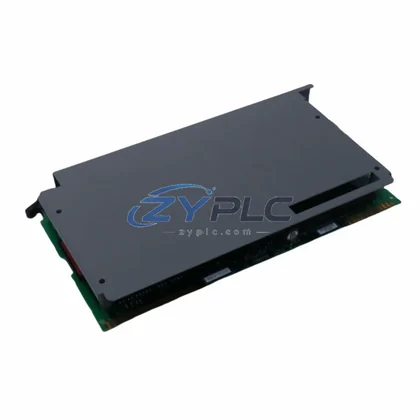
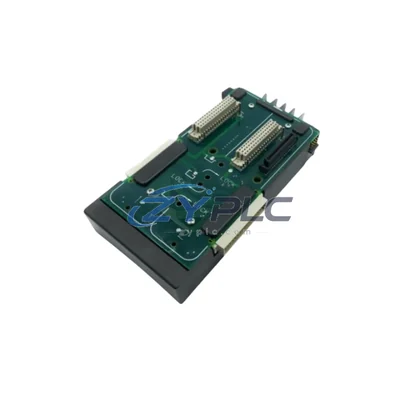
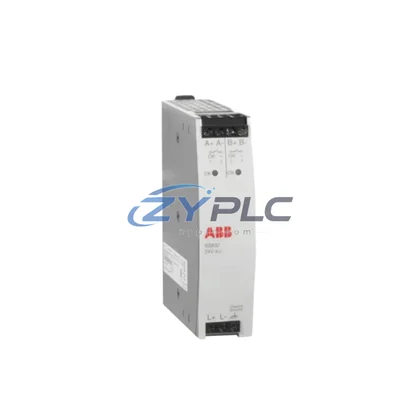
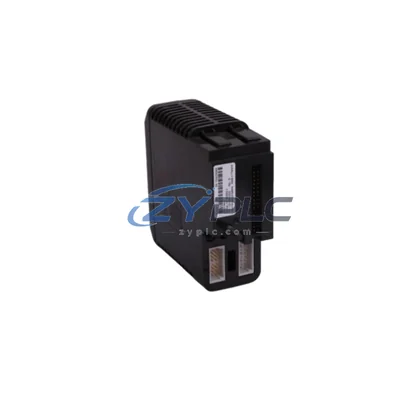
Emerson SP3402 I/O Module for DeltaV Automation
The Emerson SP3402 is a high-efficiency Universal Input Module engineered for the DeltaV distributed control system, purpose-built to help industrial facilities reduce unplanned downtime, improve equipment utilization, and optimize process control across demanding production environments. As a core I/O component within the DeltaV architecture, the SP3402 plays a critical role in maintenance-focused automation — capturing real-time field signals, feeding accurate data to the control layer, and enabling precise, low-latency responses that directly reduce unnecessary actuator cycling, motor overrun, and idle operating load.
In modern manufacturing and process industries, unoptimized I/O infrastructure is a hidden source of energy loss. Poorly conditioned signals, delayed feedback loops, and incompatible input ranges force controllers to compensate with wider control bands, increasing energy draw across drives, motors, and heating systems. The SP3402 eliminates these inefficiencies by accepting a wide universal input range — including thermocouple, RTD, millivolt, voltage, and current signals — without requiring external signal conditioners. This consolidation reduces panel wiring complexity, lowers auxiliary power consumption, and shortens the signal chain between field instruments and the DeltaV controller, resulting in faster loop response and tighter energy control.
Product Specification Table
| Parameter |
Specification / Value |
| SKU |
SP3402 |
| Brand |
Emerson |
| Series |
DeltaV S-Series I/O |
| Module Type |
Universal Input Module |
| Input Types Supported |
Thermocouple, RTD, mV, Voltage (0–10V), Current (4–20mA) |
| Channel Count |
8 Channels (typical for SP34xx series) |
| Operating Voltage |
24 VDC (bus-powered via DeltaV carrier) |
| Power Consumption |
Low-draw design; bus-powered, no external PSU required |
| Running Efficiency |
High-accuracy signal acquisition; reduces control loop deviation |
| Compatible Systems |
Emerson DeltaV DCS, DeltaV S-Series Electronic Marshalling |
| Application Environment |
Process manufacturing, oil & gas, chemical, power generation |
| Energy Saving Value |
Eliminates signal conditioners; reduces auxiliary power draw |
| Origin |
United States |
| Warranty |
warranty terms confirmed during quotation |
| Stock Status |
RFQ Available — Ships within 1–3 business days |
System Compatibility and Application
The SP3402 is designed to operate within Emerson’s DeltaV Electronic Marshalling ecosystem, where it pairs directly with the DeltaV CIOC (Characterization Input/Output Card) and the DeltaV CHARMs (Characterization Modules) to create a flexible, energy-efficient I/O infrastructure. Unlike traditional hardwired marshalling panels that require dedicated signal conditioners and consume significant panel space and auxiliary power, the SP3402 within the S-Series architecture allows field signals to be routed dynamically, reducing copper wiring, junction boxes, and the associated power overhead.
At the controller level, the SP3402 feeds conditioned process data directly to the Emerson DeltaV MD Plus Controller or the DeltaV M5Plus Controller, enabling high-speed PID loop execution with minimal scan cycle latency. Tight integration between the input module and the controller ensures that energy-intensive field devices — such as variable frequency drives (VFDs), control valves, and electric actuators — receive precise, timely setpoint corrections rather than hunting corrections that waste energy.
For motor-driven systems, the SP3402 works in coordination with Emerson Control Techniques variable speed drives (such as the Unidrive M series) by providing accurate process feedback — flow rate, temperature, pressure — that allows the drive to modulate motor speed precisely to demand. This eliminates the energy penalty of running motors at fixed speed against throttled valves, a common source of Actual operating results depend on the installed system, load profile, and commissioning parameters.
On the power monitoring side, the SP3402’s current input channels can be configured to receive signals from Emerson Power Xpert energy meters or third-party current transformers, enabling the DeltaV system to perform real-time operating load tracking at the loop level. This data feeds into DeltaV Insight analytics, where energy KPIs can be trended, alarmed, and reported — supporting ISO 50001 maintenance planning objectives without requiring a separate condition monitoring system.
For facilities using Emerson AMS Device Manager alongside DeltaV, the SP3402 supports HART pass-through on current input channels, allowing field instruments such as Emerson Rosemount 3051 pressure transmitters or Rosemount 644 temperature transmitters to be diagnosed and calibrated remotely. This capability directly reduces the need for manual field inspections, cutting maintenance labor costs and the energy associated with unplanned shutdowns and restarts.
Communication within the DeltaV network is handled via the DeltaV DeltaV-SE (System Engineering) workstation and the redundant DeltaV Application Station, ensuring that I/O data from the SP3402 is available system-wide with deterministic latency — a prerequisite for energy-optimized advanced process control (APC) strategies such as model predictive control (MPC).
Maintenance and Replacement Notes
In a typical continuous process plant — such as a refinery, chemical plant, or food and beverage facility — the SP3402 contributes to maintenance planning across multiple production stages. During startup sequences, accurate temperature and flow inputs from the SP3402 allow the DeltaV controller to execute optimized ramp-up profiles, avoiding the energy spikes associated with cold-start overdriving of heaters and pumps. During steady-state operation, the module’s high-accuracy signal acquisition (typically ±0.1% of span for RTD inputs) ensures that control loops maintain setpoints with minimal deviation, reducing the frequency and magnitude of corrective actuator movements.
In batch manufacturing environments, the SP3402 enables precise recipe-driven control of energy-intensive unit operations — reactor heating, distillation column reflux, dryer temperature profiles — by providing the accurate, low-noise input signals that advanced batch controllers require. Tighter batch control translates directly to reduced operating load per batch, shorter cycle times, and higher throughput on the same installed equipment base.
Predictive maintenance is another area where the SP3402 delivers operational stability. By continuously monitoring process variables such as heat exchanger differential temperature, pump discharge pressure, and motor winding temperature (via RTD inputs), the DeltaV system can detect early signs of equipment degradation — fouled heat exchangers, cavitating pumps, failing bearings — before they cause energy efficiency losses or unplanned shutdowns. Early intervention based on SP3402-sourced data allows maintenance teams to schedule corrective action during planned downtime windows, avoiding the energy and production cost of emergency shutdowns.
For facilities pursuing energy intensity reduction targets, the SP3402’s integration with DeltaV Insight and third-party maintenance planning systems (via OPC-UA or Modbus TCP) enables granular energy accounting at the process unit level. This data supports energy audits, identifies high-consumption outliers, and provides the baseline measurements needed to verify the ROI of energy efficiency projects.
All SP3402 modules supplied by ZYPLC are sourced from authorized channels, undergo pre-shipment functional testing, and are backed by a warranty terms confirmed during quotation. Stock is maintained for fast dispatch, with typical lead times of 1–3 business days for availability confirmed by RFQ units.
Product Sourcing FAQ
Q1: How does the SP3402 contribute to measurable operational stability in a DeltaV-controlled plant?
The SP3402 improves energy efficiency by providing high-accuracy, low-latency process inputs that enable tighter control loop performance. Tighter loops mean less actuator hunting, more precise motor speed control via connected VFDs, and reduced operating load in heating, cooling, and pumping systems. Facilities typically see 5–15% energy reduction in controlled loops after upgrading from legacy I/O with lower signal accuracy.
Q2: Is the SP3402 compatible with existing DeltaV S-Series carriers and Electronic Marshalling infrastructure?
Yes. The SP3402 is designed for the DeltaV S-Series I/O platform and is compatible with standard DeltaV S-Series carriers. It integrates with Electronic Marshalling (CHARM-based) architectures, allowing flexible signal assignment without rewiring. Compatibility with specific DeltaV system versions should be verified against Emerson’s compatibility matrix for your installed base.
Q3: Can the SP3402 replace older DeltaV input modules, and what is the migration process?
The SP3402 is intended as a direct replacement or upgrade path for earlier DeltaV universal input modules. Migration typically involves swapping the module on the carrier, updating the I/O configuration in DeltaV Explorer, and verifying channel assignments. No field wiring changes are required in most cases. ZYPLC recommends consulting Emerson’s migration documentation and testing the replacement module in a non-critical loop first.
Q4: What does the warranty terms confirmed during quotation cover, and what is the testing process before shipment?
All SP3402 modules supplied by ZYPLC carry a warranty terms confirmed during quotation covering manufacturing defects and functional failures under normal operating conditions. Prior to shipment, each unit undergoes functional verification testing to confirm power-up, communication, and channel integrity. Units that fail testing are quarantined and not shipped. Warranty claims are processed directly through ZYPLC; contact our team at plc.sales@zyplc.com for RMA procedures.