Emerson SPMD1601 Digital I/O Module: Industrial Data Link for Ovation DCS Smart Factory Connectivity
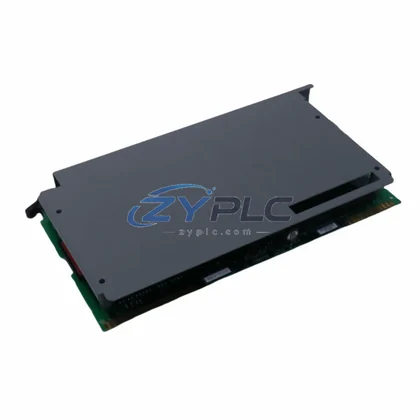
The Emerson SPMD1601 is a high-performance Digital I/O Module engineered for the Ovation Distributed Control System (DCS) platform — one of the most widely deployed process automation architectures in power generation, water treatment, and continuous manufacturing environments. Designed to bridge field-level devices with supervisory control layers, the SPMD1601 delivers deterministic digital signal acquisition and output control across complex industrial networks. Whether integrating hardwired field instruments, relay-driven actuators, or digital status signals from motor control centers, this module ensures that every data point reaches the control layer with precision and reliability.
In a modern smart factory, data isolation is one of the most persistent challenges. Field devices — including pressure transmitters, flow sensors, limit switches, and solenoid valves — generate continuous streams of process data that must be reliably captured, converted, and transmitted upstream to PLC controllers, SCADA servers, and HMI workstations. The SPMD1601 sits at the heart of this data flow, acting as the critical interface between physical process signals and the Ovation DCS controller network. Its role in the automation chain is not merely passive signal conditioning — it actively participates in the real-time control loop, enabling closed-loop feedback, alarm generation, and interlock execution at the field level.
Compatibility & Integration Notes
| Parameter |
Specification |
| Module SKU |
SPMD1601 |
| Brand / Manufacturer |
Emerson (formerly Westinghouse / Ovation) |
| Product Type |
Digital I/O Module |
| Compatible Platform |
Ovation DCS (Distributed Control System) |
| Communication Protocol |
Ovation proprietary network; compatible with OPC DA / OPC UA gateway integration |
| Interface Type |
Digital Input / Digital Output (DI/DO) |
| Network Compatibility |
Ovation Controller Network, Ethernet-based SCADA backbone |
| System Application |
Power Generation, Water & Wastewater, Continuous Process Manufacturing |
| SCADA / HMI Integration |
Native Ovation Workstation; OPC-compatible third-party SCADA systems |
| Remote Diagnostics |
Supported via Ovation network health monitoring and controller diagnostics |
| Warranty |
warranty terms confirmed during quotation — Covered by ZYPLC |
| Stock Status |
Available — shipment arranged after confirmation |
Connected Automation Data Flow
Understanding the SPMD1601’s role requires tracing the full data path from field device to enterprise system. At the lowest layer, field instruments — such as proximity sensors, digital flow switches, and vibration monitors — generate binary status signals that are wired directly into the SPMD1601’s input channels. These signals are scanned at high speed and transmitted across the Ovation Controller Network to the resident Ovation DCS controller, where they are processed against control logic, setpoints, and interlock conditions.
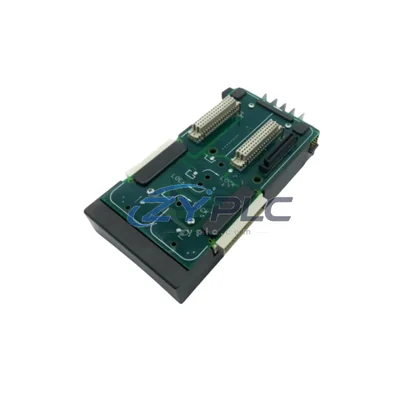
Within the same Ovation cabinet, the SPMD1601 operates alongside companion modules such as the Emerson SPMA1601 Analog Input Module and the Emerson SPMB1601 Analog Output Module, forming a complete mixed-signal I/O subsystem. The Ovation controller — for example, an Emerson Ovation OCR1100 Controller — aggregates data from all I/O modules and executes the control strategy in real time, issuing digital output commands back through the SPMD1601 to field actuators such as motor starters, solenoid valves, and relay-driven equipment.
For facilities requiring integration with third-party systems, an OPC UA Gateway — such as those provided by Kepware KEPServerEX or Matrikon OPC Server — can be deployed to bridge the Ovation network with external SCADA platforms, MES systems, or cloud-based analytics engines. This gateway translates Ovation-native data into standardized OPC UA objects, enabling seamless data exchange with Wonderware InTouch HMI, Ignition SCADA by Inductive Automation, or enterprise historian platforms such as OSIsoft PI System.
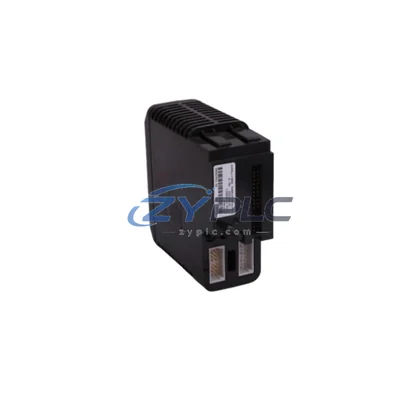
At the field network layer, remote I/O panels equipped with Emerson Remote I/O Modules extend the reach of the Ovation DCS to distributed process areas, reducing home-run cabling costs while maintaining network determinism. Variable frequency drives (VFDs) — such as those from the ABB ACS880 series or Siemens SINAMICS G120 — can be monitored for run/fault status through digital feedback wired into SPMD1601 input channels, providing the SCADA operator with real-time drive health visibility without requiring a separate fieldbus connection.
Edge computing nodes, such as an Industrial Edge Gateway running IIoT middleware, can subscribe to Ovation OPC UA data streams and perform local analytics, anomaly detection, and predictive maintenance calculations before forwarding summarized results to cloud platforms. This architecture ensures that the SPMD1601’s field-level data contributes not only to real-time control but also to long-term asset performance management and digital twin applications.
Solving Data Isolation in Industrial Sites
Many industrial facilities operate with legacy DCS architectures that were designed for isolated, single-vendor environments. As production demands evolve and digital transformation initiatives accelerate, these sites face a common set of challenges: protocol incompatibility between field devices and control systems, data silos that prevent cross-system visibility, inability to perform remote diagnostics without physical site access, and limited scalability when adding new process areas or production lines.
The Emerson SPMD1601 directly addresses these challenges within the Ovation DCS ecosystem. Its native integration with the Ovation controller network eliminates protocol translation overhead at the I/O level, ensuring that digital field signals are available to the control strategy with minimal latency. For sites requiring cross-protocol connectivity, the Ovation platform’s OPC UA compatibility enables structured data export to any standards-compliant SCADA or MES system, breaking down the data silos that have historically separated process control from business intelligence.
Remote monitoring and diagnostics are supported through the Ovation network’s built-in health monitoring capabilities, allowing maintenance engineers to assess module status, channel health, and communication integrity from the Ovation Workstation without requiring physical access to the I/O cabinet. This capability is particularly valuable in hazardous or hard-to-reach process areas, where reducing physical interventions directly improves safety and operational efficiency.
Production line transparency — the ability to visualize real-time process status across all connected devices — is achieved by ensuring that every digital signal captured by the SPMD1601 is available as a named process variable within the Ovation historian and SCADA display system. Operators gain a complete, real-time picture of field device status, enabling faster fault diagnosis, reduced mean time to repair (MTTR), and improved overall equipment effectiveness (OEE).
System expansion is straightforward within the Ovation architecture. Additional SPMD1601 modules can be added to existing I/O cabinets as process requirements grow, with the Ovation controller automatically recognizing new modules during configuration updates. This plug-and-expand capability protects the initial infrastructure investment while accommodating future production capacity increases.
Industrial Connectivity FAQ
Q1: What communication protocol does the Emerson SPMD1601 use, and is it compatible with third-party SCADA systems?
The SPMD1601 communicates natively over the Ovation proprietary controller network. For integration with third-party SCADA systems such as Ignition, Wonderware, or iFIX, an OPC DA or OPC UA gateway server is required to translate Ovation process variables into standardized data objects. This approach is well-established in the industry and supports seamless multi-vendor system integration.
Q2: What is the typical communication latency for digital I/O signals processed by the SPMD1601?
Within the Ovation DCS architecture, digital I/O scan cycles are typically configured in the range of 100–500 milliseconds, depending on the controller configuration and network load. For time-critical interlock applications, the Ovation controller supports faster scan rates, ensuring that safety-relevant digital signals are processed within the required response time.
Q3: Can the SPMD1601 be used in network expansion projects alongside newer Ovation hardware?
Yes. The SPMD1601 is designed for compatibility within the Ovation I/O subsystem and can be deployed alongside newer Ovation controller generations and I/O modules. When planning a network expansion, it is recommended to verify firmware compatibility with the resident Ovation controller version. ZYPLC’s technical team can assist with compatibility verification prior to shipment.
Q4: What does the warranty terms confirmed during quotation cover, and how is the module tested before shipment?
Every SPMD1601 unit supplied by ZYPLC undergoes pre-shipment functional verification to confirm module integrity and communication readiness. The warranty terms confirmed during quotation covers manufacturing defects and functional failures under normal operating conditions. In the event of a warranty claim, ZYPLC provides direct technical support and replacement coordination to minimize downtime at your facility.
—