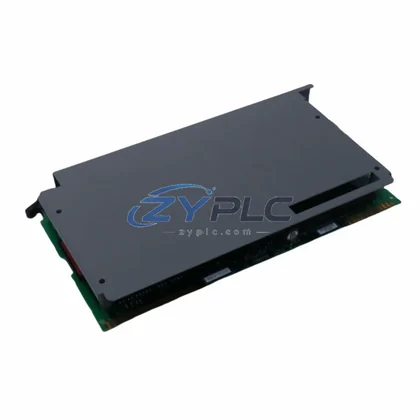
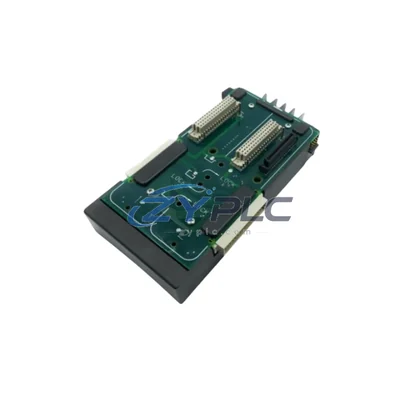
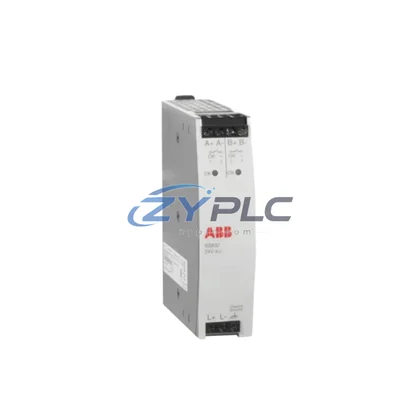
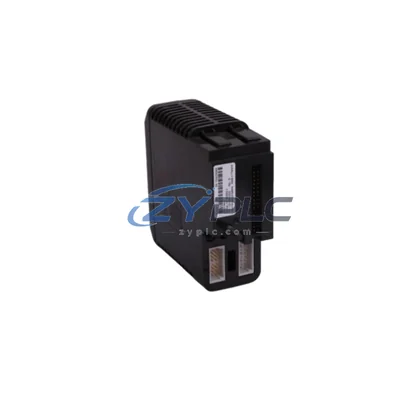
The Emerson UNI1402 Analog Input Module is a precision-engineered I/O component designed for seamless integration within the Emerson Ovation Distributed Control System (DCS) architecture. Rather than functioning as a standalone device, the UNI1402 occupies a critical position within the layered automation hierarchy — bridging field-level instrumentation with the control layer to deliver reliable, high-fidelity analog signal acquisition across demanding industrial environments. Its role in the overall system architecture makes it an indispensable element for engineers designing, expanding, or maintaining Ovation-based control platforms in power generation, petrochemical processing, water treatment, and advanced manufacturing facilities.
In a fully integrated Ovation DCS environment, the UNI1402 operates in close coordination with the Ovation Controller (OCR400 or OCR1100 series), receiving conditioned analog signals from field transmitters and forwarding processed data to the control execution layer. The module mounts directly onto the Ovation I/O cabinet backplane, ensuring deterministic communication with the controller via the Ovation I/O bus. This tight architectural coupling eliminates signal latency issues common in loosely integrated systems and supports the real-time control loops essential for process stability.
From a system architecture perspective, the UNI1402 is typically deployed alongside complementary I/O modules such as the UNI1401 Analog Output Module, the UNI1403 Digital Input Module, and the UNI1404 Digital Output Module, forming a complete I/O subsystem within a single cabinet. The module’s compatibility with the Ovation I/O marshalling architecture allows engineers to organize field wiring through dedicated terminal modules and marshalling panels, reducing cross-wiring complexity and improving long-term maintainability. When paired with the Ovation Redundancy Controller and redundant I/O backplanes, the UNI1402 supports hot-standby configurations that eliminate single points of failure in critical process loops.
Signal integrity is maintained across the full operating range through the module’s built-in signal conditioning circuitry, which supports standard 4–20 mA and 1–5 V analog input ranges. Each channel is individually isolated, preventing ground loop interference from propagating across the I/O bus and corrupting adjacent measurement channels. This channel-level isolation is particularly valuable in high-noise industrial environments such as substations, compressor stations, and rolling mill control rooms, where electromagnetic interference can compromise measurement accuracy.
The UNI1402 integrates natively with the Ovation Developer Studio engineering environment, enabling configuration, calibration, and diagnostics without requiring external tools or proprietary adapters. Engineers can perform online module replacement, channel-level diagnostics, and firmware verification directly from the Ovation workstation, significantly reducing mean time to repair (MTTR) during unplanned outages. The module’s self-diagnostic capabilities continuously monitor channel health, power supply integrity, and communication status, generating structured alarm data that feeds directly into the Ovation alarm management system.
For system architects planning capacity expansion, the UNI1402 supports incremental I/O scaling within existing Ovation cabinet infrastructure. Additional modules can be added to available backplane slots without requiring controller reconfiguration or system shutdown, provided the I/O bus loading remains within specified limits. This non-disruptive expansion capability is critical for facilities undergoing phased capacity upgrades or integrating new process units into an existing Ovation control domain.
Long-term supply continuity is a key consideration for facilities operating Ovation DCS platforms over multi-decade lifecycles. ZYPLC maintains verified inventory of the UNI1402 and related Ovation I/O modules, with each unit undergoing functional testing prior to shipment. All modules are supplied with a warranty terms confirmed during quotation covering manufacturing defects and operational failures under normal service conditions, providing procurement teams with the assurance needed for both emergency replacement and planned maintenance programs.
Product Specification Table
| Parameter |
Specification |
| System Role |
Analog Input I/O Module — Ovation DCS Control Layer |
| Compatible Platform |
Emerson Ovation DCS (OCR400 / OCR1100 Controller Series) |
| Input Signal Types |
4–20 mA, 1–5 V DC Analog |
| Number of Channels |
16 Channels (individually isolated) |
| Channel Isolation |
Channel-to-channel and channel-to-bus isolation |
| Communication Interface |
Ovation I/O Bus (proprietary backplane protocol) |
| Power Supply |
Supplied via Ovation I/O backplane (24 VDC nominal) |
| Operating Temperature |
0°C to 60°C (32°F to 140°F) |
| Mounting |
Ovation I/O Cabinet Backplane (DIN rail compatible enclosure) |
| Diagnostics |
Online self-diagnostics via Ovation Developer Studio |
| Redundancy Support |
Compatible with Ovation redundant I/O backplane configurations |
| Certifications |
CE, UL (refer to product datasheet for full certification list) |
| Country of Origin |
United States |
| Warranty |
warranty terms confirmed during quotation (manufacturing defects and operational failures) |
System Compatibility Notes
The UNI1402 achieves its full performance potential when deployed as part of a coordinated Ovation DCS architecture rather than as an isolated replacement component. At the control layer, the Ovation OCR400 or OCR1100 Controller serves as the execution engine, processing analog data acquired by the UNI1402 and executing control algorithms at deterministic scan rates. The controller communicates with the I/O layer via the Ovation I/O bus, with the UNI1402 responding to polling cycles and delivering channel data within the controller’s configured scan period.
At the I/O layer, the UNI1402 operates alongside the UNI1401 Analog Output Module to form closed-loop control pairs — the UNI1402 acquiring process variable measurements while the UNI1401 drives final control elements such as control valves and variable speed drives. Digital I/O functions are handled by the UNI1403 Digital Input Module and UNI1404 Digital Output Module, which manage discrete signals from field switches, solenoids, and motor starters within the same cabinet assembly.
At the network layer, the Ovation OCR Controller connects to the Ovation control network via redundant Ethernet links, communicating with Ovation Workstations running the Ovation Operator Interface and Ovation Developer Studio. Network switches within the Ovation control network are typically configured for VLAN segmentation, isolating control traffic from business network traffic and maintaining deterministic communication latency. For facilities requiring integration with third-party systems, the Ovation OPC Server provides a standardized data exchange interface without compromising control network integrity.
Power distribution to the UNI1402 and associated I/O modules is managed through the Ovation I/O Power Supply Module, which provides regulated 24 VDC to the backplane. Redundant power supply configurations — using dual Ovation Power Supply Modules with automatic failover — eliminate power-related single points of failure in critical process areas. The UNI1402’s low power consumption profile allows high-density I/O configurations without exceeding backplane power budgets.
At the human-machine interface layer, Ovation Operator Workstations display real-time analog values acquired by the UNI1402, presented through process graphics configured in the Ovation Developer Studio. Alarm limits, engineering unit conversions, and signal filtering parameters are all configured at the module level and reflected automatically in the operator display, ensuring consistency between field measurements and control room visualization without manual data reconciliation.
Industrial Application Notes
In power generation facilities — including coal-fired, gas turbine, and combined-cycle plants — the UNI1402 is widely deployed for boiler drum level measurement, turbine exhaust temperature monitoring, and feedwater flow acquisition. These applications demand high measurement accuracy and fast scan rates to support the tight control loops required for safe and efficient power generation. The module’s channel isolation prevents interference between high-voltage field circuits and the control system, a critical requirement in substation-adjacent control rooms.
In petrochemical and refinery applications, the UNI1402 supports continuous process monitoring across distillation columns, heat exchangers, and reactor vessels. Its compatibility with HART-enabled transmitters — when used with appropriate signal conditioning — allows asset health data to be extracted alongside process measurements, supporting predictive maintenance programs without requiring additional field wiring infrastructure.
Water and wastewater treatment facilities use the UNI1402 for flow, pressure, and chemical dosing measurement across treatment trains. The module’s ability to operate reliably in high-humidity environments and its compatibility with the Ovation DCS alarm management system make it well-suited for unmanned or remotely monitored treatment facilities where alarm response time is critical.
In mining and minerals processing applications, the UNI1402 supports conveyor load monitoring, crusher pressure measurement, and flotation cell level control. The module’s robust design and compatibility with the Ovation redundant I/O architecture ensure continuous operation in environments subject to vibration, dust, and wide ambient temperature variations.
Product Compatibility FAQ
Q1: Is the UNI1402 compatible with both OCR400 and OCR1100 Ovation Controllers, and does it require any firmware updates for integration?
The UNI1402 is designed for use within the Emerson Ovation DCS I/O architecture and is compatible with Ovation controller platforms that support the standard Ovation I/O bus protocol. Firmware compatibility should be verified against the specific Ovation system version in use at your facility. ZYPLC recommends consulting the Emerson Ovation compatibility matrix or contacting our technical team prior to installation to confirm version alignment and avoid configuration conflicts during commissioning.
Q2: Can the UNI1402 be installed in an existing Ovation cabinet without a system shutdown, and what are the backplane slot requirements?
The Ovation DCS architecture supports online module insertion in many configurations, provided the backplane slot is pre-configured in the Ovation Developer Studio and the controller is operating in a state that permits I/O reconfiguration. Physical installation requires an available backplane slot of the correct form factor. Engineers should verify slot assignments, I/O bus loading, and power budget availability before proceeding with online installation. For critical process areas, a planned maintenance window is recommended to validate channel calibration and alarm configuration after module insertion.
Q3: What does the warranty terms confirmed during quotation cover, and what is the process for warranty claims on the UNI1402?
The warranty terms confirmed during quotation provided by ZYPLC covers manufacturing defects and operational failures occurring under normal service conditions from the date of shipment. It does not cover damage resulting from improper installation, electrical overstress, or unauthorized modification. To initiate a warranty claim, contact ZYPLC at plc.sales@zyplc.com or +86 19859288691 with the module serial number, purchase documentation, and a description of the observed failure. ZYPLC will coordinate return authorization and replacement or repair within the warranty period to minimize system downtime.