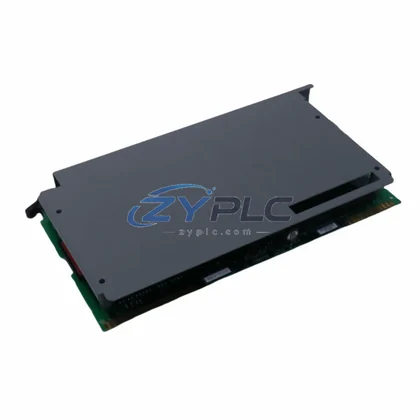
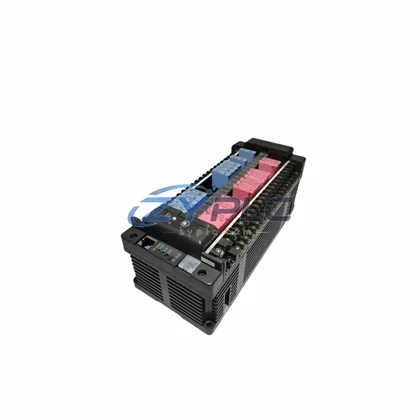
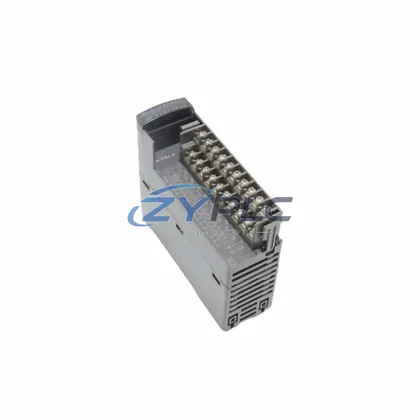
Endress+Hauser CM14-AAM Industrial Network Interface for Liquiline Systems: Bridging Field Sensors to Smart Factory Data Links
The Endress+Hauser CM14-AAM is a high-performance multiparameter transmitter from the Liquiline platform, engineered to serve as a critical industrial network interface between field-level analytical sensors and upper-layer control and monitoring systems. In modern smart manufacturing environments, the ability to reliably acquire, convert, and transmit process data across heterogeneous network architectures is no longer optional — it is the foundation of operational transparency. The CM14-AAM addresses this need directly, offering robust protocol support, flexible communication architecture, and seamless integration into SCADA, DCS, and HMI ecosystems.
Designed for continuous process industries including water treatment, chemical processing, food and beverage, and pharmaceutical manufacturing, the CM14-AAM connects analytical measurement points — pH, conductivity, dissolved oxygen, turbidity, and more — into the plant-wide data infrastructure. Its dual-channel measurement capability and modular sensor interface design make it a versatile node in any industrial data acquisition network.
Compatibility & Integration Notes
| Parameter |
Specification |
| SKU / Model |
CM14-AAM |
| Brand / Series |
Endress+Hauser / Liquiline |
| Product Type |
Multiparameter Transmitter |
| Communication Protocols |
HART, Modbus RTU, Modbus TCP/IP |
| Interface Types |
4–20 mA analog output, digital fieldbus, RS-485 |
| Measurement Channels |
Dual-channel (expandable via Liquiline module system) |
| Network Compatibility |
PROFIBUS DP, EtherNet/IP (via gateway), FOUNDATION Fieldbus (optional) |
| System Application |
SCADA, DCS, PLC, HMI, MES integration |
| Display |
Backlit graphic display with intuitive menu navigation |
| Protection Rating |
IP66 / IP67 (NEMA 4X) |
| Power Supply |
100–240 V AC / 24 V DC |
| Origin |
Germany |
| Warranty |
|
| Availability |
RFQ Available — Global Shipping |
Connected Automation Data Flow
In a typical smart factory deployment, the CM14-AAM sits at the intersection of the field instrumentation layer and the process control network. Analytical sensors — such as the Endress+Hauser CPS11D digital pH sensor or the CLS50D inductive conductivity sensor — connect directly to the CM14-AAM via the Memosens digital protocol, delivering calibration data, sensor diagnostics, and live measurement values in a single cable. This eliminates analog signal degradation and enables predictive maintenance at the sensor level.
From the CM14-AAM, process values are transmitted upstream via HART or Modbus RTU over RS-485 to a Siemens S7-1200 or S7-300 PLC acting as the field controller. The PLC aggregates data from multiple field devices — including Endress+Hauser Promag electromagnetic flowmeters, Cerabar pressure transmitters, and Liquiline CM42 single-channel transmitters deployed at adjacent measurement points — and forwards consolidated process data to the plant DCS or SCADA server.
Where Ethernet-based supervisory systems are in use, a Moxa NPort 5150 serial-to-Ethernet device server or an HMS Anybus X-gateway can bridge the RS-485 Modbus RTU signal from the CM14-AAM into Modbus TCP/IP, making the analytical data accessible to Wonderware InTouch or Ignition SCADA platforms without additional hardware investment. This architecture supports real-time monitoring dashboards, alarm management, and historical trending — all critical for regulatory compliance in water and chemical industries.
For facilities running EtherNet/IP-based control networks with Allen-Bradley ControlLogix or CompactLogix PLCs, the CM14-AAM’s analog 4–20 mA outputs can feed directly into remote I/O modules such as the Allen-Bradley 1734 POINT I/O series, while HART pass-through capability allows asset management software like FieldCare or PACTware to access full device diagnostics without interrupting the live process signal. This dual-path data architecture — real-time control via analog and deep diagnostics via HART — is a hallmark of the Liquiline platform’s industrial connectivity design.
At the edge computing layer, the CM14-AAM’s Modbus TCP/IP output can be polled by an industrial edge gateway such as the Siemens SIMATIC IPC127E or a Advantech ECU-1251 edge controller, enabling local data preprocessing, anomaly detection, and OPC-UA forwarding to cloud-based MES or ERP systems. This positions the CM14-AAM not merely as a field transmitter, but as an active data node in the IIoT architecture of the modern smart factory.
Solving Data Isolation in Industrial Sites
One of the most persistent challenges in industrial automation is the fragmentation of process data across incompatible protocols and isolated subsystems. A water treatment plant may operate pH and conductivity analyzers on HART, flowmeters on PROFIBUS DP, and energy meters on Modbus — with no unified data path to the SCADA system. The result is data silos: operators cannot correlate analytical measurements with flow rates or energy consumption in real time, and maintenance teams lack the remote diagnostic visibility needed to prevent downtime.
The CM14-AAM directly addresses this challenge through its multi-protocol communication architecture. By supporting HART, Modbus RTU, and Modbus TCP/IP simultaneously, it can serve as a protocol bridge between legacy field instruments and modern Ethernet-based control networks. Its dual-channel design allows a single transmitter to monitor two independent measurement points — reducing hardware footprint while increasing data density at each network node.
For production line transparency, the CM14-AAM’s integration with SCADA platforms enables continuous visibility into analytical process parameters. Alarm thresholds configured in the transmitter trigger immediate notifications in the SCADA system, allowing operators to respond to out-of-spec conditions before they escalate into product quality failures or regulatory violations. Remote diagnostic access via HART or Modbus means that maintenance engineers can interrogate sensor health, calibration status, and error logs from the control room — eliminating the need for physical site visits during routine checks.
System expansion is equally straightforward. The Liquiline modular platform allows additional measurement modules to be added to the CM14-AAM without replacing the transmitter, protecting capital investment as process requirements evolve. New sensor types, additional communication modules, or expanded I/O capacity can be integrated through the Liquiline module slot system, making the CM14-AAM a scalable foundation for growing industrial networks.
Every CM14-AAM unit supplied by ZYPLC undergoes pre-shipment functional testing, verifying communication output, display operation, and sensor interface integrity before dispatch. All units are covered by a and supported by Availability confirmed by RFQ inventory for rapid global fulfillment.
Industrial Connectivity FAQ
Q1: What communication protocols does the CM14-AAM support, and is it compatible with existing Modbus-based SCADA systems?
The CM14-AAM supports HART, Modbus RTU (RS-485), and Modbus TCP/IP, making it directly compatible with the vast majority of industrial SCADA and DCS platforms. For systems using EtherNet/IP or PROFIBUS DP, integration is achievable via standard protocol gateways without modification to the transmitter configuration.
Q2: How does the CM14-AAM perform in terms of communication latency and network stability in continuous process environments?
The CM14-AAM is designed for continuous 24/7 operation in demanding industrial environments. Modbus polling cycles are configurable to match the scan rate requirements of the connected PLC or SCADA system, and the RS-485 physical layer supports multi-drop network topologies with up to 32 nodes per segment — ensuring stable, low-latency data transmission even in electrically noisy plant environments.
Q3: Can the CM14-AAM be expanded to support additional measurement parameters or communication interfaces after installation?
Yes. The Liquiline modular platform allows additional sensor input modules, communication modules (including PROFIBUS DP and EtherNet/IP cards), and I/O expansion modules to be installed in the CM14-AAM’s available module slots without replacing the base unit. This makes it straightforward to scale the transmitter’s capabilities as process monitoring requirements grow.
Q4: What pre-shipment testing and warranty coverage does ZYPLC provide for the CM14-AAM?
All CM14-AAM units supplied by ZYPLC undergo pre-shipment functional verification, including communication output testing, display and keypad operation checks, and sensor interface validation. Each unit is covered by a from the date of shipment. RFQ-confirmed units are available for shipment arranged after confirmation with global shipping support.