Fisher 38B5786X112 Relay Module for DVC6200: Control System and Upstream–Downstream Coordination
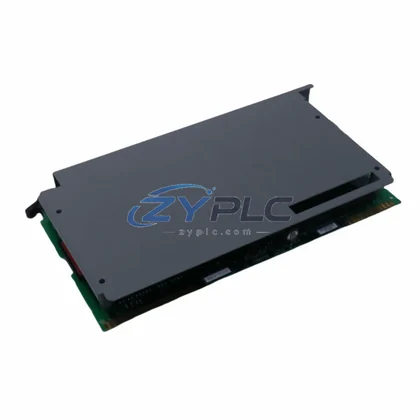
In modern industrial automation, the reliability of a valve control system depends not on any single component, but on the seamless coordination of every layer within the control architecture. The Fisher 38B5786X112 is a precision-engineered relay module designed specifically for the FIELDVUE DVC6200 series of digital valve controllers, serving as a critical signal-conditioning and relay interface element within pneumatic and electro-pneumatic valve control loops. Its role extends far beyond simple signal switching — it functions as a structural node that connects the digital intelligence of the DVC6200 controller to the physical actuation layer, ensuring that control commands are translated into reliable, repeatable mechanical output across demanding process environments.
Understanding the 38B5786X112 requires viewing it within the full hierarchy of a distributed control system. At the control layer, a DCS or PLC platform — such as a Emerson DeltaV DCS controller or a Rockwell ControlLogix processor — issues 4–20 mA analog or HART digital commands to the FIELDVUE DVC6200 digital valve controller. The DVC6200 interprets these signals, applies its internal PID logic and travel calibration algorithms, and then drives the relay module to modulate pneumatic output pressure to the actuator. The 38B5786X112 relay module is the electro-pneumatic bridge in this chain, converting the controller’s electrical output into precise pneumatic pressure signals that position the valve stem with high accuracy and fast response.
At the I/O and field instrument layer, the DVC6200 communicates upstream via HART protocol, enabling the host system to perform continuous valve diagnostics, partial stroke testing, and performance trending without interrupting the process. The 38B5786X112 supports this architecture by maintaining stable relay output even during HART communication bursts, ensuring that diagnostic polling does not introduce noise or instability into the pneumatic output signal. This characteristic is particularly valuable in safety-instrumented systems where valve response consistency is a functional safety requirement.
Product Specification Table
| Parameter |
Specification |
| Part Number |
38B5786X112 |
| Compatible Controller |
Fisher FIELDVUE DVC6200 Series |
| System Role |
Electro-Pneumatic Relay Module (Valve Controller Internal Component) |
| Function |
Pneumatic relay / signal amplification for valve actuator positioning |
| Communication Protocol |
HART (via DVC6200 host controller) |
| Electrical Interface |
4–20 mA analog input (processed by DVC6200) |
| Pneumatic Output |
Modulated supply pressure to actuator (single or double acting) |
| Supply Pressure Range |
1.4 to 10.0 bar (20 to 145 psi) — per DVC6200 system specification |
| Operating Temperature |
–40°C to +85°C (–40°F to +185°F) |
| Enclosure / Installation |
Integral mount to DVC6200 valve controller body |
| Material |
Aluminum alloy housing, corrosion-resistant internals |
| Country of Origin |
United States |
| Warranty |
— covered from date of shipment by ZYPLC |
System Compatibility Notes
The Fisher 38B5786X112 relay module is engineered to operate as an integral component within a coordinated valve control assembly, not as a standalone device. Its performance is inseparable from the broader system architecture in which it is installed. In a typical process control loop, the DVC6200 digital valve controller — of which the 38B5786X112 is an internal relay subassembly — is mounted directly to a Fisher control valve actuator, such as the Fisher 667 diaphragm actuator or the Fisher 1052 spring-and-diaphragm rotary actuator. The relay module amplifies the controller’s internal pneumatic pilot signal to drive these actuators with sufficient force and speed to meet process control requirements.
At the network and communication layer, the DVC6200 system integrates with HART multiplexers or HART-over-IP gateways, enabling centralized asset management through platforms such as the Emerson AMS Device Manager or Plantweb Optics. The 38B5786X112, as part of the DVC6200 assembly, participates in this diagnostic ecosystem by supporting continuous monitoring of relay output pressure, supply pressure, and actuator travel feedback. Engineers can remotely detect relay wear, pneumatic leakage, or calibration drift without removing the valve from service.
For redundant control architectures, the DVC6200 series supports dual-acting relay configurations where two relay modules — including units such as the 38B5786X112 — work in tandem to provide fail-safe positioning. In high-availability process lines, this redundancy is paired with solenoid valve assemblies (such as the Fisher 377 Trip Valve or Asco Series 327 solenoid) that provide emergency shutoff capability independent of the DVC controller. The relay module’s fast pneumatic response ensures that the actuator reaches its fail-safe position within the required response time specified by the safety instrumented function (SIF).
At the power and instrument supply layer, the DVC6200 is typically loop-powered from the 4–20 mA control signal, requiring no separate power supply for standard operation. This simplifies panel wiring and reduces the number of power distribution modules required in the marshalling cabinet. When installed alongside Fisher DVC6200f (Foundation Fieldbus variant) controllers, the relay module supports segment-level power conditioning, working in conjunction with Pepperl+Fuchs or MTL fieldbus power conditioners to maintain stable bus voltage across multi-drop instrument segments.
At the human-machine interface layer, operators interact with the DVC6200 system through handheld HART communicators (such as the Emerson 475 Field Communicator) or through DCS faceplate displays. The relay module’s output status — including supply pressure, output pressure, and travel position — is surfaced through these interfaces, giving operators real-time visibility into valve health without requiring physical inspection at the valve location.
Industrial Application Notes
Oil & Gas and Petrochemical Processing: In upstream and downstream hydrocarbon processing facilities, the Fisher 38B5786X112 relay module supports precise flow control on high-pressure separator trains, compressor anti-surge loops, and flare header pressure control valves. The DVC6200 assembly, with its integrated relay module, is certified for use in hazardous area classifications (ATEX / IECEx Zone 1 and Zone 2), making it suitable for installation in gas compression buildings, offshore platform topsides, and LNG liquefaction trains. The relay module’s robust pneumatic design ensures consistent valve positioning even under high differential pressure conditions typical of wellhead choke valve applications.
Power Generation: In coal-fired, gas turbine, and combined-cycle power plants, the 38B5786X112 supports steam turbine bypass valve control, boiler feedwater flow regulation, and combustion air damper positioning. The relay module’s fast response time — typically under 1 second for full stroke — meets the dynamic control requirements of turbine load-following applications. In nuclear power auxiliary systems, the DVC6200 assembly with this relay module is used in non-safety-related cooling water and HVAC control loops, where long-term reliability and predictable maintenance intervals are essential.
Water and Wastewater Treatment: Municipal water treatment plants and industrial effluent systems use the DVC6200 with the 38B5786X112 relay module for precise chemical dosing valve control, filter backwash sequencing, and clarifier inlet flow regulation. The relay module’s corrosion-resistant construction and wide operating temperature range make it suitable for outdoor installation in water intake structures and pump stations exposed to seasonal temperature extremes.
Pharmaceutical and Food & Beverage: In hygienic process environments, the DVC6200 assembly is used on sanitary diaphragm valves and butterfly valves controlling CIP (clean-in-place) circuits, sterile media transfer, and fermentation vessel pressure. The relay module’s smooth, repeatable pneumatic output supports the tight positioning tolerances required for batch process reproducibility and regulatory compliance under FDA 21 CFR Part 11 and EU GMP Annex 11 frameworks.
Mining and Minerals Processing: In slurry transport, flotation cell level control, and tailings pond management, the Fisher 38B5786X112 relay module supports valve control in abrasive and corrosive service conditions. The DVC6200’s diagnostic capability allows maintenance teams to schedule relay module replacement based on actual wear data rather than fixed time intervals, reducing downtime in continuous mining operations.
Product Compatibility FAQ
Q1: Is the Fisher 38B5786X112 relay module compatible with all DVC6200 variants, including the DVC6200f (Foundation Fieldbus) and DVC6200 SIS (Safety Instrumented System) versions?
The 38B5786X112 relay module is designed as an internal subassembly for the Fisher FIELDVUE DVC6200 platform. Compatibility with specific DVC6200 variants — including the DVC6200f (Foundation Fieldbus), DVC6200 HW1/HW2 hardware revisions, and DVC6200 SIS — depends on the relay type designation (Type A, B, or C) and the actuator action (single-acting or double-acting). Before ordering, engineers should confirm the relay type required by cross-referencing the DVC6200 assembly drawing and the actuator action specification. ZYPLC’s technical team can assist with compatibility verification based on your existing DVC6200 serial number and configuration data.
Q2: How does the 38B5786X112 relay module affect the overall control loop response time, and what pneumatic supply pressure is recommended for optimal performance in fast-acting control applications?
The relay module’s pneumatic amplification ratio and supply pressure directly influence the DVC6200 assembly’s stroking speed. For fast-acting control applications — such as compressor anti-surge or turbine bypass — a supply pressure at the upper end of the rated range (typically 5.5 to 7.0 bar / 80 to 100 psi) is recommended to maximize actuator stroking speed. The relay module’s internal geometry is optimized for low hysteresis and fast pressure recovery, supporting control loop scan rates of 100 ms or faster when paired with a properly tuned DVC6200 PID configuration. Supply pressure regulators (such as the Fisher 67CFR or 67FR series) should be installed upstream to maintain stable supply pressure independent of plant header pressure fluctuations.
Q3: What does the cover for the Fisher 38B5786X112, and what long-term maintenance practices are recommended to maximize relay module service life?
ZYPLC provides a on the Fisher 38B5786X112 relay module from the date of shipment, covering manufacturing defects in materials and workmanship under normal operating conditions. The warranty supports system integration — meaning the module is verified for compatibility with the DVC6200 system architecture before dispatch. For long-term maintenance, Fisher recommends periodic partial stroke testing (PST) via the DVC6200’s built-in diagnostic routines to detect relay wear without removing the valve from service. Relay module replacement intervals are typically determined by the DVC6200’s performance diagnostics, which track supply pressure decay rate and output pressure response as indicators of relay seal condition. Maintaining clean, dry instrument air supply (per ISA-7.0.01 quality standard) is the single most effective measure for extending relay module service life beyond 10 years in normal process service.