Foxboro 2750/DO4 Discrete Output for 2750 Series: Compatibility and Replacement Notes
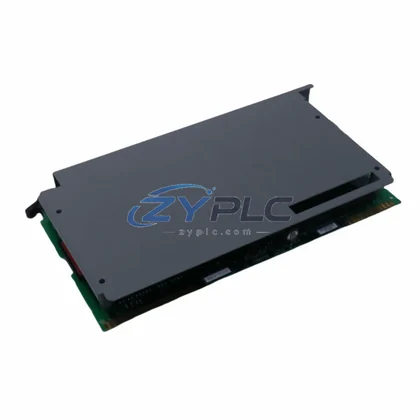
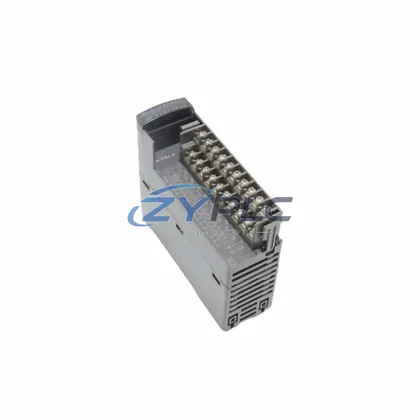
The Foxboro 2750/DO4 Discrete Output Module is a purpose-built field output component designed to operate within the Foxboro 2750 Series Distributed Control System (DCS) architecture. Rather than functioning as a standalone device, the 2750/DO4 occupies a critical position in the output layer of a multi-tier automation hierarchy — translating controller-level logic decisions into reliable, electrically isolated discrete switching signals that drive field actuators, solenoid valves, motor starters, and alarm annunciators across demanding industrial environments.
In a fully integrated 2750 Series control system, the 2750/DO4 works in close coordination with the upstream control processor and downstream field devices. The module receives execution commands from the 2750 Series Central Processing Unit (CPU), which manages scan cycles, logic execution, and I/O arbitration across the entire rack. The 2750/DO4 then converts those digital commands into hardwired output signals, ensuring deterministic response times that are essential in process-critical applications such as emergency shutdown sequences, interlock activation, and sequential machine control.
The module is housed within the standard 2750 Series backplane, sharing the same rack infrastructure as analog input modules, discrete input modules, and communication interface cards. This shared backplane architecture eliminates the need for external signal conditioning hardware and reduces overall panel footprint — a significant advantage in compact control cabinet designs common in water treatment facilities, pharmaceutical batch processing, and food and beverage packaging lines.
Product Specification Table
| Parameter |
Specification |
| Model |
Foxboro 2750/DO4 |
| System Role |
Discrete Output Module — Field Output Layer |
| Compatible Platform |
Foxboro 2750 Series DCS |
| Number of Output Channels |
4 Discrete Output Channels |
| Output Signal Type |
Discrete (Digital) Switching Output |
| Electrical Isolation |
Channel-to-channel and channel-to-backplane isolation |
| Backplane Compatibility |
2750 Series Standard Rack / Backplane |
| Communication Interface |
Internal backplane bus — integrated with 2750 Series CPU |
| Installation Environment |
Industrial control cabinet, DIN rail or rack-mount enclosure |
| Operating Temperature |
0°C to 60°C (typical industrial DCS range) |
| system integration |
Full system integration within 2750 Series architecture |
| Warranty |
— tested prior to shipment |
| Origin |
United States |
| Availability |
RFQ Available — ready for shipment arranged after confirmation |
System Compatibility Notes
The 2750/DO4 achieves its highest value when deployed as part of a coordinated 2750 Series system architecture. At the control layer, the Foxboro 2750 Series CPU module manages all logic execution and I/O scheduling, issuing output commands to the 2750/DO4 on every scan cycle. The CPU’s deterministic scan rate ensures that discrete output transitions occur within predictable time windows — a requirement for interlock systems and safety-rated shutdown sequences.
On the input side, the Foxboro 2750/DI4 Discrete Input Module and 2750/AI4 Analog Input Module feed real-time process data back to the CPU, creating a closed-loop control architecture where the 2750/DO4’s output states are continuously validated against incoming field signals. This feedback loop is fundamental to maintaining process stability in applications such as boiler control, compressor sequencing, and pump station automation.
Power distribution within the rack is managed by the Foxboro 2750 Series Power Supply Module, which provides regulated DC power to all installed I/O modules including the 2750/DO4. Redundant power supply configurations are supported in high-availability system designs, ensuring that a single power supply failure does not interrupt discrete output operation — a critical requirement in continuous process industries such as petrochemical refining and power generation.
For systems requiring network-level integration, the Foxboro 2750 Series Communication Gateway Module bridges the 2750 Series backplane to plant-wide networks using standard industrial protocols such as Modbus TCP, PROFIBUS DP, or Foundation Fieldbus. This allows the 2750/DO4’s output status to be monitored and logged by SCADA systems, historian servers, and asset management platforms without requiring additional hardware.
At the human-machine interface layer, operator workstations running Foxboro IA Series HMI software provide real-time visualization of discrete output states, alarm management, and trend logging. Operators can monitor the 2750/DO4’s channel status, acknowledge output faults, and initiate manual override commands directly from the HMI — reducing mean time to repair (MTTR) during process upsets.
Terminal block assemblies and Foxboro 2750 Series field wiring termination panels provide the physical interface between the 2750/DO4’s output channels and field-mounted actuators. Pre-wired termination panels reduce installation time and minimize wiring errors during commissioning — a significant advantage on large-scale projects with hundreds of I/O points.
Industrial Application Notes
The Foxboro 2750/DO4 is deployed across a wide range of industrial sectors where reliable discrete output control is essential to process integrity and operational safety.
In power generation and electrical utilities, the 2750/DO4 controls circuit breaker trip coils, transformer tap changers, and auxiliary relay panels. Its electrically isolated output channels prevent ground loop interference between high-voltage field circuits and the low-voltage control system — a critical design requirement in substation automation and generator protection systems.
In petrochemical and oil & gas processing, the module drives solenoid-operated shutdown valves, blowdown valves, and emergency depressurization systems. The 2750/DO4’s integration with the 2750 Series safety architecture allows it to participate in Safety Instrumented System (SIS) logic, where output response time and channel integrity are subject to IEC 61511 functional safety requirements.
In water and wastewater treatment, the 2750/DO4 controls pump motor starters, valve actuators, chemical dosing systems, and UV disinfection equipment. Its compatibility with the 2750 Series backplane allows water utility operators to expand I/O capacity incrementally as treatment plant capacity grows — without replacing the existing control system infrastructure.
In mining and mineral processing, the module operates conveyor belt drives, crusher interlock systems, and dust suppression solenoids. The 2750/DO4’s robust industrial design tolerates the high-vibration, high-dust environments typical of underground and open-pit mining operations.
In packaging and discrete manufacturing, the 2750/DO4 sequences pneumatic actuators, reject gates, labeling heads, and end-of-line inspection systems. Its four-channel configuration allows a single module to control multiple actuators within a single machine cell — reducing rack slot consumption and simplifying system documentation.
Product Compatibility FAQ
Q1: Is the Foxboro 2750/DO4 compatible with all 2750 Series rack configurations, and can it be mixed with analog I/O modules in the same rack?
Yes. The 2750/DO4 is fully compatible with the standard 2750 Series backplane and can be installed in any available I/O slot within a 2750 Series rack. It can coexist in the same rack with analog input modules (2750/AI4), discrete input modules (2750/DI4), and communication interface cards without any slot restriction. The 2750 Series CPU automatically recognizes the module type during system initialization and assigns the appropriate I/O map addresses. Mixed I/O rack configurations are standard practice in 2750 Series system design and are fully supported by Foxboro’s system engineering documentation.
Q2: How does the 2750/DO4 support redundant architecture designs, and what happens to output states during a CPU failover event?
In redundant 2750 Series configurations, the primary and secondary CPUs maintain synchronized I/O state tables through the system’s redundancy communication link. During a CPU failover event, the secondary CPU assumes control and restores the last known output states to all I/O modules — including the 2750/DO4 — within the system’s configured failover time window. This bumpless transfer capability is essential in continuous process applications where an uncontrolled output state change could trigger a process upset or safety interlock. The 2750/DO4’s output channels remain energized or de-energized according to the last valid CPU command during the failover transition, ensuring process continuity.
Q3: What does the cover, and what pre-shipment testing is performed on the 2750/DO4?
Every Foxboro 2750/DO4 unit supplied by ZYPLC is subject to functional testing prior to shipment, including output channel continuity verification, isolation resistance testing, and backplane communication handshake validation. The covers defects in materials and workmanship under normal operating conditions. Units that exhibit functional failure within the warranty period are eligible for replacement or repair at no additional cost. ZYPLC maintains a dedicated technical support team reachable at plc.sales@zyplc.com and +86 19859288691 to assist with warranty claims, installation guidance, and system compatibility verification.