GE 469-P5-HI-A1-E-H Industrial Network Interface for Multilin 469 Systems: Bridging Field Devices and Smart Factory Data Links
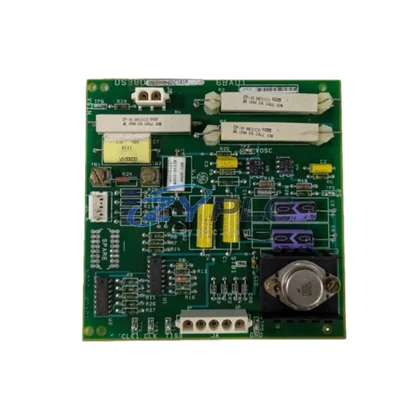
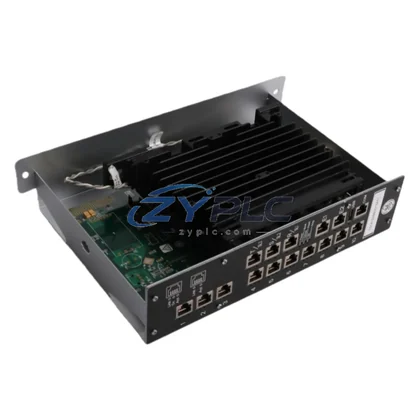
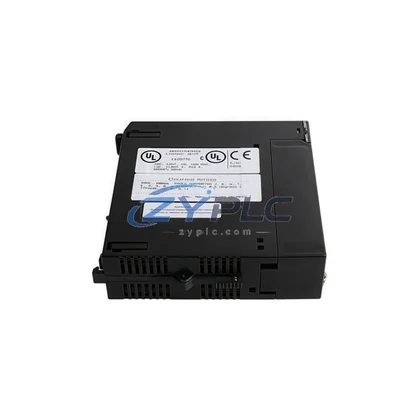
The GE Multilin 469-P5-HI-A1-E-H is a high-performance motor protection relay engineered for demanding industrial environments where reliable communication, real-time data acquisition, and seamless SCADA integration are non-negotiable. As part of the renowned GE Multilin 469 Series, this unit delivers comprehensive motor management capabilities — from thermal overload and differential protection to ground fault detection — while simultaneously serving as a critical node in the plant-wide industrial communication network. Whether deployed in oil & gas, water treatment, mining, or discrete manufacturing, the 469-P5-HI-A1-E-H ensures that every motor event, alarm, and diagnostic signal is captured, transmitted, and acted upon in real time.
Compatibility & Integration Notes
| Parameter |
Specification |
| Communication Protocol |
Modbus RTU, Modbus TCP/IP, DNP3, IEC 61850 (GOOSE) |
| Interface Type |
RS-485 (2-wire), RJ-45 Ethernet (10/100 Mbps) |
| Transmission Capability |
Real-time motor data, event logs, waveform capture, alarm relay |
| Network Compatibility |
SCADA, DCS, PLC, HMI, EtherNet/IP gateway, industrial ring topology |
| System Application |
Motor MCC, switchgear protection, smart factory automation, remote monitoring |
| Warranty |
warranty terms confirmed during quotation — Tested before shipment, full functional verification |
Connected Automation Data Flow
In a modern smart factory, the GE 469-P5-HI-A1-E-H sits at the intersection of field-level protection and plant-level intelligence. The data journey begins at the motor terminals, where current transformers and voltage inputs feed raw analog signals into the relay’s high-accuracy measurement engine. These signals are processed locally — thermal model calculations, unbalance detection, and start inhibit logic execute in milliseconds — before being packaged as structured Modbus RTU frames and transmitted upstream via the RS-485 network to a GE Multilin SR750 feeder protection relay or directly to a Rockwell Automation Allen-Bradley ControlLogix PLC acting as the network master.
From the PLC layer, data flows into a Siemens S7-1500 or Schneider Electric Modicon M340 controller managing the broader production line. The Ethernet port on the 469-P5-HI-A1-E-H enables simultaneous Modbus TCP/IP communication, allowing a Wonderware InTouch HMI or GE iFIX SCADA platform to poll live motor parameters — current, voltage, power factor, thermal capacity used — at sub-second intervals. Operators at the control room can visualize motor health trends, acknowledge alarms, and initiate remote resets without leaving the SCADA workstation.
For sites requiring protocol bridging, a Moxa MGate MB3480 Modbus-to-EtherNet/IP gateway can be inserted between the 469 relay and an EtherNet/IP-based control network, ensuring compatibility with legacy and modern architectures alike. Remote I/O modules such as the Phoenix Contact Axioline F series can extend digital output signals from the relay’s trip contacts to distributed actuators across the plant floor. Edge computing nodes — for example, a Advantech UNO-2484G industrial edge gateway — can subscribe to the relay’s data stream, apply local analytics, and push aggregated motor health KPIs to cloud-based MES or ERP platforms via MQTT or OPC-UA.
Variable frequency drives such as the ABB ACS880 or Danfoss FC302 operating in the same motor control center can share the same Modbus segment as the 469-P5-HI-A1-E-H, enabling coordinated soft-start sequencing and energy monitoring across multiple drive-motor pairs. Smart sensors — vibration transmitters, bearing temperature probes — connected via Pepperl+Fuchs WirelessHART adapters feed additional condition monitoring data into the same SCADA layer, creating a unified asset health dashboard that spans from the relay’s electrical measurements to the mechanical condition of the driven equipment.
Solving Data Isolation in Industrial Sites
One of the most persistent challenges in industrial facilities is the coexistence of multiple communication protocols across different generations of equipment. Older motor protection relays may speak only hardwired discrete I/O, while newer PLCs and SCADA systems demand structured digital data. The GE 469-P5-HI-A1-E-H eliminates this data isolation by natively supporting both Modbus RTU for legacy RS-485 networks and Modbus TCP/IP for modern Ethernet backbones — no external protocol converter required for the majority of installations.
Data silos between the electrical protection layer and the process control layer are broken down through the relay’s comprehensive register map, which exposes over 200 data points including metered values, protection element states, event records, and oscillography triggers. SCADA engineers can map these registers directly into their historian databases, enabling long-term trend analysis, predictive maintenance scheduling, and regulatory compliance reporting without manual data entry.
Remote monitoring is transformed: maintenance teams can access the relay’s web interface or poll its Modbus TCP registers from any networked workstation, diagnosing motor issues — thermal overload history, number of starts, last fault type — without physical access to the switchgear room. Production line transparency is achieved through real-time dashboards that display motor loading, energy consumption, and protection status for every motor on the network simultaneously. System expansion is straightforward: additional 469 relays or other GE Multilin devices such as the GE Multilin 369 motor management relay can be added to the same RS-485 bus with unique Modbus addresses, scaling the protection network as the facility grows.
Industrial Connectivity FAQ
Q1: What is the communication latency of the 469-P5-HI-A1-E-H over Modbus TCP/IP?
Under normal network conditions, Modbus TCP/IP polling of the 469-P5-HI-A1-E-H typically achieves response times of 10–50 ms per transaction, depending on network load and the number of registers requested per query. For time-critical protection signaling, the relay’s hardwired trip outputs operate independently of the communication network, ensuring sub-cycle protection response regardless of network latency.
Q2: Is the 469-P5-HI-A1-E-H compatible with IEC 61850 SCADA systems?
The 469-P5-HI-A1-E-H supports IEC 61850 GOOSE messaging for peer-to-peer protection interlocking between IEDs on the same Ethernet segment. For full IEC 61850 MMS client-server integration with a substation automation system, the relay’s Ethernet port and configuration software support the necessary logical node mapping. Consult the GE Multilin 469 communications guide for the complete IEC 61850 data model.
Q3: Can multiple 469 relays share the same RS-485 Modbus network with other GE Multilin devices?
Yes. The RS-485 port supports up to 32 devices on a single segment (extendable with repeaters), and each relay is assigned a unique Modbus slave address (1–247). The 469-P5-HI-A1-E-H can coexist on the same bus with other GE Multilin relays such as the GE Multilin 369, GE Multilin 239, or third-party Modbus RTU devices, provided address conflicts are avoided and the baud rate is consistent across all nodes.
Q4: What does the warranty terms confirmed during quotation cover, and is pre-shipment testing performed?
Every GE 469-P5-HI-A1-E-H unit supplied by ZYPLC undergoes full functional verification prior to shipment, including communication port testing, protection element calibration checks, and firmware version confirmation. The warranty terms confirmed during quotation covers manufacturing defects and functional failures under normal operating conditions. Our technical team provides post-sale support for commissioning, Modbus register mapping, and SCADA integration queries.